
Political Turbulence and Pharma Volatility: Navigating Regulatory and Reputational Risks in 2025
The pharmaceutical sector has long been a bellwether for regulatory and geopolitical shifts, but the past two years have introduced a new era of volatility. High-profile political statements and executive actions—particularly those emanating from the Trump administration—have created a perfect storm of uncertainty, eroding market confidence and reshaping investor strategies. From price-control mandates to reputational crises, the interplay between politics and pharma has never been more pronounced.
Regulatory Risks: A New Era of Price Controls
On April 15, 2025, President Donald Trump signed Executive Order 14273, titled “Lowering Drug Prices by Once Again Putting Americans First,” which implemented a “most favored nation” pricing model, aligning U.S. drug prices with those in other developed countries[2]. This move, coupled with threats to impose Section 232 tariffs on pharmaceutical imports, has sent shockwaves through the sector. According to a report by S&P Global Market Intelligence, the order alone triggered a sector-wide sell-off, with Moderna's share price plummeting 7.3% in a single week and its short interest reaching a 2024 high[2].
The regulatory overhang extends beyond pricing. Trump's administration has pressured 17 major pharmaceutical CEOs to cut U.S. drug prices, while the appointment of Robert F. Kennedy Jr.—a vocal vaccine skeptic—to lead health policy has raised fears of ad hoc interventions[2]. These actions have not only disrupted pricing models but also introduced operational risks, as companies now face potential delays in FDA approvals and a restructured regulatory framework[2].
Reputational Risks: Politicians and the Paradox of Pharma
Reputational damage has compounded financial risks. Lawmakers have traded millions in pharmaceutical stocks while publicly criticizing the industry, creating a credibility gap. For example, Rep. Marjorie Taylor Greene (R-GA) and Rep. Jefferson Shreve (R-LA) disclosed multiple purchases in Merck and Johnson & Johnson, while Rep. Ro Khanna (D-CA) reported similar transactions[1]. This duality—where political rhetoric clashes with personal financial interests—has eroded public trust in both the sector and its critics, further destabilizing market sentiment.
Market Reactions: A Sector in Retreat
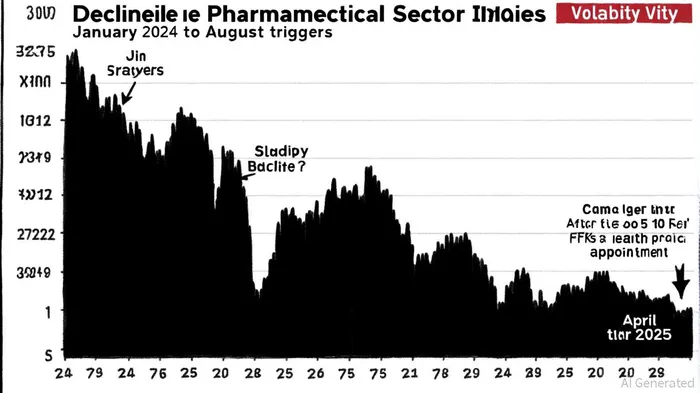
The market's response has been swift and severe. Data from Lombard Odier indicates that pharma stocks have underperformed broader indices by over 15% since early 2024, with companies like PfizerPFE--, Novo Nordisk, and Eli Lilly experiencing double-digit declines[2]. Investor anxiety is fueled by fears of regulatory overhauls, potential tariffs, and the sector's exposure to global supply chains. Trump's broader trade policies, which initially targeted industries like steel and semiconductors, have also raised concerns that pharmaceuticals could become collateral damage in a protectionist agenda[2].
Investment Implications: Opportunities Amidst the Chaos
While the sector faces headwinds, some analysts argue that depressed valuations and robust innovation pipelines present selective opportunities. For instance, firms with strong R&D portfolios in orphan drugs or biologics may be less vulnerable to price controls[2]. However, investors must remain vigilant about political risks, which now rival traditional market forces in their impact on stock valuations.
In conclusion, the pharma sector's 2025 turbulence underscores the growing influence of high-profile political statements on market dynamics. As regulatory and reputational risks converge, investors must balance caution with a nuanced understanding of long-term fundamentals. The next chapter for the industry will likely be written not just in boardrooms, but in the halls of power.





Comentarios
Aún no hay comentarios