
Political Stability and Foreign Investment in Benin: Navigating the 2023 Election's Impact on Economic Policy
Democratic Resilience and Electoral Outcomes
Benin's 2023 election reinforced its reputation as a democratic model in the region. According to the World Bank, parties supporting President Talon maintained dominance, while the opposition, , returned to Parliament after a four-year absence, signaling a healthy multiparty system. This electoral outcome, though contested in tone, did not disrupt the broader narrative of political stability. However, regional tensions-particularly in the North and with neighboring countries-remain a wildcard, complicating long-term predictability for investors.
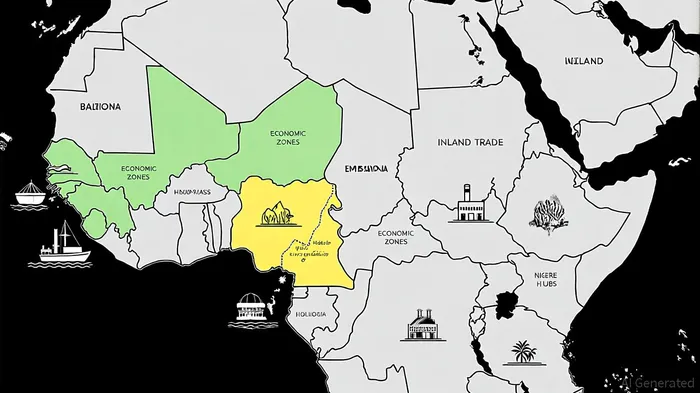
The election's clarity in institutional processes likely bolstered confidence among foreign investors. A report by the (IFC) highlights Benin's strategic location as a gateway to West African markets, with ongoing initiatives to strengthen cross-border trade and SMEs. For instance, the IFC's Benin-Nigeria investment corridor project aims to leverage Nigeria's market size while mitigating infrastructure gaps, a move that could attract manufacturing and logistics investments.
Economic Policy and Structural Reforms
Benin's economic policy framework, aligned with the World Bank's 2018–2023 (CPF), emphasizes structural transformation, human capital development, and resilience-building. Key initiatives like the PACOFIDE project have enhanced agricultural productivity and export diversification, particularly in northern regions. These efforts align with broader goals to reduce reliance on traditional cash crops and attract agribusiness investments.
The 2023 election results suggest continuity in these policies, as Talon's coalition retains legislative control. However, the return of Les Démocrates to Parliament may introduce checks on executive power, potentially slowing policy implementation. For investors, this duality-between stable governance and legislative friction-requires careful assessment. A visual representation of FDI trends over the past decade reveals a steady upward trajectory, albeit with volatility tied to global commodity prices and regional security shifts.
Challenges and Opportunities for Investors
While Benin's political stability remains a draw, external risks persist. Geopolitical uncertainties in the Sahel and cross-border security threats could deter investments in infrastructure and energy. Additionally, the 2023 election's contested nature, though resolved democratically, highlights the need for investors to monitor post-election dynamics.
On the positive side, Benin's engagement with multilateral institutions offers a safety net. The World Bank's and social protection programs, which target youth and women through vocational training, are designed to create a skilled workforce-a critical asset for labor-intensive industries. Such initiatives not only address social equity but also enhance the country's appeal as a destination for manufacturing and services.
Conclusion
Benin's 2023 election reaffirms its position as a politically stable yet strategically complex market. For foreign investors, the interplay between democratic governance, regional challenges, and policy continuity will define risk-return profiles. While the government's alignment with international development partners provides a robust framework for growth, vigilance around regional tensions and legislative dynamics is essential. As Benin continues to diversify its economy and strengthen institutional capacity, it presents a compelling case for long-term investment-provided stakeholders navigate its unique political and economic terrain with nuance.







Comentarios
Aún no hay comentarios