
Political Sentiment and U.S. Equity Markets: Navigating Volatility Through Resilient Sectors
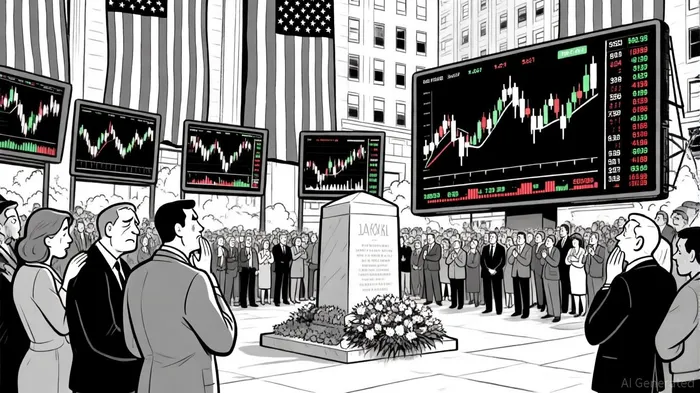
The assassination of conservative activist Charlie Kirk in September 2025 and the subsequent emotionally charged memorial service underscored the profound intersection of politics, investor psychology, and market dynamics. As tens of thousands gathered in Arizona to honor Kirk's legacy, the event amplified societal divisions and triggered speculative frenzies in financial markets. This analysis explores how politically charged events like these influence investor behavior through behavioral finance principles and highlights strategies for positioning in resilient sectors amid heightened volatility.
Behavioral Biases and Market Reactions
Emotionally charged political events often activate cognitive biases that distort investment decisions. Herding behavior, for instance, was evident in the surge of Charlie Kirk-themed crypto tokens such as $CHARLIE and $KIRK, which spiked over 500% in trading volume within hours of the shooting [2]. These meme coins, devoid of fundamental value, became symbols of ideological solidarity, driven by social media hype and collective action. Similarly, during the memorial, retail investors on platforms like Stocktwits attributed Tesla's stock performance to the symbolic reunion of Donald Trump and Elon Musk, illustrating how confirmation bias and recency bias can override rational analysis [4].
Loss aversion further exacerbates market swings. On the day of Kirk's assassination, the Dow Jones Industrial Average fell 0.48%, while the S&P 500 and NASDAQ showed mixed results [3]. Investors, fearing prolonged political instability, shifted capital toward defensive assets like gold, which rose 0.17% to $3,676 per ounce [3]. This flight to safety reflects the tendency to prioritize short-term risk mitigation over long-term growth—a pattern observed in prior crises, such as the 2020 pandemic and the 2021 Capitol riot [6].
Sector Volatility and Resilient Opportunities
While emotionally charged events amplify sector-specific volatility, certain industries demonstrate resilience. The technology sector, for example, maintained a "Marketperform" rating in September 2025, buoyed by strong earnings and innovation cycles [7]. The Nasdaq-100 surged 2.2% for the week ending September 21, 2025, as investors anticipated Federal Reserve rate cuts and continued to favor high-growth tech stocks [5]. This resilience contrasts with the underperformance of consumer discretionary and healthcare sectors during the immediate aftermath of Kirk's assassination, which saw declines as uncertainty dampened spending and regulatory optimism [3].
Healthcare and utilities also emerged as defensive plays during periods of political turmoil. These sectors, characterized by stable cash flows and low sensitivity to macroeconomic shifts, historically outperform during crises. For instance, during the 2024 U.S. presidential election cycle, healthcare stocks demonstrated lower volatility compared to cyclical sectors like industrials and materials [8]. Similarly, the energy sector benefited from geopolitical tensions and tariff-related policies, with oil and gas firms outperforming broader indices [5].
Strategic Positioning Amid Political Uncertainty
To mitigate the emotional and unpredictable impacts of politically charged events, investors should adopt a dual strategy:
1. Diversification into resilient sectors: Prioritize industries with structural growth drivers, such as technology, healthcare, and utilities, which are less susceptible to short-term political noise.
2. Behavioral safeguards: Leverage tools like AI-driven portfolio analytics to counteract biases such as herding and loss aversion. For example, platforms that provide real-time sentiment analysis can help investors avoid impulsive trades driven by social media trends [4].
The Federal Reserve's dovish pivot in September 2025—marked by a 25-basis-point rate cut—further supports a focus on long-term fundamentals. With two additional rate cuts anticipated by year-end, investors are incentivized to lock in gains in sectors poised to benefit from lower borrowing costs, such as real estate and infrastructure [5].
Conclusion
The Charlie Kirk memorial exemplifies how emotionally charged political events can amplify investor biases and sector volatility. While speculative frenzies in crypto and meme stocks highlight the risks of herding behavior, resilient sectors like technology and healthcare offer a counterbalance. By anchoring strategies in behavioral finance principles and structural growth trends, investors can navigate political uncertainty with discipline and foresight.







Comentarios
Aún no hay comentarios