
The Political Risks to U.S. Treasury Markets: Why Powell's Potential Ouster Could Trigger a Bond Market Crisis
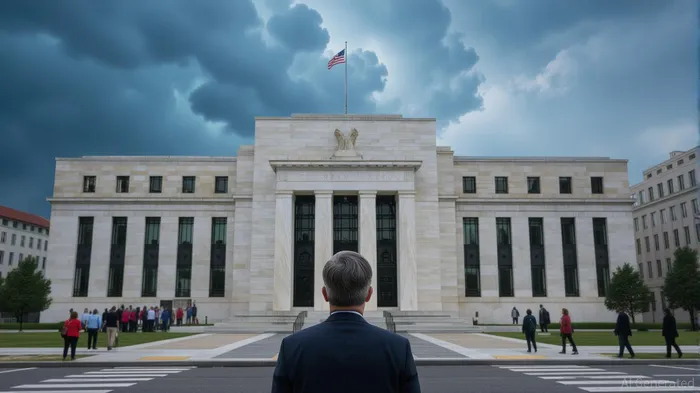
The Federal Reserve's independence has long been a cornerstone of U.S. economic policy, ensuring that monetary decisions are guided by data and economic fundamentals rather than political expediency. Yet in 2025, this independence faces its gravest threat in decades. The potential removal of Jerome Powell, the Fed's chair, by President Donald Trump has sparked a crisis of confidence in the markets, with far-reaching implications for Treasury yields, the U.S. dollar, and global capital flows.
Historical Precedents and the Fragility of Independence
The erosion of central bank autonomy is not unprecedented. In 1971, President Richard Nixon's pressure on the Fed to prioritize growth over inflation led to a decade of stagflation, a crisis that reshaped global economic policy. Nixon's actions—ending the gold standard and imposing wage-price controls—highlighted the dangers of political interference in monetary policy. Today, with the U.S. debt-to-GDP ratio at 130% and global markets more interconnected than ever, the risks of repeating history are amplified.
President Trump's public frustrations with Powell over the Fed's reluctance to cut interest rates have escalated from rhetorical attacks to concrete threats. While Trump has denied plans to fire Powell, internal discussions and mixed messaging from the White House have created uncertainty. The Fed's $2.5 billion headquarters renovation has become a lightning rod, with Trump and allies framing it as a potential grounds for removal under the “for cause” provision of the Federal Reserve Act. Legal scholars warn that such a move would likely face litigation, but the mere possibility is enough to unsettle markets.
Yield Volatility and the Dollar's Fragility
The bond market is already pricing in the risks of political interference. Deutsche Bank's analysis suggests that a loss of Fed credibility could trigger a 30–40 basis point jump in Treasury yields, with the dollar depreciating by 3–4%. This would exacerbate inflationary pressures, as a weaker dollar drives up import costs and erodes the real returns of Treasuries. The 10-year yield has already risen by 60 basis points since September 2024, despite three rate cuts by the Fed, reflecting investor skepticism about the central bank's ability to act independently.
The yield curve inversion—a sign of recessionary fears—further underscores the tension between the Fed's policy goals and political pressures. If the Fed is forced to prioritize short-term political demands over long-term stability, the result could be a self-reinforcing cycle of higher inflation and higher yields, eroding the credibility of the dollar as a global reserve currency.
Portfolio Reallocation Strategies for a Volatile Era
Investors must adapt to this new reality by rebalancing portfolios to mitigate political risks. Here are key strategies:
Inflation-Linked Bonds as a Hedge: Treasury Inflation-Protected Securities (TIPS) and ETFs like the iShares TIPS ETF (TIP) offer protection against rising inflation. With breakeven inflation rates at 2.3% for the 10-year TIPS, these instruments are critical for preserving purchasing power in an environment of policy uncertainty.
Shorter Duration Bonds for Stability: Reducing exposure to long-dated Treasuries can limit interest rate risk. Short-term instruments like the iShares 1–3 Year Treasury Bond ETF (SHY) have outperformed the 10-year Treasury by 2% annually since 2020, offering a safer harbor in volatile markets.
Global Diversification to Offset Dollar Weakness: Shifting toward global fixed income, such as the WisdomTree Emerging Markets Local Debt Fund (ELD), can capitalize on a weaker dollar while diversifying risk. This strategy also reduces reliance on U.S. markets, which are increasingly politicized.
Monitoring Policy Signals: Investors should closely track indicators of the Fed's independence, including the USD Index and the MOVE index (a volatility gauge for Treasury yields). A spike in the probability of Powell's removal—currently at 19% on Polymarket—could trigger a sharp sell-off in bonds.
The Broader Implications for the U.S. Dollar
The dollar's decline in 2025—a 4.9% drop since April—reflects growing concerns over U.S. trade policies and political instability. Foreign investors, including Japanese domestic holders, have become net sellers of foreign bonds for six consecutive weeks, signaling a shift in capital flows. While official central bank holdings of Treasuries remain stable, private sector reallocation is already underway.
A further erosion of the dollar's status as the global reserve currency would have cascading effects. Higher borrowing costs, reduced foreign demand for Treasuries, and a weaker U.S. export sector could all follow. For investors, this means the dollar's traditional role as a safe haven is no longer guaranteed.
Conclusion: Navigating the New Normal
The potential removal of Powell is not merely a political spectacle—it is a test of the Fed's institutional resilience. While the legal and political barriers to removal remain formidable, the mere threat has already introduced volatility into markets. Investors must act now to protect portfolios against a future where central bank independence is compromised.
By prioritizing inflation-linked bonds, short-duration instruments, and global diversification, investors can hedge against the risks of a politicized Fed. The coming months will determine whether the U.S. can preserve the integrity of its monetary institutions—or face the consequences of a system undermined by political interference.







Comentarios
Aún no hay comentarios