
Political Risk and Market Sentiment: How Criminal Justice Debates Shape Investor Behavior
The intersection of politics and markets has never been more volatile. As investors grapple with the ripple effects of high-profile criminal cases and death penalty debates, the lines between societal values, legal reforms, and financial performance are blurring. From the fallout of corporate scandals to the moral calculus of capital punishment, these issues are reshaping sector dynamics and investor sentiment in ways that demand closer scrutiny.
The ESG Backlash and Criminal Justice Reforms
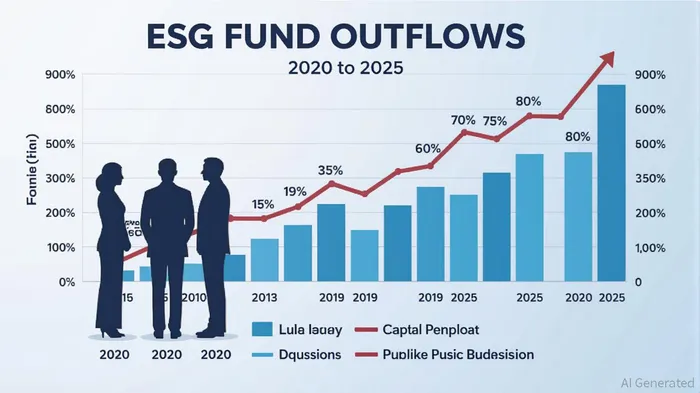
The past five years have seen a seismic shift in ESG investing, with 2024 marking a record $19.6 billion in outflows from U.S. sustainable funds[1]. This exodus was fueled by political backlash, greenwashing accusations, and underperformance against traditional portfolios. Yet, the roots of this trend run deeper. Criminal justice reforms—particularly the growing abolitionist movement against the death penalty—have amplified ESG's social governance (G) component.
Take Texas, for example. The state's historic decline in death sentences and executions—from 18 in 2020 to just 25 in 2024[2]—reflects a broader societal shift toward alternatives like life without parole. Investors are taking note. Companies perceived as aligning with progressive criminal justice policies, such as those advocating for prison reform or reducing racial disparities in sentencing, have seen inflows in niche ESG funds. Conversely, firms tied to industries profiting from mass incarceration (e.g., private prison operators) face mounting pressure from activist shareholders[3].
High-Profile Scandals and Sector Volatility
While the death penalty debate plays out in courtrooms and legislatures, corporate criminal cases deliver immediate market shocks. The Danske Bank money laundering scandal (€200 billion in illicit transactions) and Wirecard's €1.9 billion fraud exemplify how legal misconduct erodes trust and triggers sector-wide corrections. In 2024, the financial services sector saw a 12% drop in ESG fund allocations following these scandals, as investors recalibrated risk models to account for governance failures[4].
The ripple effects extend beyond banking. The 1MDB scandal in Malaysia, which cost Goldman SachsGS-- a $2.5 billion fine, underscored the vulnerability of global markets to regulatory enforcement actions. These cases highlight a critical truth: investors now price in the reputational and legal risks of corporate malfeasance, often before regulators act[5].
Death Penalty Costs and Investor Calculus
The financial burden of capital punishment is another wildcard. Studies show that capital trials cost counties an average of $2.3 million per case—far exceeding the costs of life imprisonment[6]. These figures, coupled with the prolonged appeals process (22 years on average[7]), have made states increasingly wary of pursuing death sentences. For investors, this translates to a reevaluation of public sector budgets and insurance liabilities tied to legal systems.
Meanwhile, the global push to abolish the death penalty—led by countries like Zimbabwe and Malaysia—has created a new axis for ESG alignment. Funds prioritizing human rights metrics have redirected capital toward jurisdictions with progressive judicial reforms, while divesting from nations retaining capital punishment[8].
Navigating the New Landscape
For investors, the takeaway is clear: political risks tied to criminal justice debates are no longer abstract. They manifest in ESG fund flows, sector rotations, and regulatory shifts. The key is to balance short-term volatility with long-term trends.
- Defensive Sectors: Defensive sectors like healthcare and utilities may benefit from stable ESG allocations, as investors seek refuge from the turbulence of reform-driven markets.
- Legal and Financial Services: Firms specializing in criminal justice reform consulting or compliance software could see growth as governments and corporations adapt to stricter governance standards.
- ESG Rebranding: With ESG under scrutiny, companies must prioritize transparency. Those that proactively address criminal justice issues—such as reducing biases in hiring or advocating for fair sentencing—will likely outperform peers.
Conclusion
The markets are no longer insulated from the moral and legal debates shaping society. As high-profile criminal cases and death penalty controversies continue to dominate headlines, investors must integrate these factors into their risk assessments. The future belongs to those who recognize that political risk is not just about policy—it's about people, values, and the evolving cost of justice.







Comentarios
Aún no hay comentarios