
Political Risk and High-Net-Worth Asset Allocation: Navigating Legal and Reputational Vulnerabilities in 2025
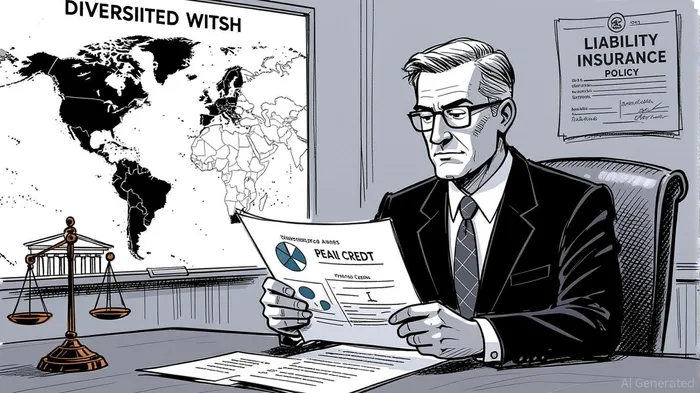
The legal and reputational vulnerabilities of public figures have emerged as critical factors reshaping high-net-worth asset allocation strategies in 2025. Recent high-profile cases, such as E. Jean Carroll v. Donald Trump, underscore the escalating financial and legal risks faced by individuals in the public eye—and by extension, the broader implications for insurance markets and investment portfolios.
Legal Liabilities and the Erosion of Immunity
The U.S. Second Circuit Court of Appeals’ rulings in E. Jean Carroll v. Trump have set a precedent with far-reaching consequences. In 2024, the court upheld an $83.3 million defamation award against TrumpDJT--, rejecting his claims of presidential immunity and emphasizing that defamatory statements made by public figures carry significant punitive and compensatory risks [1]. A separate $5 million verdict for sexual abuse and defamation was similarly upheld, with the court ruling that evidence of Trump’s past misconduct was admissible and relevant [2]. These decisions signal a judicial shift toward holding public figures accountable for reputational harm, even when their statements intersect with political power.
For high-net-worth individuals, the takeaway is clear: reputational damage is no longer a peripheral risk. According to a report by Reuters, defamation awards against public figures have surged by 200% since 2020, with plaintiffs increasingly leveraging social media’s amplification effect to escalate claims [3]. This trend has forced insurers to reevaluate coverage models, particularly for liability policies that traditionally excluded political or reputational claims.
Insurance Industry Adaptation: From Gaps to Specialization
The insurance sector is responding to these legal dynamics with a dual approach: tightening underwriting criteria and developing niche products. A 2025 analysis by WTW notes that high-net-worth clients are now being required to disclose more granular details about their public exposure, including social media activity and media engagement [4]. Insurers are also introducing higher premiums for defamation liability coverage, with some policies explicitly excluding claims arising from political commentary or public disputes [5].
However, the demand for tailored solutions is growing. For instance, cyber-reputation insurance—covering costs related to online defamation, data breaches, and crisis management—is gaining traction. A case in point is the Citizens Insurance controversy, where policyholders challenged the company’s arbitration practices, highlighting the need for transparent and equitable dispute resolution mechanisms [6]. Insurers that fail to adapt risk losing market share to fintech-driven alternatives offering agile, modular coverage.
Asset Allocation Strategies: Diversification and Resilience
High-net-worth individuals are recalibrating their portfolios to mitigate political and legal risks. According to BlackRock’s 2025 Geopolitical Risk Dashboard, 68% of ultra-wealthy investors have increased allocations to politically neutral markets such as Southeast Asia, India, and Latin America [7]. These regions are perceived as less susceptible to U.S.-China trade tensions and domestic political volatility.
The concept of “fortress portfolios” is also gaining prominence. These strategies prioritize cross-border diversification, real assets (e.g., infrastructure, agriculture), and jurisdictional flexibility to withstand prolonged legal or geopolitical shocks. For example, investors are structuring trusts in jurisdictions with robust privacy laws (e.g., Singapore, Switzerland) to shield assets from potential litigation in high-risk regions [8].
Tax structures are another focal point. With regulatory shifts in the U.S. and Europe, investors are adopting dynamic frameworks that allow rapid reconfiguration in response to policy changes. A 2025 Axios analysis notes that Trump’s defamation lawsuits against media outlets—part of a broader trend of forum shopping—have prompted investors to scrutinize the legal environments of their holdings more rigorously [9].
The Interplay of Legal, Insurance, and Investment Trends
The E. Jean Carroll cases exemplify how legal outcomes can ripple across sectors. The $83.3 million award, for instance, has not only strained Trump’s personal finances but also influenced how insurers assess political risk. As noted by Forbes, the prolonged appeals process has highlighted the uncertainty inherent in defamation litigation, prompting insurers to incorporate probabilistic models that account for the duration and complexity of legal battles [10].
For investors, the lesson is twofold: first, to allocate capital toward assets with intrinsic resilience (e.g., private credit, hedge funds) and, second, to integrate legal risk assessments into due diligence. The rise of AI-driven compliance tools is aiding this process, enabling real-time monitoring of reputational threats and regulatory changes.
Conclusion
The convergence of legal accountability, insurance innovation, and strategic asset allocation is defining the 2025 investment landscape. High-net-worth individuals must now treat reputational and political risks as core components of their wealth management frameworks. As courts continue to redefine liability boundaries and insurers adapt to new risk profiles, the ability to anticipate and hedge against these vulnerabilities will separate resilient portfolios from those exposed to systemic shocks.
Source:
[1] Appeals court upholds E. Jean Carroll's $83 million award against Trump [https://san.com/cc/appeals-court-upholds-e-jean-carrolls-83-million-award-against-trump/]
[2] Trump loses appeal of E. Jean Carroll $5-million defamation verdict [https://www.reuters.com/legal/trump-loses-appeal-e-jean-carroll-5-million-defamation-verdict-2024-12-30/]
[3] Defamation Lawsuits Are on the Rise [https://www.newsweek.com/donald-trump-rudy-giuliani-johnny-depp-defamation-libel-cases-mike-lindell-alex-jones-1941397]
[4] IMR 2025 Spring Update – Personal Lines [https://www.wtwco.com/en-us/insights/2025/05/insurance-marketplace-realities-2025-spring-update-personal-lines]
[5] High Net Worth Risks [https://riskandinsurance.com/high-net-worth-risks/]
[6] Citizens Insurance targeted in lawsuits that seek to void forced ... [https://www.yahoo.com/news/articles/citizens-insurance-targeted-lawsuits-seek-110000994.html]
[7] Geopolitical Risk Dashboard | BlackRock InvestmentBKN-- Institute [https://www.blackrockBLK--.com/corporate/insights/blackrock-investment-institute/interactive-charts/geopolitical-risk-dashboard]
[8] Top 10 Private Wealth Trends – April 2025 [https://www.blacktowerfm.com/news/private-wealth-trends/]
[9] Trump's defamation and media litigation spikes [https://www.axios.com/2025/02/08/trump-media-defamation-lawsuits-spike]
[10] Trump must pay $83 million to E Jean Carroll after 'egregious' defamation [https://ca.news.yahoo.com/trump-must-pay-83-million-150342031.html]





Comentarios
Aún no hay comentarios