
Political and Regulatory Risk in U.S. Markets: Legal Actions Against Former Officials and Their Impact on Investor Sentiment and Sector Volatility
The 2024–2025 period in U.S. markets was defined by a confluence of high-profile legal actions against former officials and aggressive trade policies, creating a volatile environment for investors. These developments, particularly those involving former President Donald Trump, underscored the interplay between political uncertainty and market dynamics. As legal proceedings unfolded and regulatory frameworks evolved, investor sentiment and sector volatility indices reflected the growing unease.
Legal Uncertainty and Market Volatility
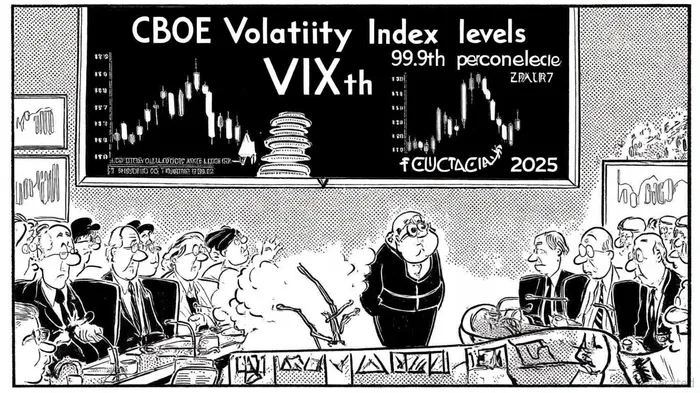
The conviction of Donald Trump in the New York hush money case marked a historic first for a former U.S. president, yet the lack of incarceration and ongoing appeals left a cloud of uncertainty over the legal landscape. Simultaneously, the stalling of the Georgia election interference case and the dismissal of federal charges post-re-election highlighted the fragility of legal accountability in politically charged environments. These developments coincided with a sharp rise in the CBOE Volatility Index (VIX), which surged over 80% following Trump's re-election and subsequent tariff announcements[1]. According to a report by Bloomberg, the VIX reached its highest levels since August 2024 amid fears of trade wars and economic instability[5].
The AAII Investor Sentiment Survey further illustrated this trend, with bearish sentiment peaking at 61% in February 2025—a level not seen since the 2022 market downturn[2]. This pessimism was fueled by the unpredictability of Trump's trade policies, including sweeping tariffs on imports from China, Canada, and Mexico. Legal challenges to these tariffs, such as the Court of International Trade's ruling deeming them “unlawful,” added another layer of uncertainty, prompting investors to hedge against potential market corrections[3].
Sector-Specific Impacts
The volatility was not evenly distributed across sectors. Energy and Financial Services benefited from deregulation and reduced regulatory burdens, with energy stocks gaining traction amid relaxed environmental policies[5]. Conversely, clean energy and electric vehicle (EV) industries faced headwinds as policy risks overshadowed long-term growth prospects. The Financials sector, in particular, saw a spike in default risk, rising from 0.4% to 2.3% by May 2025, as trade uncertainty eroded investor confidence[4].
Technology and AI-related stocks, which had previously driven market momentum, experienced a sharp reversal. Crowded trades in these sectors unwound as the S&P 500 dropped 11% in April 2025, with some tech stocks declining by up to 50%[4]. This shift was exacerbated by the Supreme Court's 2024 rulings, including the overturning of the Chevron doctrine, which emboldened businesses to challenge regulations and created regulatory ambiguity[1].
Geopolitical and Global Market Reactions
The ripple effects extended beyond U.S. borders. Global equity markets reacted negatively to Trump's re-election, with 21 out of 27 markets recording negative abnormal returns. Countries perceived as vulnerable to U.S. trade policies—Germany, France, and South Korea—saw the most pronounced declines, while markets in Russia and Israel experienced gains[3]. This divergence underscored the geopolitical risks embedded in Trump's trade agenda, which prioritized protectionism over multilateral cooperation.
Strategic Implications for Investors
For investors, the 2024–2025 period serves as a case study in navigating political and regulatory risk. The interplay between legal actions, trade policies, and market sentiment highlights the importance of diversification and hedging strategies. Sectors with high exposure to regulatory shifts, such as Financials and Technology, require closer scrutiny, while defensive sectors like Energy may offer relative stability.
Moreover, the role of volatility indices like the VIX as contrarian indicators cannot be overstated. As noted by the American Association of Individual Investors (AAII), extreme levels of bearish sentiment often precede market rebounds[2]. However, the prolonged uncertainty under Trump's administration suggests that traditional contrarian signals may be less reliable in an environment of sustained political instability.
Conclusion
The legal and regulatory turbulence of 2024–2025 has reshaped the U.S. market landscape, emphasizing the need for adaptive investment strategies. High-profile legal actions against former officials, coupled with aggressive trade policies, have amplified sector volatility and tested investor resilience. As the legal battles continue and regulatory frameworks evolve, investors must remain vigilant, leveraging tools like the VIX and AAII surveys to gauge sentiment shifts and anticipate market corrections.







Comentarios
Aún no hay comentarios