
Political Pressures on the Federal Reserve and the Retirement Savings Crisis: A Strategic Reallocation Imperative
The Federal Reserve's independence has long been a cornerstone of U.S. economic stability, shielding monetary policy from short-term political pressures. However, recent developments under President Donald Trump have reignited concerns about the politicization of the central bank. Trump's public demands for preemptive interest rate cuts and his appointment of loyal economic advisors to the Fed Board have created a climate of uncertainty, threatening to undermine the institution's credibility and long-term stability [1]. For retirees, whose financial security hinges on predictable inflation and stable markets, these pressures pose a direct risk to their savings and purchasing power.
Historical Precedents: The 1970s Stagflation Crisis
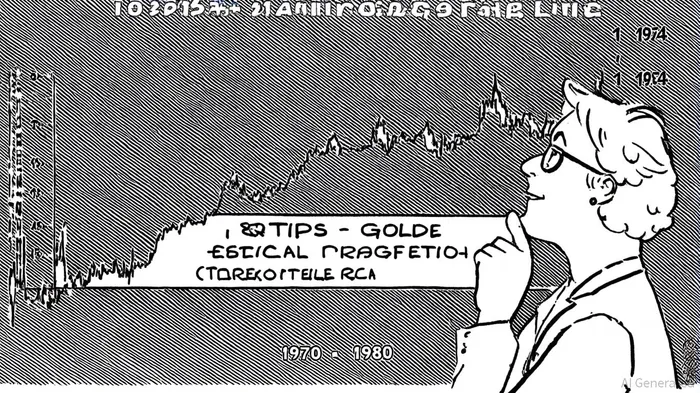
The 1970s offer a cautionary tale of how political interference in the Fed can exacerbate economic instability. President Richard Nixon's pressure on then-Fed Chair Arthur Burns to maintain low interest rates ahead of the 1972 election contributed to a surge in inflation, eroding the value of fixed-income investments and destabilizing retirement portfolios [2]. During this period, long-term U.S. Treasury bonds delivered negative real returns of approximately –3% annually, while retirees who shifted to inflation-resistant assets like gold and real estate fared significantly better. Gold, for instance, surged from $35/oz in 1970 to $850/oz in 1980, delivering a 2,300% nominal gain and a 9.2% real annual return [3]. Similarly, real estate investments, including REITs, provided a 4.5% real return as property values and rental income rose in tandem with inflation [3].
Current Risks for Retirees
Today's economic landscape mirrors elements of the 1970s, with inflation remaining stubbornly high and concerns about stagflation resurfacing. Trump's aggressive tariff policies and regulatory rollbacks have introduced volatility into markets, while his public attacks on Fed Chair Jerome Powell risk further politicizing monetary policy [4]. Retirees face a dual threat: rising inflation erodes the real value of Social Security benefits and pension payouts, while market turbulence threatens the value of retirement portfolios. For example, retirees with significant exposure to low-yield bonds or cash accounts may see their savings lose purchasing power as inflation outpaces returns [5].
Strategic Asset Reallocation: A Defensive Framework
To mitigate these risks, retirees must adopt a diversified, low-volatility investment strategy that prioritizes inflation protection and capital preservation. Key components include:
- Inflation-Linked Bonds: Treasury Inflation-Protected Securities (TIPS) adjust their principal with inflation, preserving purchasing power. During the 1970s, TIPS delivered a 3.0% real return, outperforming traditional bonds [3].
- Real Assets: Commodities like gold and real estate (including REITs) historically serve as hedges against inflation. Gold's 9.2% real return during the 1970s underscores its value in stagflationary environments [3].
- Low-Volatility Equities: Dividend-paying blue-chip stocks and low-volatility ETFs offer stability while generating income. The MSCI World Minimum Volatility Index has outperformed broader markets during six bear-market downturns since 1988 [6].
- Dynamic Rebalancing: Retirees should maintain a flexible asset allocation, adjusting exposure to equities, fixed income, and alternatives based on macroeconomic signals. A 7-asset portfolio (including U.S. stocks, international equities, real estate, commodities, bonds, and cash) achieved a 9.69% average annualized return from 1972–2021 with lower volatility than traditional 60/40 portfolios [7].
The Case for Proactive Hedging
Experts warn that delaying action could leave retirees vulnerable to sequence-of-returns risk, where poor market performance early in retirement depletes savings faster. For instance, a 60/40 portfolio during the 1970s stagflation period would have faced a 54% drop in inflation-adjusted spending under a Guyton-Klinger guardrails framework [7]. By contrast, conservative 30/70 portfolios or endowment-style allocations with alternative assets (e.g., 10–15% in multi-strategy funds) offer greater resilience [7].
Conclusion
The Federal Reserve's independence is not just an abstract principle—it is a practical safeguard against economic mismanagement. As political pressures intensify, retirees must act decisively to reallocate assets toward inflation-resistant and diversified strategies. By learning from historical precedents and adopting a proactive, data-driven approach, retirees can protect their savings from the fallout of policy-driven market turbulence.







Comentarios
Aún no hay comentarios