
Boletín de AInvest
Titulares diarios de acciones y criptomonedas, gratis en tu bandeja de entrada
The Federal Reserve's monetary policy in 2025 has been increasingly shaped by a volatile mix of political pressures and tariff-driven inflationary forces. As trade policies evolve under heightened geopolitical and domestic political scrutiny, the Fed faces a delicate balancing act: mitigating inflationary risks while supporting an economy grappling with labor market softness and supply chain disruptions. This analysis explores how these dynamics are reshaping rate-cutting strategies and evaluates the implications for equity and fixed income markets.
Tariff hikes on durable goods-such as vehicles, electronics, and furniture-have directly inflated consumer prices,
. By August 2025, tariffs accounted for 10.9% of headline PCE annual inflation, . These pressures, compounded by the Trump administration's April 2025 announcement of a 10% minimum tariff on imports, forced the Fed to recalibrate its approach. While the central bank cut the federal funds rate by 0.25% in October 2025 to address labor market weakness, , with future decisions hinging on data.The political calculus is clear: tariffs, often framed as tools for protecting domestic industries, have unintended second-order effects on inflation and economic stability.
, these policies have introduced "unusually elevated" uncertainty, complicating the Fed's dual mandate of price stability and maximum employment.The April 2025 tariff announcement triggered a sharp market selloff,
. Energy, financials, industrials, and materials sectors bore the brunt of the decline, as investors priced in higher corporate costs and reduced profit margins. , signaling heightened default risk.However, markets stabilized by June 2025,
. This recovery reflected a shift in investor focus from trade policy details to the Fed's potential rate cuts. By Q3 2025, fixed income markets had absorbed much of the initial shock, . The lesson for equity investors? Short-term volatility remains a risk, but nimble sector rotation-favoring resilient industries like technology and healthcare-can offset trade-related headwinds.Fixed income markets have demonstrated surprising resilience amid tariff-driven turbulence. The Bloomberg Aggregate Bond Index and Bloomberg Municipal Bond Index posted positive returns in Q3 2025 as investors flocked to high-quality, tax-exempt securities
. Treasury demand remained robust, with yields fluctuating in response to inflation fears and subsequent stabilization .The Fed's communication strategy has played a critical role in shaping market expectations. By explicitly acknowledging the "elevated uncertainty" from tariffs and industrial policies, officials have signaled a willingness to adapt policy to evolving conditions
. This transparency has helped anchor investor confidence, even as inflation remains above the 2% target.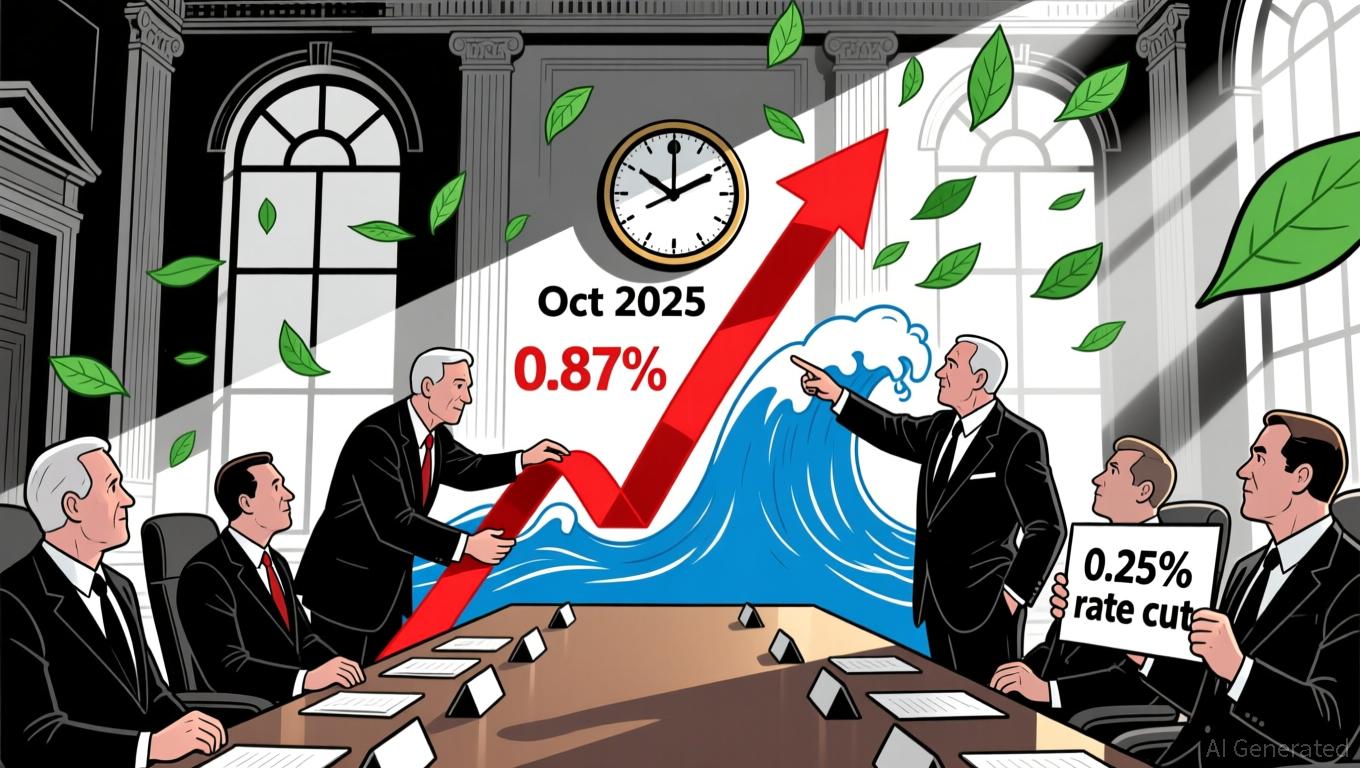
For equities, the primary risks stem from sector-specific vulnerabilities. Durable goods manufacturers and import-dependent industries face margin compression, while export-oriented sectors may benefit from retaliatory tariff scenarios. Conversely, technology and healthcare-less sensitive to trade policy-offer relative safety.
Fixed income investors, meanwhile, must navigate a landscape of shifting risk premiums. While Treasury demand is likely to persist, corporate bond yields could diverge based on sectoral exposure to tariff impacts. High-yield bonds in trade-sensitive industries may see wider spreads, whereas investment-grade bonds in resilient sectors could outperform.
The Fed's rate-cutting strategy in 2025 is increasingly entangled with political and trade policy dynamics. For investors, the key lies in hedging against volatility while capitalizing on sectoral and asset-class imbalances. As tariffs reshape global supply chains and inflation trajectories, those who anticipate these shifts-rather than react to them-will be best positioned to navigate the new normal.

Titulares diarios de acciones y criptomonedas, gratis en tu bandeja de entrada







Comentarios
Aún no hay comentarios