
U.S. Political Polarization and Market Volatility: Navigating Short-Term Asset Allocation Shifts
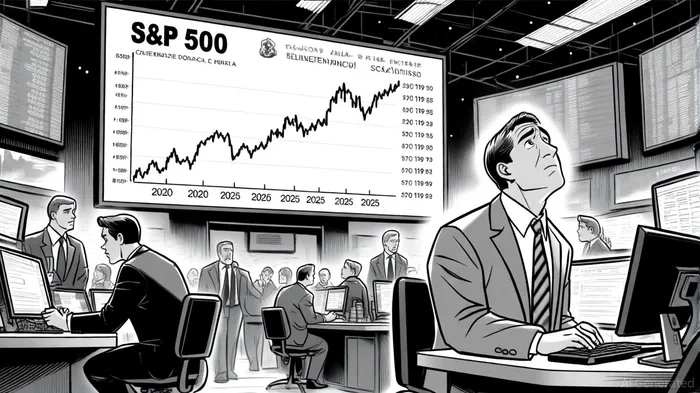
The U.S. political landscape has become a dominant force in shaping financial markets, with polarization driving volatility and reshaping asset allocation strategies. From the 2020 election to the 2025 AI regulation debates, investors have faced a landscape where partisan divides translate into policy uncertainty, regulatory shifts, and sector-specific risks. This article examines how political polarization influences short-term market dynamics and explores predictive frameworks to navigate these challenges.
The Mechanisms of Polarization-Driven Volatility
Political polarization amplifies market uncertainty through three primary channels: legislative gridlock, partisan investor behavior, and regulatory unpredictability. Studies show that pre-election months and election weeks are marked by abnormal volatility, with the Dow Jones Industrial Average and S&P 500 reacting sharply to political developments[2]. Legislative gridlock, as highlighted by the Special Eurasia report, delays fiscal policies and creates a “regulatory fog” that discourages long-term investments in sectors like technology and energy[2].
Retail investors, meanwhile, increasingly align portfolios with partisan preferences. For example, Republican-leaning investors boosted equity exposure after the 2016 election, while Democratic-leaning investors favored safer assets[3]. This “polarized market hypothesis” has led to overpricing of politically controversial stocks, creating a valuation premium that reflects ideological alignment rather than fundamentals[3].
Case Studies: Political Events and Market Reactions
2020 Election and Pandemic Recovery: The S&P 500 surged 16.3% in 2020, reflecting stability amid uncertainty[3]. However, the January 6, 2021 Capitol riotRIOT-- introduced volatility, with BitcoinBTC-- dropping sharply while traditional indices rose[4]. Firms that publicly condemned the event saw positive stock reactions, underscoring the role of corporate political activism[4].
2024 Trump Re-Election and Tariff Announcements: The first quarter of 2025 saw U.S. large-cap equities fall 5.63% as investors grappled with aggressive tariff proposals[4]. The VIX volatility index and 10-year Treasury yields spiked to the 99th percentile of historical levels, signaling heightened uncertainty[2]. Defensive stocks and safe-haven assets like gold gained traction during this period[4].
2025 AI Regulation Shifts: The Trump administration's deregulatory approach to AI created a “regulatory whiplash” for tech firms, forcing companies to choose between maintaining stringent risk protocols or adapting to a laxer framework[2]. Investors adopted cautious strategies, hedging against potential policy reversals and cross-border compliance challenges[2].
Predictive Models for Asset Allocation
To navigate this environment, investors are turning to advanced predictive models. A Duke University project combined ARIMA, GARCH, and Random Forest techniques to optimize portfolios during election cycles[1]. By encoding political scenarios (e.g., contested elections, party sweeps), the model generated asset allocations inversely proportional to predicted risk. For instance, a Republican sweep might favor tax-cut-driven sectors like industrials, while a Democratic sweep could tilt toward healthcare and renewables[2].
Machine learning models, such as LSTM networks and Support Vector Machines (SVMs), are also gaining traction. These tools identify nonlinear relationships in asset returns, enabling more accurate forecasts of sector rotations and bond-equity shifts[3]. For example, value stocks outperformed growth stocks by 11.64% in Q1 2025, a trend captured by hybrid models that integrate political variables[4].
Implications for Investors
The 2025 Asset Allocation Committee (AAC) anticipates a pro-business environment driven by easing inflation and lower policy rates[3]. However, uncertainties around fiscal policies and geopolitical tensions (e.g., the 2025 India-Pakistan conflict) necessitate disciplined strategies. Key recommendations include:
- Diversification: Balancing portfolios with defensive stocks and safe-haven assets during high-volatility periods.
- Hedging: Using derivatives to mitigate risks from regulatory shifts, particularly in tech and energy sectors.
- Scenario Planning: Stress-testing portfolios against partisan-driven policy outcomes, such as tax reforms or trade wars.
Conclusion
U.S. political polarization has become a defining feature of market volatility, with short-term asset allocation increasingly tied to partisan dynamics. By leveraging predictive models and historical case studies, investors can better navigate this fragmented landscape. As the 2025-2026 cycle unfolds, the ability to anticipate political-driven market shifts will be critical for maintaining resilience in an era of uncertainty.






Comentarios
Aún no hay comentarios