
The Political and Legal Risks of Immigration Policy Shifts and Their Impact on U.S. Investment Markets
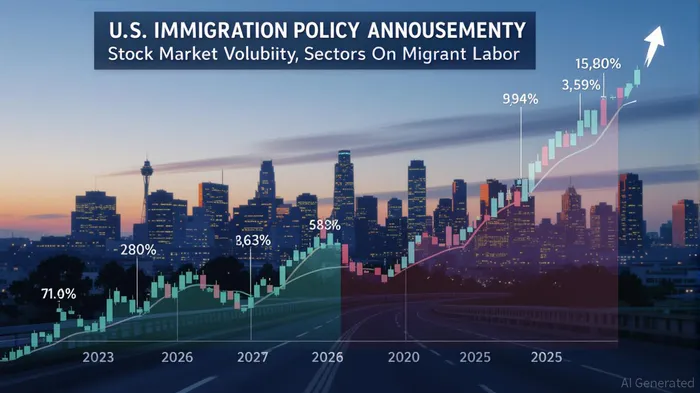
The U.S. immigration landscape in 2025 is a minefield of regulatory instability, and investors ignoring this volatility do so at their peril. Recent shifts in humanitarian parole policies—coupled with the looming shadow of Project 2025, a Heritage Foundation blueprint for sweeping immigration reforms—have created a perfect storm of uncertainty. This isn't just about border politics; it's about how sudden legal reversals and policy overhauls are shaking the foundations of labor-dependent industries and social policy funding, sending ripples through capital markets.
Regulatory Instability: A Recipe for Market Jitters
The revocation of humanitarian parole for migrants in 2025 has already triggered chaos in sectors like agriculture, hospitality, and construction, which rely heavily on migrant labor[4]. According to a report by the World Economic Forum, geopolitical instability and policy shifts are among the top global risks in 2025[2]. While specific court rulings on parole revocations remain elusive, the broader context is clear: businesses are scrambling to adapt to a rapidly changing legal environment. For example, the Heritage Foundation's Project 2025—a policy framework advocating for mass deportations and stricter immigration enforcement—has amplified fears of a labor shortage crisis[3].
This regulatory whiplash isn't just theoretical. Companies in the agricultural sector, which employs over 1.2 million migrant workers, are already seeing rising operational costs as they invest in automation and training for domestic labor pools[4]. Investors in agribusiness or hospitality should be wary: a sudden shift in policy could force companies to burn through cash reserves to stay compliant, eroding profit margins.
Sector-Specific Vulnerabilities
The hospitality and construction industries are particularly exposed. A Reuters analysis highlights how the U.S. return to Trump-era tariffs in 2025 has disrupted global supply chains, compounding the strain on labor-dependent sectors[1]. For instance, hotels and restaurants face a dual threat: higher material costs from tariffs and a shrinking workforce due to immigration crackdowns. This creates a feedback loop of rising prices and reduced output, which could trigger a slowdown in consumer-driven sectors.
Meanwhile, social policy funding—already under siege from conservative policy agendas—risks further erosion. Project 2025's push to dismantle federal agencies like the Department of Education and restrict DEI programs[3] signals a broader ideological shift. Investors in education technology or social services should brace for shrinking public funding and regulatory hurdles.
Hedging Against Policy-Driven Volatility
The key takeaway? Investors must treat immigration policy shifts as a macroeconomic risk, not a political talking point. Here's how to hedge:
1. Diversify Exposure: Reduce holdings in sectors like agriculture and hospitality unless you're betting on companies with robust automation strategies.
2. Short-Term Treasuries: In times of regulatory uncertainty, cash and short-term bonds offer a safe haven.
3. : Counterbalance the rightward policy drift by investing in ESG-focused portfolios, which may gain traction as public backlash against anti-DEI policies grows[3].
The Bottom Line
Immigration policy isn't just a social issue—it's a market-moving force. As legal battles over humanitarian parole and broader policy agendas like Project 2025 unfold, investors must stay ahead of the curve. Regulatory instability isn't a temporary blip; it's a structural risk that demands proactive portfolio adjustments. In this climate, the mantra is simple: Don't bet on stability. Hedge for chaos.







Comentarios
Aún no hay comentarios