
Political Instability and Venezuela's Investment Risk Landscape
, , sustained a single spinal fracture during a delayed boat journey to Oslo for her Nobel Peace Prize, according to a Norwegian report. This physical risk underscores broader investor safety concerns in Venezuela's unstable environment. The injury reflects operational dangers that could extend to business assets and personnel in 2025.
Machado's advocacy for intensified sanctions signals escalating international tensions, creating compliance and operational barriers. She reiterated support for U.S. pressure on , advocating for international legal actions to escalate costs for the regime. Such measures increase regulatory uncertainty and complicate cross-border operations, forcing businesses to navigate heightened political frictions and potential asset freezes. The injury context-sustained during a high-risk escape-exemplifies the volatile conditions that could disrupt supply chains, personnel safety, and foreign investment flows.
Structural Economic Constraints on Cash Flows
The absence of a credible opposition voice in Venezuela further isolates the government from constructive economic feedback, hindering meaningful reform. However, the nation's immediate cash flow crisis stems directly from profound structural failures. peaked at a staggering 190% in 2023, .
Such extreme inflation rapidly devalues all domestic revenue streams. Companies receive payments in pesos that lose significant purchasing power almost immediately, making it nearly impossible to cover even basic operational costs like payroll or supplier invoices. Simultaneously, servicing the colossal $150 billion debt consumes an enormous portion of government cash outflows, diverting funds that might otherwise support essential public services or infrastructure. This debt burden also severely restricts the government's ability to access international credit markets, further crippling its cash position.
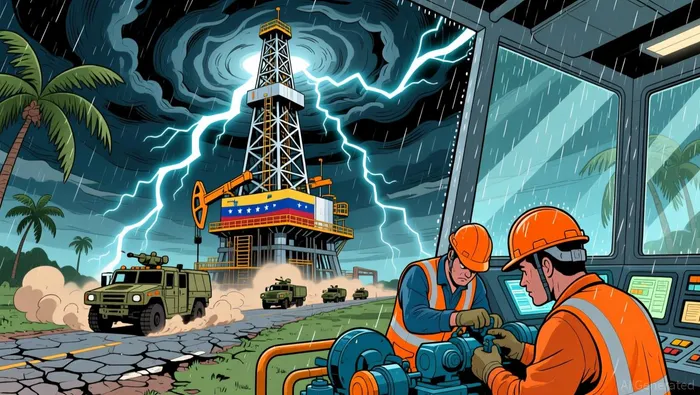
Furthermore, this toxic combination of runaway inflation and crushing debt erodes compliance capacity at every level. Businesses struggle to maintain accurate financial records in a collapsing currency, hindering tax collection and regulatory reporting. The state itself lacks the cash reserves needed to enforce regulations effectively or invest in the institutions necessary for a stable business environment. The economy's heavy reliance on volatile oil exports, combined with persistent political instability and renewed sanctions, creates an environment where long-term planning and reliable cash flow forecasting become nearly impossible, deterring vital investments needed for recovery.
Venezuela's Oil Investment Dilemma
according to Reuters commentary. , . This dramatic fall stems partly from PDVSA's decay under military control, which has prioritized political loyalty over operational competence. Deteriorating infrastructure compounds the problem, making the country's hydrocarbon potential largely theoretical for now.
Current governance creates severe operational hurdles. Military entanglement in oil operations undermines technical expertise and investor confidence. U.S. sanctions and reluctance to intervene militarily further deter foreign capital, leaving the reserves untapped despite their global significance. The risk of supply disruptions from ongoing instability makes near-term recovery highly uncertain.
Speculative scenarios suggest a pro-Western transition could change this equation. Such a shift might ease sanctions, . However, this outcome remains contingent on unpredictable political change and faces OPEC+ production constraints. Even if sanctions lift, rebuilding requires years of stable governance foreign investors cannot count on today.
Short-term volatility and infrastructure delays remain the primary concerns. Military intervention risks, while potentially unlocking long-term gains, could trigger immediate supply shocks and price spikes. Investors must weigh the theoretical upside against the near-term reality: without resolving governance decay and military interference, the required billions won't flow. , but the immense political and operational friction blocking progress.
Venezuela: Elevated Risk Thresholds
Venezuela's economic vulnerabilities now sit at dangerously high levels, creating unacceptably risky conditions for investment. , . This combination of crippling inflation and massive debt severely undermines the country's economic stability and repayment capacity, demanding extreme caution.
Further complicating the outlook, PDVSA's operations face significant compliance red flags. The company's deep entanglement with military interests creates heightened political and reputational risk for any potential investors. Simultaneously, the ongoing humanitarian crisis, including mass refugee outflows, signals severe governance failures that increase exposure to secondary sanctions and complex regulatory scrutiny.
Investors must therefore monitor two key triggers before reconsidering exposure. The first is any shift in US sanctions enforcement policy toward Venezuela, which could alter the operational landscape unexpectedly. The second is the trajectory of political developments surrounding the 2026 election, as this will be a critical determinant of future governance stability. Until these thresholds provide clearer signals of reduced risk, a defensive posture remains essential.







Comentarios
Aún no hay comentarios