
Political Instability and State-Level Investment Climates: The Role of Leadership in Shaping Market Sentiment and Public Trust
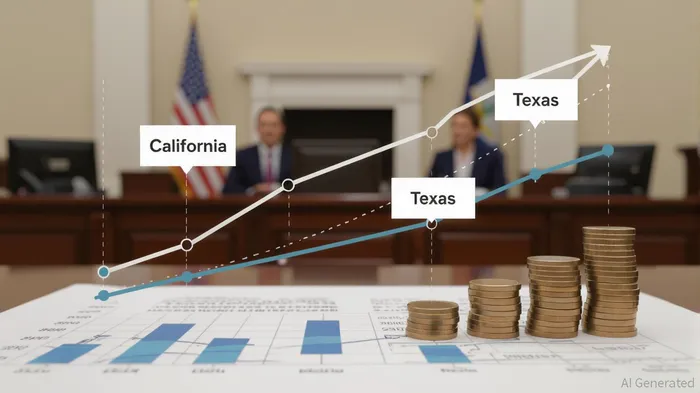
Political instability at the state level has emerged as a critical determinant of investment climates, with leadership responses to crises serving as a linchpin for market sentiment and public trust. As global crises—from pandemics to climate disruptions—reshape economic landscapes, the quality of governance has become a decisive factor in attracting capital and sustaining investor confidence. This analysis examines how leadership strategies during crises influence trust metrics, market volatility, and investment flows, drawing on empirical evidence from U.S. states post-2020.
Leadership and Public Trust: A Fragile Equilibrium
Public trust in governance is a cornerstone of stable investment climates. During crises, leadership actions directly shape perceptions of institutional reliability. For instance, states that implemented transparent, science-based pandemic responses—such as California's early lockdowns and mask mandates—saw higher public trust retention compared to states with inconsistent policies [1]. Conversely, delayed or politicized responses, as observed in Texas, correlated with declining trust levels, particularly among populations reliant on government services [2].
Quantitative studies further underscore this dynamic. A 2024 analysis revealed that when states exceeded a government response threshold of 63.59 (measuring policy stringency), investor sentiment significantly influenced financial institution stock returns, suggesting a direct link between perceived leadership competence and market confidence [3]. This threshold effect highlights the nonlinear relationship between governance and trust, where even minor deviations in policy clarity can amplify uncertainty.
Market Sentiment: The Double-Edged Sword of Crisis Leadership
Market sentiment, a barometer of investor behavior, is deeply intertwined with leadership narratives during crises. During the pandemic, states with proactive climate policies—such as Washington's coal-free grid mandate—experienced heightened ESG (Environmental, Social, and Governance) investment inflows, driven by perceived regulatory stability [4]. In contrast, states with fossil fuel-dependent economies, like West Virginia, faced capital outflows as investors anticipated policy conflicts and stranded asset risks [5].
The interplay between leadership and market volatility is further illustrated by the CUSP database, which tracks state-level pandemic interventions. States that rapidly expanded unemployment benefits and eviction moratoria saw reduced stock market volatility, as investors interpreted these actions as signals of economic resilience [6]. However, inconsistent messaging from state leaders—such as mixed guidance on mask mandates—correlated with higher market uncertainty, deterring long-term investment [7].
Case Studies: Pandemic Responses and Climate Policy Shifts
The divergence in state-level leadership during the pandemic offers a stark contrast in investment outcomes. California's aggressive public health measures, coupled with renewable energy incentives under the Inflation Reduction Act (IRA), attracted $12 billion in clean energy investments by 2024 [8]. Conversely, states like Florida, which resisted federal climate guidelines and prioritized short-term economic gains, experienced slower adoption of green infrastructure, deterring ESG-focused capital [9].
Climate policy shifts further exemplify this trend. Post-2020, 24 states pledged to uphold the Paris Agreement's goals despite federal inaction, creating a patchwork of regulatory environments. States with robust climate action plans—such as New York's Climate Leadership and Community Protection Act—saw a 15% increase in private-sector clean energy projects compared to states with fragmented policies [10]. This underscores how leadership in aligning with global sustainability trends can catalyze investment.
Investment Implications: Navigating the Leadership Landscape
For investors, the quality of state-level leadership has become a critical risk factor. States with cohesive crisis responses and long-term climate strategies are increasingly viewed as “safe havens” for capital, particularly in sectors like renewable energy and infrastructure resilience. Conversely, states marked by political polarization and inconsistent governance face higher discount rates, as investors demand compensation for regulatory uncertainty [11].
The U.S. Department of State's 2024 Investment Climate Statements emphasize the need for transparent, predictable policy frameworks to sustain investor interest [12]. This aligns with empirical findings that states leveraging collaborative governance models—such as California's partnerships with private firms like Volkswagen and Rivian—achieve superior investment outcomes [13].
Conclusion
Political instability at the state level is no longer an abstract risk but a tangible determinant of investment success. Leadership responses to crises—whether pandemic mitigation or climate adaptation—directly shape public trust and market sentiment, with cascading effects on capital flows. As the U.S. continues to navigate overlapping crises, investors must prioritize states that demonstrate agility, transparency, and alignment with global sustainability goals. In this evolving landscape, leadership is not just a political asset but a financial imperative.







Comentarios
Aún no hay comentarios