
Political Instability in Peru and Its Impact on Emerging Market Investments
Political instability in Peru has become a defining feature of its economic and political landscape since 2023, with profound implications for emerging market investments. The country's reliance on commodity exports-particularly copper, gold, and silver-places it at a crossroads where governance crises, social unrest, and institutional erosion collide with global market dynamics. For investors, navigating this environment requires a nuanced assessment of both risks and opportunities.
Risks: Governance Crises and Commodity Market Volatility
Peru's political instability has been marked by a rapid succession of leaders, with six presidential changes in seven years as of 2025, according to an Allianz country risk report. President Dina Boluarte, who assumed office following the 2022 removal of Pedro Castillo, faces a staggering 93% disapproval rating, according to an FTI Consulting update, reflecting deep public distrust in institutions. This erosion of legitimacy has been compounded by a security crisis, including record homicide rates and high-profile assassinations, such as that of cumbia singer Paul Flores, as noted by FTI Consulting. The government's failure to address these issues has led to protests, including the Marcha de Paz in March 2025, and a state of emergency in Lima, according to the same FTI Consulting update.
The mining sector, which contributes approximately 10% of Peru's GDP, is particularly vulnerable, according to a U.S. State Department report. Over 78 active social conflicts were reported in 2024, per the U.S. State Department, with Indigenous communities protesting against mining operations. These disputes have delayed projects and increased operational costs for firms like Anglo American and BHP, which rely on Peru's mineral wealth. According to FTI Consulting, political volatility has deterred foreign direct investment (FDI), with Peru ranking 121st out of 180 countries in Transparency International's 2023 Corruption Perceptions Index (as cited by the U.S. State Department report).
The institutional framework has further weakened, with Congress passing controversial laws that undermine oversight of corruption and organized crime, reported in a UPI article. This mirrors patterns seen in Ecuador, where democratic erosion fueled public unrest, according to the UPI piece. The approval of a constitutional reform to transition to a bicameral Congress in 2025 (noted by FTI Consulting) has done little to restore confidence, as public trust in political institutions remains at historic lows, the UPI report observes.
Opportunities: Resilience in Economic Fundamentals
Despite these challenges, Peru's economic fundamentals have shown resilience. GDP growth is projected to remain around 3% in 2025, as highlighted in the Allianz country risk report, supported by robust private consumption and buoyant exports. The Central Reserve Bank of Peru (BCRP) has maintained macroeconomic stability, with low inflation and manageable interest rates, according to the U.S. State Department report. Strategic infrastructure projects, such as the Chancay Port-a $1.2 billion investment by China's Cosco Group-highlight Peru's potential to enhance connectivity and attract long-term capital (noted by Allianz).
The mining sector's strategic importance to global markets offers another opportunity. As the second-largest copper producer globally (Allianz), Peru's output directly influences global commodity prices. While social conflicts have caused short-term disruptions, the sector's long-term demand remains strong, particularly as green energy transitions drive copper demand. Investors with a long-term horizon may find value in firms that navigate local challenges through community engagement and sustainable practices.
Navigating the 2026 Elections: A Pivotal Moment
The 2026 general elections, scheduled for April 12 (per FTI Consulting), represent a critical inflection point. A fragmented political landscape-with 43 presidential candidates and nearly 15,000 congressional hopefuls (reported by UPI)-suggests no clear winner. However, the elections could catalyze reforms if voters prioritize candidates with anti-corruption platforms. The government's enforcement of neutrality in state-run media and electoral campaigns under Article 192 of the Organic Law of Elections (noted by FTI Consulting) may also bolster institutional credibility, albeit modestly.
For investors, the key will be hedging against short-term volatility while capitalizing on structural opportunities. Diversifying exposure to sectors less sensitive to political risk-such as agriculture or technology-could mitigate mining sector vulnerabilities. Additionally, partnerships with local stakeholders who understand the social and regulatory landscape may enhance project viability.
Conclusion
Peru's political instability presents a complex risk-reward profile for emerging market investors. While governance crises and social conflicts pose immediate threats to commodity-driven economies, the country's economic resilience and strategic assets offer long-term potential. Success will depend on navigating institutional weaknesses, engaging with local communities, and timing investments around the 2026 elections-a moment that could either deepen instability or pave the way for reform.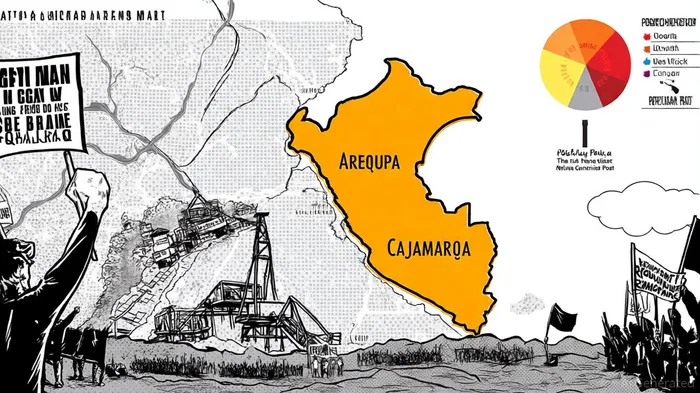







Comentarios
Aún no hay comentarios