
Political Instability in France and Its Impact on Global Markets: Assessing Investment Risk and Opportunity in Europe Amid Governance Uncertainty
France's political crisis has deepened into a full-blown governance emergency, with Prime Minister Sébastien Lecornu resigning just hours after forming his cabinet on October 6, 2025, according to a Reuters report. This marks the latest in a series of government collapses since 2022, as President Emmanuel Macron's minority administration struggles to navigate a fragmented parliament and a far-right National Rally (RN) surging in polls. The resulting policy gridlock-exemplified by stalled fiscal reforms and a 5.4% budget deficit-has triggered a cascade of economic and market repercussions, as Le Monde reported. For investors, the question is no longer whether France's instability will ripple outward, but how far and how fast.
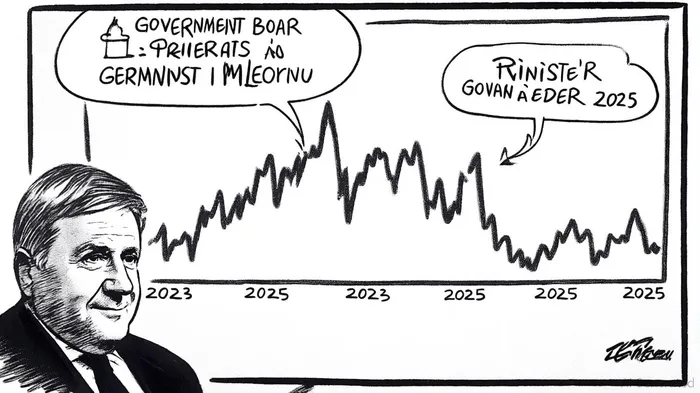
The Political Quagmire: A Recipe for Economic Uncertainty
Macron's gamble on a centrist coalition has backfired spectacularly. With no party holding a majority, the president has resorted to a series of short-lived prime ministers, including Michel Barnier and François Bayrou, both of whom fell over budget disputes, as Reuters documented. The current crisis, compounded by a 2027 presidential election race already fracturing party alliances, has left France without a functioning government. As one analyst notes in a CNN article, "The political system is now a self-fulfilling prophecy of dysfunction."
This instability has direct economic consequences. France's public debt is projected to hit 118% of GDP in 2025, with government spending consuming 57% of GDP-a level unsustainable without growth, Euronews reported. The European Commission has already placed France under an excessive deficit procedure, warning that delayed reforms could force a harsher fiscal consolidation path. Meanwhile, the ECB's Transmission Protection Instrument (TPI) remains on standby, but its use hinges on Paris meeting reform criteria-a prospect dimmed by political chaos, as reported by Euronews.
Market Reactions: Bonds, Equities, and the Euro Under Pressure
The financial markets have priced in significant risk. French 10-year bond yields have widened to 86 basis points over German Bunds-the highest since the 2024–2012 eurozone crisis, according to Euronews's coverage. This spread reflects not just fiscal concerns but a loss of confidence in governance. The CAC 40 index, now below 8,000, has underperformed global peers, with banking stocks like Société Générale down 20% year-to-date, as Le Monde observed.
The euro, too, has suffered. Against the U.S. dollar, it has depreciated nearly 1% in response to the political turmoil, raising fears of a broader currency crisis, per Euronews. While the ECB remains cautious, its hands are tied: aggressive rate cuts in 2025 have already begun, and further intervention could destabilize the broader eurozone. As Le Monde notes, France's 2026 deficit could rise by 0.1 percentage points if the crisis persists, further straining markets.
Investment Strategies: Navigating the Storm
For investors, the challenge lies in balancing risk mitigation with opportunistic positioning. European equities, trading at a 30% discount to U.S. benchmarks, offer compelling valuations. The Euro Stoxx 50's forward P/E of 15 versus the S&P 500's 22 suggests undervaluation, though volatility remains high. Sectors like technology and infrastructure, however, present asymmetric opportunities.
The ECB's latest Economic Bulletin highlights a shift toward intangible assets, with firms prioritizing IT, software, and AI-driven productivity (reported without direct link here). Germany's reindustrialization plans and EU defense spending also offer tailwinds for industrials and energy, though these opportunities are shadowed by geopolitical risks, including U.S. tariffs and supply chain dependencies on China and the U.S. for critical materials, as covered by CNN.
Diversification is key. Investors are advised to overweight sectors with strong balance sheets and less exposure to fiscal policy shifts-think utilities and healthcare-while hedging against euro weakness. For the Eurozone as a whole, growth is projected at 1.0% in 2025, driven by resilient labor markets and rate cuts, according to BNP Paribas research, but France's drag could limit upside.
A Eurozone at Risk?
France's struggles are not isolated. While Germany and Spain are expected to grow at 0.1% and 2.5% respectively in 2025, BNP Paribas noted, the bloc's cohesion is fraying. Italy's 145% debt-to-GDP ratio and Greece's fiscal fragility amplify contagion risks, as Euronews has highlighted. The ECB's TPI, designed to prevent fragmentation, may yet be tested if France's crisis triggers a broader loss of confidence.
Conclusion: Caution and Opportunity in Equal Measure
France's political instability is a microcosm of broader European challenges-aging demographics, fiscal fragility, and a fractured political landscape. For investors, the path forward requires vigilance. While the eurozone's structural weaknesses persist, undervalued equities and strategic sectors offer long-term potential. The key is to remain nimble, hedging against short-term volatility while positioning for a post-crisis rebalancing. As one market strategist puts it, "Europe's pain is an opportunity for those who dare to look beyond the noise," a sentiment captured by Le Monde.







Comentarios
Aún no hay comentarios