
Political Influence and Legal Risk: How Trump's Virginia Prosecutorial Shifts Signal National Enforcement Trends
The Trump administration's reshaping of Virginia's prosecutorial landscape in 2025 has crystallized a broader national strategy to recalibrate legal and regulatory enforcement priorities. By appointing loyalists to key federal roles and redirecting Department of Justice (DOJ) resources toward immigration, drug cartels, and traditional fraud, the administration is signaling a deliberate pivot away from corporate white-collar enforcement. For investors, this shift demands a reevaluation of risk exposure across sectors, as compliance costs and legal liabilities evolve in response to these policy changes.
Virginia as a Bellwether: Prosecutorial Appointments and Policy Shifts
The Eastern District of Virginia, a historically influential jurisdiction, has become a testing ground for Trump's enforcement agenda. In September 2025, the administration replaced U.S. Attorney Erik Siebert—whose resignation was framed by Trump as a firing—with Mary “Maggie” Cleary, a conservative lawyer with ties to Republican circles and a history of controversial claims about her involvement in the 2021 Capitol riot [1]. Cleary's appointment underscores a pattern of prioritizing loyalty and ideological alignment over institutional independence, a move that has drawn criticism from legal experts concerned about politicized prosecutions [2].
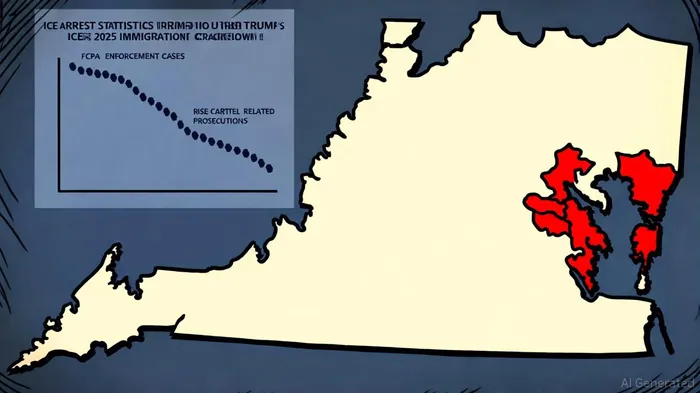
This shift aligns with the DOJ's February 2025 policy memorandum, which mandates that charging decisions avoid political bias and focus on “the most serious, readily provable offenses” [3]. While the memo emphasizes neutrality, its practical implementation in Virginia has already seen a redirection of resources toward immigration enforcement and cartel investigations. For instance, ICE arrests in Virginia surged to 4,264 in the first seven months of 2025—nearly triple the previous year's total—reflecting a national strategy to weaponize immigration enforcement as a political tool [4].
National Enforcement Trends: From Corporate Compliance to Border Security
The Trump administration's enforcement priorities are increasingly defined by a “core fraud” framework, prioritizing immigration violations, drug trafficking, and transnational criminal organizations (TCOs) while deprioritizing white-collar cases like Foreign Corrupt Practices Act (FCPA) prosecutions [5]. This reallocation of resources is part of a broader deregulatory agenda, including the Department of Government Efficiency (DOGE)'s layoffs and hiring freezes, which have reduced the DOJ's capacity for complex corporate investigations [6].
For example, the DOJ has paused FCPA enforcement for 180 days, redirecting attention to cases involving bribery that facilitates cartel operations [7]. While this may lower short-term compliance costs for multinational corporations, it creates long-term risks as state attorneys general and private whistleblowers fill enforcement gaps [8]. Similarly, the administration's crackdown on diversity, equity, and inclusion (DEI) programs has introduced new legal liabilities for federal contractors, who now face heightened False Claims Act (FCA) risks if they maintain DEI initiatives deemed incompatible with federal anti-discrimination laws [9].
Implications for Investors: Sector-Specific Risks and Opportunities
Investors must navigate a fragmented regulatory landscape shaped by these enforcement shifts. Key sectors to monitor include:
- Healthcare: Despite reduced federal focus on white-collar enforcement, healthcare fraud remains a priority under the FCA. The DOJ's emphasis on “high-impact” cases suggests continued scrutiny of Medicare and Medicaid billing practices, particularly as DOGEDOGE-- leverages data analytics to identify fraud [10].
- Agriculture and Hospitality: Immigration enforcement has created operational risks for industries reliant on immigrant labor. With ICE raids intensifying and I-9 audit requirements tightening, companies must invest in robust compliance systems to avoid criminal exposure for harboring undocumented workers [11].
- Technology and Cryptocurrency: The DOJ's recalibration of digital assetDAAQ-- enforcement—from technical regulatory violations to cases involving actual fraud—has reduced immediate compliance burdens for crypto firms. However, the administration's focus on national security could lead to renewed scrutiny of transactions involving China or Iran [12].
Strategic Adjustments for Investors
The Trump administration's enforcement priorities necessitate a proactive approach to risk management. Boards should:
- Reallocate Compliance Budgets: Redirect resources from FCPA and ESG compliance to immigration and workplace safety protocols.
- Monitor State-Level Enforcement: As federal agencies scale back, state attorneys general are increasingly enforcing federal laws in areas like consumer protection and labor standards [13].
- Assess Political Exposure: Companies with operations in high-risk jurisdictions (e.g., Latin America) must enhance due diligence to mitigate liability from cartel-related activities, even as FCPA enforcement pauses [14].
Conclusion
Virginia's prosecutorial changes under Trump's 2025 administration are not an isolated phenomenon but a microcosm of a broader national strategy to reshape legal and regulatory risk. By prioritizing immigration enforcement and deprioritizing corporate compliance, the administration is creating a new enforcement paradigm that investors must navigate. While short-term compliance costs may decline in some sectors, the long-term risks—ranging from political backlash to state-level enforcement—demand a nuanced, adaptive approach.






Comentarios
Aún no hay comentarios