
Political and Governance Risk in Emerging Markets: The Philippines' Graft Crisis and Its Impact on FDI and Economic Growth
The Philippines' recent graft scandals have emerged as a critical case study in how systemic corruption undermines foreign direct investment (FDI) and economic growth in emerging markets. From 2020 to 2025, the country has grappled with a series of high-profile corruption cases involving ghost infrastructure projects, inflated contracts, and collusion among lawmakers, contractors, and auditors. These scandals have not only eroded public trust but also triggered a sharp decline in investor confidence, with tangible consequences for the nation's economic trajectory.
The Cost of Corruption: A Double-Edged Sword
Bloomberg reported that the Philippine central bank cut its benchmark interest rate unexpectedly in October 2025 to stimulate economic activity amid deteriorating business confidence (Bloomberg article). This move followed revelations that ghost flood control projects between 2023 and 2025 cost the economy between ₱42.3 billion and ₱118.5 billion ($2.06 billion), Gulf News reported (Gulf News article). Finance Secretary Ralph Recto estimated, in the Inquirer, that eliminating corruption could reduce the national debt-to-GDP ratio from 63% to 54.8%, while boosting GDP by ₱1.6 trillion (Inquirer opinion).
The economic toll extends beyond fiscal metrics. Systemic graft has diverted critical resources from health and education budgets, exacerbating inequality and weakening long-term growth prospects, the Inquirer reported. As The Diplomat notes, the collusion of political elites with private contractors has created a governance environment where procurement processes are manipulated, further deterring foreign investors (The Diplomat overview).
FDI in Freefall: A 61.9% Drop and Investor Frustration
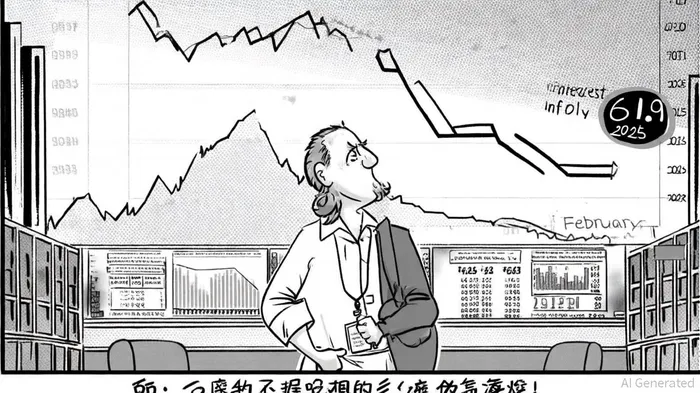
Foreign direct investment inflows into the Philippines have mirrored the nation's governance challenges. In February 2025 alone, net FDI plummeted by 61.9% to $529 million, compared to $1.4 billion in February 2024, the Inquirer reported. This decline was part of a broader trend: Q1 2025 saw total FDI fall by 41% to $1.8 billion, driven by reduced investments in debt instruments, equity capital, and reinvested earnings, Gulf News reported.
The Philippine Investment Authority attributes this downturn to a combination of global economic uncertainties and domestic governance risks, according to PSA Intelligence (PSA Intelligence report). A report by PSA Intelligence notes that FDI inflows stagnated in 2024, with preliminary data showing a 1.0% decline compared to 2023. Analysts highlight that corruption scandals have intensified perceptions of policy unpredictability, deterring long-term commitments from multinational firms.
A Path Forward? Rebuilding Trust in a Post-Scandal Era
While the Philippines has introduced anti-corruption bodies and transparency initiatives, political will and enforcement remain inconsistent, The Diplomat observed. For emerging markets like the Philippines, restoring investor confidence requires more than rhetorical commitments-it demands structural reforms to public finance systems and procurement processes.
The International Monetary Fund (IMF) has long emphasized that corruption undermines equitable development and institutional credibility. In the Philippines' case, the economic cost of inaction is stark: without systemic reforms, the nation risks further capital flight, slower GDP growth, and a deepening debt crisis.
Conclusion
The Philippines' graft scandals underscore a universal truth in emerging markets: governance risks are not abstract concerns but concrete barriers to sustainable growth. As FDI inflows continue to wane and public trust erodes, the imperative for reform has never been clearer. Investors and policymakers alike must recognize that combating corruption is not merely an ethical obligation-it is an economic necessity.







Comentarios
Aún no hay comentarios