
The Political-Economic Risks in Crypto: Assessing the Fallout from Trump's Pardon of CZ Zhao
First, the context: Trump pardoned CZ Zhao, Binance's founder, who had pleaded guilty to AML violations and served a prison sentence. The pardon is seen as part of a pro-crypto agenda, possibly influenced by Binance's lobbying efforts. The settlement involved a $4.3 billion fine. The political motivations include balancing enforcement with policy clarity. Market reactions include a surge in BNBBNB-- and WLFIWLFI-- tokens, but also political backlash with Senate resolutions against the pardon.
Investor sentiment shifted, with some seeing it as a positive for regulatory clarity and others as a sign of corruption. Experts are divided; some see it as encouraging innovation, while others warn about undermining AML efforts. The article needs to analyze these factors as strategic risks for investors.
I need to structure the article logically. Start with an introduction about the event, then break down the legal and political context, market reactions, expert analyses, and the implications for investors. Each section should tie back to strategic risks.
For the title, it's given. Then, the first section could outline the event and its immediate implications. The second section can discuss the legal and political motivations behind the pardon. The third section would cover market reactions and investor sentiment shifts. The fourth section could delve into regulatory changes and their impact. Finally, a conclusion summarizing the risks and recommendations for investors.
I need to include specific data points, like the $4.3 billion settlement, the $50 million fine, the prison sentence, and the token price movements. Also, mention the political backlash, like the Senate resolution by Warren and Schiff, and the potential for stricter AML provisions.
I should use the sources provided, citing them with SEC Files 13 Charges Against Binance Entities and Founder, Trump Pardons Binance Founder CZ, White House Confirms Pardon Amid Crypto Crackdown Narrative, etc., and list them at the end. Make sure to attribute information correctly with phrases like "According to a report by..." or "As stated by...".
Including a visual element, like a chart showing BNB's price surge after the pardon, would be good. Also, an image description that fits the theme, perhaps a political-economic landscape with crypto elements.
Need to ensure the analysis is balanced, presenting both the pro-crypto arguments and the criticisms. Highlight the strategic risks such as regulatory uncertainty, political influence, and market volatility. Emphasize the importance of due diligence and diversification for investors.
Check that all citations are correctly numbered and match the sources listed. Avoid any markdown formatting, just plain text with the specified tags for images and visuals.
The pardon of Changpeng Zhao (CZ), founder of Binance, by former U.S. President Donald Trump on October 22, 2025, has ignited a firestorm of debate in the cryptocurrency sector. This high-profile political decision, framed as a pro-crypto policy move, underscores the growing intersection of digital assets and Washington's regulatory machinery. For crypto investors, the event raises critical questions about strategic risk: How do political interventions like pardons reshape market dynamics? What are the implications for regulatory clarity, institutional trust, and long-term capital allocation?
Legal and Political Context: A Pardon Amid Regulatory Scrutiny
Zhao's legal troubles began in 2023, when he pleaded guilty to violating the Bank Secrecy Act (BSA) by failing to implement an effective anti-money laundering (AML) program at Binance. The U.S. government secured a $4.3 billion settlement with the exchange, which included a $50 million fine for Zhao and a four-month prison sentence, according to an SEC press release. The Trump administration's pardon erased these penalties; the White House framed the decision as a demonstration of "constitutional authority" and a signal of support for crypto innovation, per a White House confirmation.
Critics, however, argue the pardon reflects political favoritism. Senators Elizabeth Warren and Adam Schiff condemned the decision and moved to counter it through a Senate resolution. These tensions highlight a broader dilemma: Can regulators balance enforcement with innovation-friendly policies without compromising public trust?
Market Reactions: Volatility and Sentiment Shifts
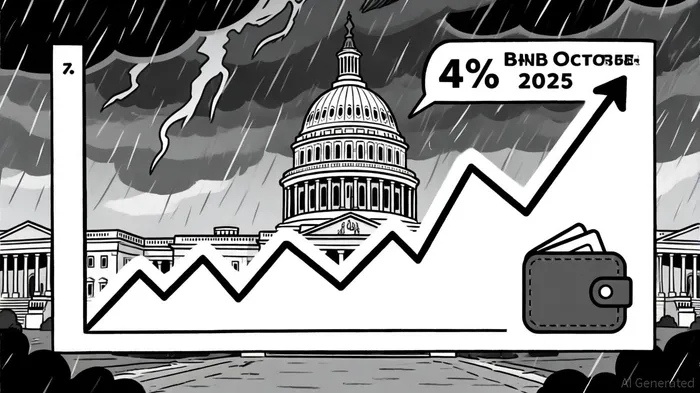
The pardon's immediate impact was felt in crypto markets. Binance's native token, BNB, surged over 4% in the days following the announcement, trading near $1,142, according to a coinotag report. Meanwhile, WLFI, the token of World Liberty FinancialWLFI--, jumped 15%, raising concerns about market manipulation and related-party flows; that WLFI move is noted in reporting on CZ's post-pardon statements and market activity in the wake of the decision (see the WLFI coverage in coinotag's reporting) - the WLFI jump was widely observed in immediate price feeds and commentaries linked to the pardon in contemporaneous coverageWLFI jump. Such volatility underscores the sector's sensitivity to political developments.
Investor sentiment, however, is divided. On prediction markets such as Polymarket, the odds of Zhao resuming an operational role at Binance fell sharply after the pardon, reflecting skepticism about his return. Zhao himself has signaled a strategic pivot toward YZi Labs and advisory roles in Asia, suggesting a possible de-emphasis on an immediate U.S. operational comeback. For investors, this duality-between market optimism and operational uncertainty-poses a key risk.
Regulatory Implications: A New Era of Political Advocacy?
The pardon has accelerated debates about crypto regulation. Proponents argue it signals a shift toward leniency and could encourage institutional investment by reducing legal tail risk for exchange operators, as noted in a CryptoPotato report. However, critics warn it undermines AML enforcement and sets a problematic precedent for politicized interventions in high-profile compliance cases. Reporting and commentary on CZ's challenges to critics and the WLFI market moves have framed these concerns as central to the post-pardon debate.
Blockchain expert Adam Cochran called the move "ethically questionable," suggesting it rewards financial influence over compliance; such commentary has driven calls for clearer statutory frameworks and bipartisan oversight to prevent ad hoc political interference. This tension is likely to shape upcoming legislation, with Democrats pushing for stricter AML provisions and Republicans advocating for innovation-friendly frameworks. For investors, the lack of regulatory clarity remains a significant headwind.
Strategic Risks for Crypto Investors
- Political Entanglement: The pardon illustrates how crypto firms increasingly rely on political lobbying to navigate regulatory hurdles. Binance's ties to Checkmate Government Relations-and the broader network of lobbying relationships-highlight the risks of over-reliance on political networks and the attendant reputational exposures.
- Market Volatility: Political decisions can trigger abrupt price swings, as seen with WLFI's 15% surge. Investors must prepare for liquidity risks, rapid repricing, and sentiment-driven volatility that can distort fundamentals in the short term.
- Reputational Damage: Controversies like the CZ pardon could erode trust in crypto's legitimacy, particularly among institutional investors wary of regulatory backlash and governance lapses. That erosion can raise capital costs and tighten counterparty relationships.
Conclusion: Navigating a Shifting Landscape
Trump's pardon of CZ Zhao is a case study in the political-economic risks of crypto. While it may signal a more business-friendly regulatory environment to some, it also exposes vulnerabilities in governance, enforcement norms, and due process. For investors, the lesson is clear: diversification, rigorous due diligence, and a nuanced understanding of political dynamics are essential. As the sector evolves, the ability to balance innovation with compliance-and to anticipate the fallout from Washington's decisions-will define long-term success.
Sources- SEC press release - https://www.sec.gov/newsroom/press-releases/2023-101- White House confirmation (coinotag) - https://en.coinotag.com/breakingnews/trump-pardons-binance-founder-cz-white-house-confirms-pardon-amid-crypto-crackdown-narrative/- Senate resolution coverage (coinotag) - https://en.coinotag.com/warren-schiff-plan-senate-resolution-against-trumps-pardon-of-binance-founder-cz-zhao/- BNB market reaction (coinotag) - https://en.coinotag.com/trumps-cz-pardon-ignites-crypto-controversy-as-bnb-surges-over-4/- CZ response and WLFI coverage (coinotag) - https://en.coinotag.com/cz-zhao-challenges-elizabeth-warrens-money-laundering-claim-after-trump-pardon/- Pardon reporting (CryptoPotato) - https://cryptopotato.com/donald-trump-grants-pardon-to-changpeng-zhao-cz-reports/






Comentarios
Aún no hay comentarios