
The Political-Economic Implications of a Hedge Fund-Appointed Candidate in State Governance
The intersection of hedge fund influence and state governance has become a defining feature of modern political economies, reshaping fiscal policies, regulatory frameworks, and investor behavior. As financial elites increasingly back political candidates and shape governance agendas, the implications for investors-particularly in states with shifting leadership-demand rigorous scrutiny. This analysis examines the risks and opportunities emerging from hedge fund-affiliated political leadership, drawing on recent developments in Pennsylvania and New Mexico to illustrate broader trends.
Hedge Fund Influence and Policy Shifts in Pennsylvania
The 2024 U.S. Senate race in Pennsylvania, where hedge fund veteran Dave McCormickMKC-- defeated Democratic incumbent Bob Casey, exemplifies the growing clout of financial actors in state politics. McCormick's tenure at Bridgewater Associates, a firm known for its aggressive short-selling strategies, has drawn scrutiny for its historical bets against Pennsylvania-based companies like The Hershey CompanyHSY-- and US Steel, according to a PICPA analysis. Critics argue such activities risk undermining local economic stability, while supporters contend they reflect market-driven decision-making, a WRAL report notes.
Under McCormick's leadership, Pennsylvania's economic policies have prioritized tax cuts and business incentives. For instance, Governor Josh Shapiro's administration accelerated the phase-down of the corporate net income tax (CNIT), aiming to attract businesses by creating a competitive tax environment, a point also raised in the PICPA analysis. However, this approach has sparked debates over long-term fiscal sustainability, particularly as states grapple with reduced federal funding and shifting economic priorities, as reflected in KOB election results. Investors must weigh the short-term allure of tax-driven growth against potential risks, such as reduced public investment in education and infrastructure, a concern highlighted by the PICPA analysis.
Contrasting Dynamics in New Mexico
In contrast, New Mexico's 2024 Senate race saw Democratic incumbent Martin Heinrich defeat hedge fund-backed challenger Nella Domenici. Domenici, a former Bridgewater CFO, advocated for policies aligning with her financial background, including expanded oil and gas drilling and border security measures, according to Investing in Opportunity. Her defeat highlights the challenges hedge fund-aligned candidates face in states with entrenched progressive constituencies. Heinrich's victory reinforced Democratic control of the Senate and underscored the importance of climate-conscious and social welfare policies in shaping investor risk profiles, as reported by KOB.
New Mexico's experience illustrates how hedge fund-backed candidates may struggle to gain traction in states prioritizing sustainability and public investment. For investors, this signals a divergence in regional economic strategies: while Pennsylvania leans into tax incentives and deregulation, states like New Mexico emphasize long-term environmental and social governance (ESG) metrics, a trend noted in a Forbes article.
Investor Risks and Opportunities
The interplay between hedge fund influence and state governance creates a dual-edged sword for investors. On one hand, tax reforms and business-friendly policies can enhance short-term returns. For example, Pennsylvania's $550 million investment in key sectors like energy and technology has attracted private capital, generating over $3 billion in private sector investments, as documented in the PICPA analysis. On the other, such policies may exacerbate fiscal imbalances, as seen in the debate over Pennsylvania's public school funding system, which was deemed unconstitutional in 2023, a conclusion discussed by PICPA.
Academic research further complicates the picture. A 2025 study found that 70% of large asset owners now integrate climate-conscious strategies, reflecting a shift toward sustainable investing reported in the Forbes article. This trend challenges hedge fund-backed leaders who prioritize short-term gains over long-term resilience. For instance, New Mexico's focus on climate infrastructure contrasts with Domenici's pro-oil stance, creating divergent risk profiles for investors in energy and renewable sectors, a dynamic described by Investing in Opportunity.
Quantifying the Impact: Tax Reforms and Capital Flows
Tax policy changes under hedge fund-influenced leadership have measurable effects on investor behavior. Empirical studies show that state tax increases raise bond yield spreads due to heightened default risk, while tax cuts have a muted impact, according to a ScienceDirect study. In Pennsylvania, the proposed CNIT phase-down could incentivize firms to relocate to low-tax states like Texas or Florida, altering capital flows, as the ScienceDirect study suggests. Similarly, hedge funds themselves are migrating to low-tax jurisdictions, with Florida and Nevada becoming hubs for firms seeking to minimize operational costs, an observation reflected in the ScienceDirect study.
For institutional investors, these shifts necessitate strategic recalibration. Universities and pension funds with significant hedge fund allocations-such as Pennsylvania's $65.6 billion in hedge fund investments-must balance tax efficiency with portfolio diversification, a point raised by Investing in Opportunity. The University of Pennsylvania Endowment, for instance, has leveraged hedge funds to mitigate market volatility, generating $4.7 billion for students, according to Investing in Opportunity.
Conclusion: Navigating a Fragmented Landscape
The rise of hedge fund-backed state leadership underscores a fragmented political-economic landscape, where investor risks and opportunities vary sharply by region. In Pennsylvania, pro-business policies offer short-term gains but risk long-term fiscal instability. In New Mexico, resistance to hedge fund influence reinforces ESG-aligned strategies, appealing to a growing segment of institutional investors.
For investors, the key lies in granular due diligence. Monitoring policy shifts, tax reforms, and regional economic priorities will be critical in 2025 and beyond. As hedge funds continue to shape governance, the interplay between financial power and public policy will remain a defining factor in investment decision-making. 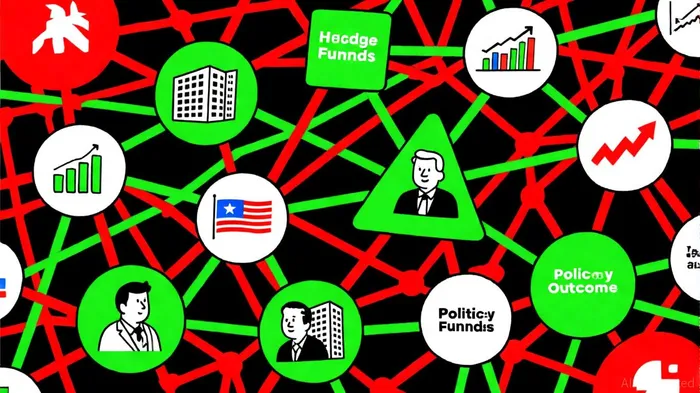





Comentarios
Aún no hay comentarios