
The Political and Economic Implications of Germany's Push to Reverse the Combustion Engine Ban
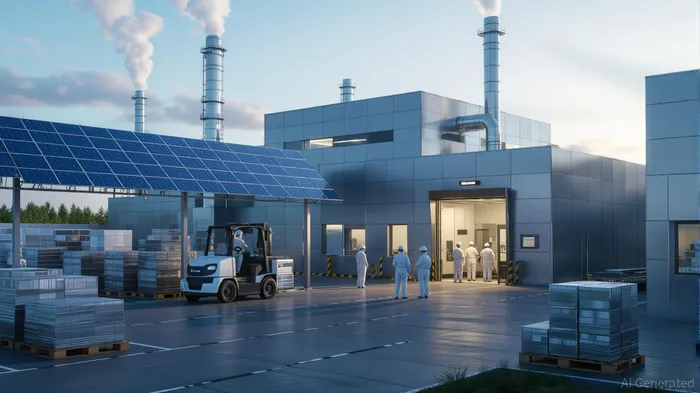
Germany's decision to reconsider its 2035 ban on new combustion engine vehicles has ignited a recalibration of industrial and infrastructure priorities, particularly in Lower Saxony—a region whose economy is inextricably linked to the automotive sector. This policy shift, driven by pragmatic concerns over economic competitiveness and slower-than-expected electric vehicle (EV) adoption, has created both challenges and opportunities for industrial stakeholders and policymakers. For Lower Saxony, the reversal signals a potential reprieve for its automotive manufacturing base while demanding strategic investments in hybrid technologies and climate-neutral fuels to align with evolving environmental goals.
Industrial Reorientation: Hybrid Technologies and Climate-Neutral Fuels
Lower Saxony, home to major automotive suppliers and production hubs, faces a critical juncture. The region's automotive sector, which employs over 100,000 workers, has long relied on combustion engine expertise. The policy reversal allows automakers to extend the lifecycle of internal combustion engines (ICEs) while integrating hybrid systems and synthetic fuels (e-fuels) powered by renewable energy. This hybrid approach could mitigate job losses and preserve industrial know-how, but it requires significant retooling.
German automakers and industry groups have already signaled a pivot toward “flex-fuel” engines compatible with carbon-neutral synthetic fuels, a technology still in its infancy. Lower Saxony's chemical and energy clusters, including companies like Evonik and RWE, are well-positioned to scale e-fuel production, provided infrastructure and subsidies align with this vision. According to a report by the German automotive lobby, such a transition could secure up to 30% of the region's current ICE-related employment while reducing carbon intensity[3].
Infrastructure Investment: Bridging Old and New Paradigms
The policy reversal also reshapes infrastructure priorities in Lower Saxony. While the region has historically invested in EV charging networks and battery production, the renewed focus on ICEs necessitates parallel investments in hybrid-compatible manufacturing facilities and e-fuel distribution systems. For instance, the state's industrial clusters—such as the Hanover-Leine region—are exploring partnerships to retrofit existing plants for hybrid engine production, leveraging their existing supply chains[1].
Sustainable infrastructure, a cornerstone of Lower Saxony's long-term strategy, remains relevant. The region's emphasis on green hydrogen and carbon capture projects aligns with the broader goal of decarbonizing transportation, even as ICEs persist. A 2025 World Economic Forum report highlights that industrial clusters like Lower Saxony can unlock $15 trillion in global infrastructure value by 2040 by integrating clean energy solutions into traditional industries[3]. This dual-track approach—supporting ICEs while advancing renewables—could position Lower Saxony as a model for transitional economies.
Political and Economic Trade-offs
The policy reversal underscores Germany's balancing act between environmental commitments and industrial pragmatism. While the European Commission remains firm on its 2035 EV mandate, Germany's push for exemptions for hybrid and e-fuel vehicles has sparked debates over regulatory harmonization. Lower Saxony's political leaders, many of whom represent automotive-dependent constituencies, have lobbied for flexibility, arguing that a rigid ban would erode Germany's global competitiveness in a market where EV adoption lags behind projections[2].
Economically, the shift could delay capital flight from traditional automotive firms and preserve supply chain stability. However, it risks diverting resources from EV innovation, potentially leaving Germany behind in the long-term energy transition. For Lower Saxony, the challenge lies in leveraging short-term industrial continuity to fund long-term sustainability projects—a strategy that hinges on public-private partnerships and EU funding mechanisms.
Conclusion: A Transitional Path Forward
Germany's reversal of the combustion engine ban is less a retreat from climate goals and more a recalibration to economic realities. For Lower Saxony, the policy shift offers a window to modernize its industrial base while maintaining its role as a key player in the energy transition. By investing in hybrid technologies, e-fuel infrastructure, and digital public systems, the region can navigate this transition without sacrificing its economic foundations.







Comentarios
Aún no hay comentarios