
The Political-Economic Battle for New York: Elise Stefanik vs. Zohran Mamdani
Stefanik's Pro-Business Blueprint: Tax Cuts and Regulatory Relief
Elise Stefanik's campaign for New York governor hinges on a starkly different economic philosophy than the status quo. She has criticized Governor Kathy Hochul for creating a "most unaffordable state in the nation" and positioned herself as a champion of small businesses. While her detailed 2025 tax proposals remain underdeveloped, her rhetoric suggests a focus on reducing corporate and income tax burdens, streamlining regulations, and incentivizing job creation. Such measures, if enacted, could mitigate capital flight by making New York a more competitive environment for businesses compared to high-tax peers like California.
Stefanik's alignment with former President Donald Trump's economic agenda further signals a preference for deregulation and tax cuts. For instance, her campaign emphasizes attracting manufacturing and tech industries through targeted incentives, a strategy that could stabilize New York's tax base by retaining high-paying jobs. However, critics argue that her approach risks exacerbating inequality, as tax cuts for corporations and wealthy individuals may not trickle down to middle-class affordability concerns.
Mamdani's Progressive Tax Agenda: Equity at the Expense of Capital Retention?
On the other side of the spectrum, Zohran Mamdani's mayoral platform has already sparked debate over its potential to drive capital out of New York. As a self-identified democratic socialist, Mamdani has proposed raising the city's top corporate tax rate from 7.25% to 11.5%, a move that would make New York the highest-taxed city in the U.S. This policy, aimed at funding affordable housing and public transit, could generate an estimated $5 billion annually but risks incentivizing corporations to relocate to states like Texas or Florida, where tax environments are more favorable.
Mamdani's income tax plan-levying a 2% surcharge on incomes over $1 million-also raises concerns. Historical data shows that 18 Fortune 500 companies moved out of high-tax states between 2018 and 2023, with New York and California bearing the brunt. A taxpayer earning $25 million annually, for example, could save $500,000 by relocating under Mamdani's proposal, creating a tangible financial incentive for high-net-worth individuals to exit the state. While proponents argue that tax flight is a myth-citing 2023 data showing no significant out-migration after previous hikes- the political tension between Mamdani and Hochul underscores the uncertainty.
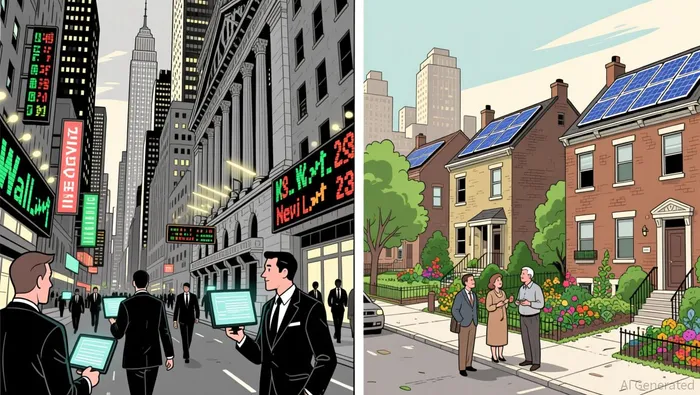
Capital Flight Risk: A Tug-of-War for New York's Economic Soul
The competing visions of Stefanik and Mamdani reflect a broader ideological battle over New York's economic identity. Stefanik's pro-business policies aim to preserve the state's status as a magnet for corporate investment, while Mamdani's progressive agenda prioritizes social equity at the potential cost of capital retention. This dichotomy is already playing out in the state's fiscal challenges: New York faces a $34.3 billion budget shortfall through 2029, compounded by federal cuts under a potential Trump administration. Hochul's consideration of corporate tax hikes mirrors Mamdani's proposals but highlights the political fragility of such measures in a state where business leaders wield significant influence.
For investors, the stakes are clear. A Stefanik-led administration could stabilize capital inflows by reducing regulatory burdens and tax rates, but may struggle to address affordability for middle-class residents. Conversely, Mamdani's policies could deepen New York's fiscal challenges if corporations and high earners flee, leaving a smaller tax base to fund his ambitious social programs. The risk of capital flight is further amplified by the lack of detailed mathematical justification for Mamdani's revenue projections, raising questions about the feasibility of his agenda.
Strategic Asset Positioning: Hedging Bets in a Polarized Landscape
Given the uncertainty, investors must adopt a nuanced approach to asset positioning in New York. Sectors likely to benefit from Stefanik's pro-business policies-such as manufacturing, logistics, and real estate-could see increased investment if her platform gains traction. Conversely, industries tied to progressive urban policies, like renewable energy and public transit infrastructure, may thrive under Mamdani's administration.
However, the risk of capital flight necessitates hedging strategies. Diversifying holdings across states with stable tax environments (e.g., Texas, North Carolina) could mitigate exposure to New York's political volatility. Additionally, investors should monitor the state's fiscal health closely: a prolonged budget shortfall could force emergency measures, such as further tax hikes or spending cuts, that disrupt both Stefanik's and Mamdani's agendas.
Conclusion: A Defining Moment for New York's Economy
The political-economic battle between Elise Stefanik and Zohran Mamdani is more than a local race-it is a microcosm of the broader U.S. debate over the role of government in shaping economic outcomes. For New York, the outcome will determine whether it remains a bastion of capital and innovation or becomes a cautionary tale of progressive overreach. As the 2026 gubernatorial election approaches and Mamdani's mayoral agenda unfolds, investors must stay agile, balancing long-term bets on New York's resilience with short-term hedges against capital flight.







Comentarios
Aún no hay comentarios