
The Political-Crypto Nexus: How John Deaton's Senate Bid Signals Growing Influence of Digital Assets in U.S. Policy
Deaton's Campaign: A Pro-Crypto Playbook
Deaton's 2024 Senate run against Elizabeth Warren, though unsuccessful, demonstrated the crypto industry's willingness to fund political candidates who align with its interests. That campaign raised over $360,000 from Ripple, Gemini, and Kraken alone in its first quarter, according to a Coinotag report, a figure that highlights the sector's financial muscle. His 2026 bid, while shifting focus to broader economic and family issues, continues to accept cryptocurrency donations-including BitcoinBTC--, EthereumETH--, and memeMEME-- coins like Dogecoin-according to the same Coinotag report. This strategy notNOT-- only keeps Deaton connected to the crypto community but also signals to investors that digital assets remain a political priority, even in a state where Democratic dominance is entrenched.
The ripple (pun intended) effects of Deaton's advocacy extend beyond fundraising. As a legal representative for XRP holders during Ripple's landmark SEC lawsuit, Deaton has positioned himself as a defender of utility-driven tokens, according to the Coinotag report. His amicus briefs emphasized XRP's role in cross-border payments, arguing against its classification as a security. This legal stance has resonated with investors, particularly as the outcome of the Ripple vs. SEC case continues to influence XRP's price trajectory, according to a Timestabloid analysis. Analysts project that a favorable ruling could push XRP to $3.44 from its current $2.07 level, according to the Timestabloid analysis, a potential windfall for those who align their portfolios with Deaton's policy priorities.
The Bigger Picture: Crypto-Friendly Politics and Market Behavior
Deaton's campaign is part of a larger wave of political engagement with digital assets. The 2024 election of a pro-crypto president, who pledged to establish a "Strategic Bitcoin Reserve" and appoint a crypto-friendly SEC chair, marked a turning point in regulatory sentiment, according to a The Conversation article. These moves coincided with the approval of exchange-traded funds (ETFs), which institutionalized access to crypto for small investors, according to the The Conversation article. The result? A 55% increase in hedge fund exposure to digital assets between 2024 and 2025, according to an AIMA press release, with 71% of these funds planning to expand their holdings further.
Political rhetoric also drives retail investor behavior. A 2025 study by Krause found that Bitcoin's price movements are significantly correlated with Donald Trump's favorability ratings, according to a SSRN paper, illustrating how sentiment-driven narratives can override traditional macroeconomic factors. This dynamic is not lost on Deaton, whose legal background and Marine veteran status lend him a unique credibility in the crypto space. His advocacy for XRP, coupled with his Senate bid, has created a feedback loop: political visibility → regulatory optimism → investor confidence.
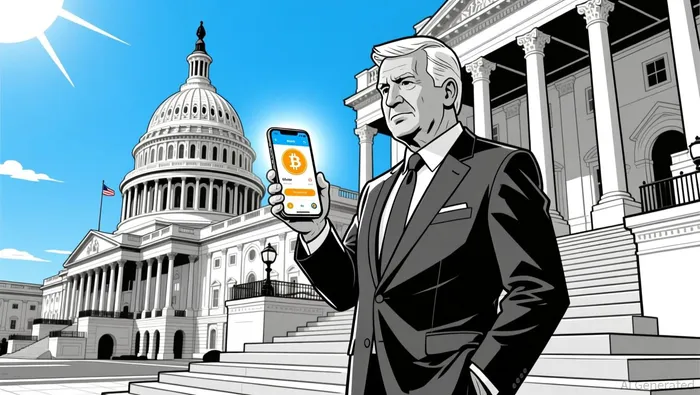
Risks and Realities: The Double-Edged Sword of Political Influence
While crypto-friendly politics can boost market optimism, they also introduce volatility. The 2023 collapse of FTX, for instance, exposed the fragility of unregulated crypto ecosystems, according to a Brookings analysis. Similarly, Deaton's focus on XRP-still embroiled in legal battles-could backfire if the SEC's stance hardens, according to the Brookings analysis. Investors must weigh the potential rewards of political alignment against the risks of regulatory overreach or market corrections.
Moreover, the broader economic implications of crypto adoption remain contentious. Critics argue that integrating volatile assets into retirement plans and pension funds exposes middle-class savers to undue risk, according to the Brookings analysis. Deaton's emphasis on cost-of-living issues may appeal to voters, but it also highlights the tension between crypto's speculative allure and its practical utility.
Conclusion: A New Era of Political-Crypto Synergy
John Deaton's Senate bid is more than a political stunt-it's a barometer of how digital assets are reshaping U.S. policy. For investors, the key takeaway is that crypto markets are increasingly influenced by political narratives, regulatory shifts, and institutional adoption. While Deaton's chances in Massachusetts remain slim, his campaign underscores a reality: the crypto industry is investing in politics to secure its future. As the 2026 election cycle unfolds, the interplay between political advocacy and market dynamics will likely become even more pronounced, offering both opportunities and challenges for those navigating this evolving landscape.






Comentarios
Aún no hay comentarios