
Political Crossfire: Navigating the Risks of Federal Contract Dependency in a Polarized Era
The public feud between President Donald Trump and Elon Musk has exposed a critical vulnerability in the investment landscape: the precarious reliance of tech and defense firms on federal contracts and subsidies. As political tensions escalate, companies tied to Washington's purse strings face existential risks—from regulatory retaliation to sudden subsidy cuts. For investors, this is no longer a theoretical risk; it's a call to reassess exposure to firms like SpaceX, TeslaTSLA--, and their peers.
The SpaceX Example: Balancing National Security with Political Risk
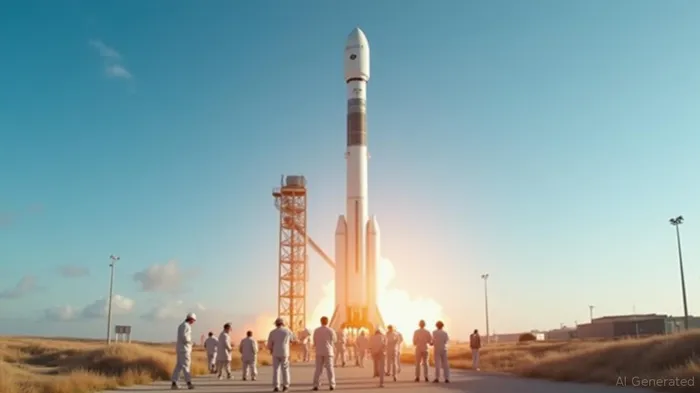
SpaceX's $34 billion pipeline of NASA and Pentagon contracts positions it as the backbone of U.S. space exploration and national security. Its Dragon spacecraft is the sole operational crew vehicle for NASA's ISS missions, while its Starlink satellites provide critical communication services to the military. Yet, Trump's threat to “terminate subsidies” highlights a paradox: the more vital a firm is to national interests, the greater its exposure to political whims.
Investment Implications:
- Short-Term Resilience: SpaceX's contractual dominance makes outright cancellation unlikely, but delays or renegotiations could strain cash flows.
- Long-Term Uncertainty: Investors should monitor congressional hearings on federal contracts and the revival of Boeing's Starliner program, which could dilute SpaceX's leverage.
Tesla's Subsidy Dependency: A Double-Edged Sword
Tesla's $7.5 billion in federal subsidies (including tax credits, loans, and DOE grants) have fueled its growth, but these lifelines now face bipartisan scrutiny. Trump's “One Big Beautiful Bill” aims to slash EV incentives, which could erase $1.2 billion in annual revenue for Tesla. Meanwhile, its $2.8 billion in regulatory emissions credits—critical for profitability—are tied to California's climate policies, now under federal attack.
Investment Advice:
- Short Tesla (TSLA): If subsidy cuts materialize, Tesla's valuation—already stretched at 15x projected 2025 revenue—could drop sharply.
- Avoid Overreliance on Regulatory Credits: Investors should favor automakers (e.g., Ford, GM) with diversified revenue streams or those betting on cheaper BEV models less dependent on subsidies.
The Broader Defense Tech Sector: A Target for Retaliation?
Beyond SpaceX, defense contractors like Lockheed Martin (LMT) and Raytheon (RTX) face risks from Trump's “audit all federal contracts” rhetoric. While these firms have decades of bipartisan ties, smaller players—such as satellite firms or AI developers with federal grants—are now in the crosshairs.
Hedging Strategies:
- Rotate into Diversified Giants: Companies like Boeing (BA)—despite Starliner's struggles—have broader revenue streams and lobbying power to weather political storms.
- Short Specialized Firms: Avoid niche players (e.g., Maxar Technologies) overly reliant on Pentagon funding for satellites or cybersecurity.
The New Investment Paradigm: De-Risking Federal Dependency
The Musk-Trump feud is a microcosm of a broader trend: firms with federal contracts are now geopolitical pawns. Investors must ask:
- Can the company survive without subsidies? (Tesla's answer: no.)
- Does its work serve bipartisan interests? (SpaceX's ISS role likely yes; Starlink's military use, yes.)
- Is there a credible alternative provider? (Boeing's revival could undercut SpaceX; China's EVs could replace Tesla's subsidies.)
Final Recommendation:
- Short TSLA and avoid small-cap defense tech stocks with narrow federal ties.
- Overweight LMT, BA, or industrial giants with lobbying muscle and diversified revenue.
- Monitor congressional actions: A vote on subsidy cuts by August 2025 could trigger a market reckoning.
In this era of political volatility, investors must treat federal contracts not as assets but as liabilities—until proven otherwise.





Comentarios
Aún no hay comentarios