
Political Brinkmanship and Fiscal Policy Risks: Sector Valuations in the Shadow of 2025's Government Shutdown
Political Brinkmanship and Fiscal Policy Risks: Sector Valuations in the Shadow of 2025's Government Shutdown
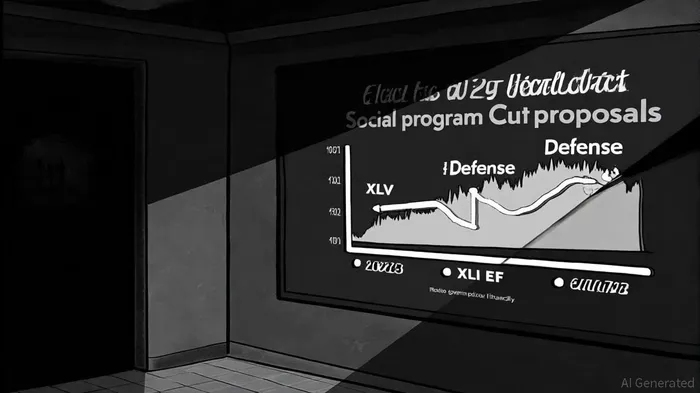
The U.S. government shutdown that began on October 1, 2025, underscores the escalating risks of political brinkmanship and fiscal policy instability. With Congress deadlocked over spending priorities, the fallout extends beyond immediate operational disruptions, reshaping sector valuations and investor sentiment. Historical precedents and current dynamics suggest that healthcare, defense, and financial sectors will face distinct challenges and opportunities as policymakers grapple with deepening polarization and austerity measures.
Healthcare: A Safe Haven Amid Uncertainty
The healthcare sector has emerged as a relative safe haven during the 2025 shutdown, with the XLV ETF surging 3.09% on the first day of the crisis, according to a YCharts analysis. This resilience reflects its perceived insulation from political volatility, but underlying risks loom large. Proposed cuts to Medicaid-projected to save $911 billion over a decade-threaten to strip coverage from 10 million Americans and destabilize healthcare providers reliant on federal funding, according to a FactCheck.org analysis. For every $1 billion reduction in Medicaid spending, states could lose thousands of jobs and face economic contractions, disproportionately affecting rural hospitals and safety-net clinics, a Weaver analysis found.
Analysts warn that reduced access to care could exacerbate long-term healthcare costs, creating valuation headwinds for insurers and providers. However, the sector's adaptability to non-acute care delivery and digital health innovations may mitigate some risks, offering a nuanced outlook for investors, according to a McKinsey outlook.
Defense: Mixed Signals in a Climate of Fiscal Austerity
Defense contractors have shown a bifurcated response to the shutdown. Government services firms like CACICACI-- and Booz Allen HamiltonBAH-- surged on expectations of catch-up spending post-shutdown, while traditional manufacturers like Lockheed MartinLMT-- remained stable, per the YCharts analysis. This divergence highlights the sector's fragmented exposure to fiscal policy shifts.
While the 2025 funding bill increased defense budgets by $6 billion for modernization and veteran healthcare, broader economic strains from Medicaid and SNAP cuts could indirectly pressure defense spending. A Rocky Mount Dispatch analysis estimates that combined social program cuts could reduce state GDPs by $113 billion and erode consumer spending, potentially limiting long-term investment capacity. Investors must weigh near-term contract opportunities against macroeconomic headwinds.
Financials: Navigating Regulatory and Economic Turbulence
The financial sector faces dual pressures from delayed federal services and economic uncertainty. The XLF ETF fell 0.89% during the 2025 shutdown as FHA loan approvals and IRS operations stalled, disrupting lending activity, according to the YCharts analysis. Analysts at J.P. Morgan caution that delayed economic data releases could cloud the Federal Reserve's rate-cut decisions, triggering short-term volatility, in a J.P. Morgan note.
Proposed Medicaid cuts add another layer of complexity. A 477,000-job loss in healthcare alone could depress demand for financial services, particularly in regions reliant on Medicaid-dependent providers, according to an AJMC report. However, the sector's historical rebound post-shutdowns suggests opportunities for cyclical plays in banking and capital markets.
Strategic Positioning for Policy Uncertainty
Investors should adopt a hedged approach to navigate the 2025 fiscal landscape:
1. Overweight Healthcare and Utilities: Defensive sectors like healthcare and utilities (e.g., Duke Energy) have historically outperformed during shutdowns, offering downside protection, according to a Campaign for a Million post.
2. Selective Exposure in Defense: Prioritize government services firms poised to benefit from post-shutdown spending, while monitoring broader economic risks.
3. Defensive Plays in Financials: Favor institutions with low Medicaid exposure and strong balance sheets to weather regulatory turbulence.
Conclusion
The 2025 government shutdown and associated fiscal policy debates exemplify the growing risks of governance on the brink. While historical patterns suggest markets will eventually rebound, the path is fraught with sector-specific volatility. Investors who anticipate these dynamics and adjust portfolios accordingly may position themselves to capitalize on both defensive resilience and opportunistic rebounds.





Comentarios
Aún no hay comentarios