
Polimex Mostostal's Strategic Expansion in Poland's Olefins Sector: Assessing Investment Potential in the European Green Transition
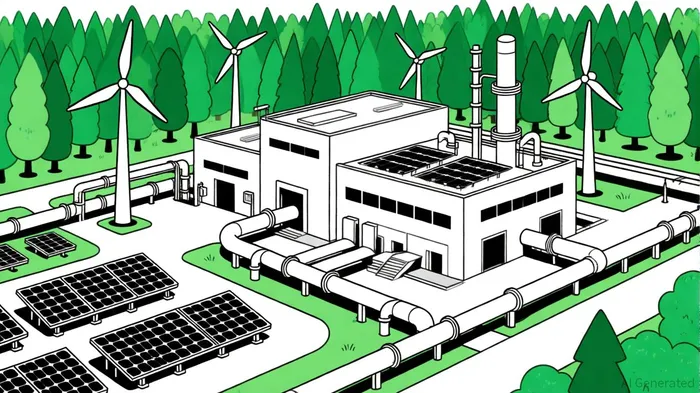
The European green transition is reshaping energy and industrial infrastructure, creating both challenges and opportunities for companies positioned at the intersection of traditional energy systems and emerging sustainability goals. Polimex Mostostal, a leading Polish construction and engineering firm, has emerged as a key player in this transformation through its involvement in ORLEN S.A.'s ambitious Olefins III project. This analysis evaluates the investment potential of Polimex Mostostal's strategic expansion in Poland's olefins sector, focusing on its alignment with the European green transition and the broader implications for industrial infrastructure partnerships.
Strategic Expansion and Project Scale
In July 2023, Polimex Mostostal, alongside a consortium including Naftoremont-Naftobudowa and KTI Poland, secured a landmark PLN 3.87 billion contract with ORLEN S.A. to expand the Olefin plant in Płock, marking the largest contract in the company's history[1]. The project, spanning 45 months, involves constructing critical infrastructure such as flare systems, pipelines, and gas pressure reduction stations for the Olefins III complex—a facility ORLEN aims to position as one of Europe's most modern petrochemical plants[1]. This expansion aligns with ORLEN's broader strategy to dominate the European petrochemicals market, with the Olefins III complex projected to increase the company's market share from 5% to 6.4% and boost annual EBITDA by PLN 1 billion[3].
Polimex Mostostal's role in this project underscores its growing influence in industrial infrastructure. The company anticipates revenue exceeding PLN 3 billion in 2025, driven by its expanding order book and participation in high-impact projects[4]. However, the Olefins III project has faced significant turbulence. ORLEN recently revised its scope, rebranding it as the “New Petrochemicals” initiative after discovering that initial cost estimates had ballooned from PLN 8.3 billion to as high as PLN 51 billion due to inadequate planning and design flaws[5]. The revised project, expected to cost PLN 34 billion (including PLN 6 billion in financing costs), will leverage existing infrastructure and prioritize cost optimization, with commissioning delayed to no earlier than 2030[5].
Green Transition Alignment and ESG Considerations
While Polimex Mostostal has not yet disclosed formal climate reduction targets for 2023–2025[2], its long-term ESG strategy emphasizes environmental care, ethical standards, and stakeholder collaboration, with goals extending to 2035[6]. This aligns with ORLEN's revised sustainability strategy, which includes reducing emissions by 25% by 2030 (relative to 2019 levels) and achieving carbon neutrality by 2050[7]. The New Petrochemicals project incorporates technologies such as carbon capture, energy efficiency improvements, and a shift to low-emission technologies by 2035[3]. Additionally, ORLEN's Transition Plan reflects a commitment to EU sustainability frameworks, including the EU's new industrial strategy focused on minimizing regulatory burdens while advancing energy transition goals[8].
The Olefins III complex also integrates advanced automation systems from ABB to reduce CO2 emissions by 30% per ton of product, enhancing energy efficiency and production yields[9]. These measures position the project as a test case for reconciling petrochemical expansion with decarbonization. However, Polimex Mostostal's lack of immediate climate targets raises questions about its readiness to meet the EU's tightening sustainability regulations, such as the upcoming ESRS (European Sustainability Reporting Standards)[2].
Investment Risks and Opportunities
The Olefins III project's transformation highlights the risks of large-scale industrial ventures in a rapidly evolving regulatory landscape. ORLEN's admission that the original project was “monumental, unnecessary, and badly prepared”[5] underscores the importance of adaptive project management. For Polimex Mostostal, the revised scope of the New Petrochemicals project offers an opportunity to refine its role in sustainable infrastructure, particularly as EU funding mechanisms increasingly prioritize green initiatives.
Investors should also consider the broader context of Poland's energy transition. As the EU's largest coal-dependent economy, Poland faces pressure to align with carbon neutrality goals. ORLEN's offshore wind farm (1.2 GW capacity) and carbon capture infrastructure[7] signal a strategic pivot, which could enhance the long-term viability of projects like Olefins III. Polimex Mostostal's expertise in executing complex EPC (engineering, procurement, and construction) projects positions it to benefit from similar initiatives, provided it accelerates its own ESG disclosures and climate strategy.
Conclusion
Polimex Mostostal's strategic expansion in Poland's olefins sector reflects both the opportunities and challenges of industrial infrastructure in the green transition. While the company's involvement in ORLEN's Olefins III project demonstrates its capacity to secure high-value contracts, the project's revisions highlight the need for flexibility in the face of regulatory and financial uncertainties. For investors, the key question is whether Polimex Mostostal can align its ESG roadmap with the EU's 2030 and 2050 climate targets. If the company accelerates its climate commitments and leverages its expertise in sustainable infrastructure, it could emerge as a pivotal player in Europe's energy transition. However, delays in formalizing its green strategy may expose it to reputational and regulatory risks in the coming years.







Comentarios
Aún no hay comentarios