
Policy Divergence and the Bank of England's Quantitative Tightening: Navigating Global Capital Flows in 2025
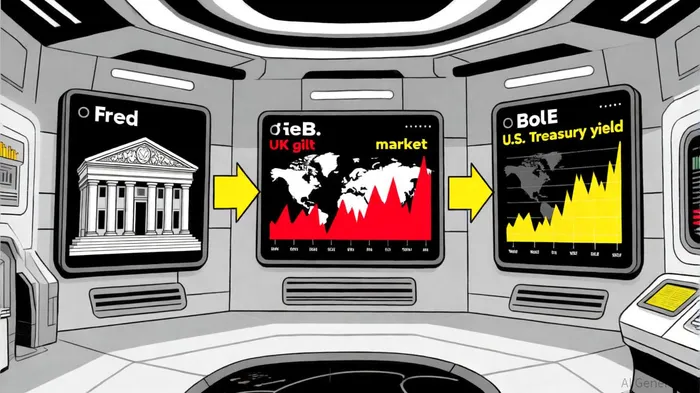
The Bank of England's recent recalibration of its quantitative tightening (QT) strategy has emerged as a pivotal factor in shaping global capital flows in 2025. By slowing its balance sheet reduction from £100 billion annually to £70 billion and shifting the composition of bond sales, the BoE has sought to balance market stability with its broader monetary policy objectives. This adjustment, however, occurs amid a backdrop of stark policy divergence among major central banks, creating a fragmented global monetary landscape with profound implications for investors.
A Strategic Pause: The BoE's QT Adjustments
According to a report by Bloomberg, the Bank of England has reduced its QT pace to £70 billion over the next 12 months, down from £100 billion, while limiting long-dated gilt sales to 20% of total transactions [1]. This shift aims to mitigate volatility in the UK gilt market, where long-term borrowing costs have surged to 27-year highs. The decision reflects concerns over structural changes in bond demand and the risk of self-reinforcing market instability. Governor Andrew Bailey emphasized the need to “minimize the impact on gilt market conditions” while maintaining progress toward balance sheet normalization [2].
The BoE's approach contrasts with its earlier aggressive QT trajectory, which had exacerbated gilt market turbulence. By prioritizing short- and medium-term debt sales, the central bank hopes to reduce liquidity pressures while still achieving its fiscal goals. However, this strategy may come at a cost: prolonged interest losses on its bond portfolio could increase fiscal burdens for the UK government, particularly as Chancellor Rachel Reeves navigates a challenging budgetary environment [3].
Divergent Paths: Fed, ECBXEC--, and Global Implications
The BoE's recalibration must be understood in the context of divergent policy stances by other major central banks. The U.S. Federal Reserve, for instance, cut its benchmark rate by 0.25 percentage points in September 2025, marking its first reduction since December 2024 [4]. This move, aimed at addressing a slowing labor market, has weakened the U.S. dollar and spurred capital outflows to higher-yielding assets. Meanwhile, the European Central Bank (ECB) has maintained its deposit rate at 2.00%, citing a stable inflation outlook and geopolitical uncertainties, including U.S. tariffs on European goods [5].
These divergent paths have created a ripple effect across global markets. The Fed's rate cut has made U.S. Treasuries less attractive, pushing investors toward European and UK sovereign debt as yields stabilize. Conversely, the ECB's rate hold has supported the euro, potentially easing inflationary pressures in the Eurozone. The BoE's pause in rate cuts, meanwhile, has bolstered the pound, offering a counterbalance to the dollar's decline. Such dynamics highlight the growing complexity of capital allocation in a world where central banks are no longer moving in lockstep [6].
Market Responses and Capital Flow Shifts
The impact of these policy divergences is evident in capital flow patterns. For example, the Fed's rate cut has led to a weaker dollar, benefiting U.S. multinationals but hurting exporters in Europe and the UK. In the bond market, U.S. Treasury yields have declined, making European and UK debt relatively more attractive. This shift has been amplified by the BoE's QT adjustments, which have stabilized UK gilt yields despite broader market volatility [7].
Emerging markets, meanwhile, face heightened risks. A stronger dollar, driven by the Fed's easing, has increased borrowing costs for countries reliant on U.S. dollar-denominated debt. In contrast, accommodative policies in Europe and the UK have provided some relief to economies grappling with trade tensions and fiscal constraints. These divergent outcomes underscore the challenges of managing capital flows in an environment of fragmented monetary policy [8].
Strategic Implications for Investors
For investors, the BoE's QT strategy and the broader policy divergence present both opportunities and risks. The BoE's focus on short-term gilts may reduce market volatility, making UK bonds a more attractive haven for income-seeking investors. However, the slower QT pace could prolong higher interest rates on the BoE's portfolio, potentially limiting fiscal flexibility for the UK government.
In contrast, the Fed's rate cuts and the ECB's cautious stance create a more uncertain environment for global investors. The dollar's weakness may drive capital toward emerging markets, but geopolitical tensions and trade barriers could disrupt these flows. Investors must also contend with the risk of sudden policy reversals, as central banks navigate evolving economic conditions.
Conclusion
The Bank of England's QT adjustments in 2025 reflect a delicate balancing act between market stability and fiscal responsibility. While the slower pace and revised bond sales strategy aim to mitigate gilt market volatility, they also highlight the broader challenges of navigating a fragmented global monetary landscape. As central banks diverge in their approaches, investors must remain agile, leveraging insights into policy trajectories and market responses to optimize capital allocation. In this environment, strategic flexibility and a deep understanding of central bank dynamics will be critical to managing risk and capturing opportunities.







Comentarios
Aún no hay comentarios