
Polaris' Strategic Exit from Indian Motorcycle and Its Implications for Harley-Davidson
The recent announcement by Polaris Inc.PII-- to divest a majority stake in Indian Motorcycle to private equity firm Carolwood LP marks a seismic shift in the premium motorcycle sector. This strategic exit, set to finalize in Q1 2026, positions PolarisPII-- to refocus on high-growth segments like ATVs and snowmobiles while unlocking $50 million in annualized adjusted EBITDA and $1.00 in adjusted earnings per share, according to a PR Newswire release. For Harley-DavidsonHOG--, the departure of a key competitor creates both opportunities and challenges in a market already grappling with economic headwinds and evolving consumer preferences.
Market Share Dynamics and Competitive Positioning
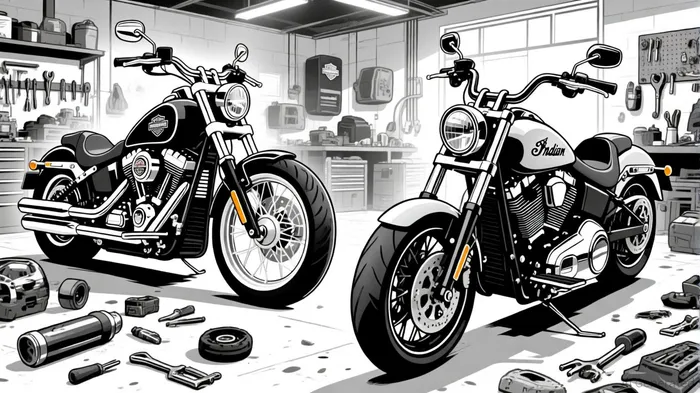
Harley-Davidson has long dominated the North American cruiser segment, maintaining a 53% market share in 2025 despite a 19% revenue decline in Q2 2025 due to high interest rates and inventory reductions, according to a Gauk Motorbuzz analysis. The exit of Indian Motorcycle, which reported flat sales in a declining 2024 market, could temporarily reduce competition in the 800cc+ category. However, Indian's brand heritage and loyal customer base-coupled with its PowerPlus 112 engine (126 hp vs. Harley's Milwaukee‑Eight 117 at 105 hp)-mean the brand remains a formidable player, as highlighted in a Law Abiding Biker comparison.
That comparison also points to Indian's challenges, including outdated infotainment systems and heat management issues, which have limited its ability to compete with Harley's integrated digital dash and rider‑assist technologies. Yet, its pricing premium (e.g., the Chieftain Limited PowerPlus at $30,500 vs. Harley's Street Glide at $27,750) could alienate budget‑conscious buyers. Analysts suggest that Harley's strategic focus on affordability-planning 2026 entry‑level cruisers-could further widen this gap, according to the Gauk Motorbuzz analysis.
Industry Trends and Technological Shifts
The premium motorcycle market is projected to grow at a 4.5% CAGR through 2033, driven by electrification, IoT connectivity, and adventure‑touring demand, per a LinkedIn analysis. Harley's LiveWire division, though struggling with volume declines, is pivoting toward affordable electric models, while Indian's reliance on internal combustion engines may hinder its agility. Meanwhile, emerging competitors like Royal Enfield and Triumph are leveraging hybrid and electric platforms to capture market share in Asia‑Pacific and Europe, according to a Strategic Revenue Insights report.
Harley's recent investments in AI‑driven productivity and AI‑powered customization options (e.g., Parts & Accessories) align with consumer demand for personalization, a point emphasized by the Gauk Motorbuzz analysis. However, its Q2 2025 results underscore vulnerabilities: dealer inventory reductions and soft retail sales highlight the risks of over‑reliance on legacy markets.
Analyst Sentiment and Investment Outlook
Post‑Polaris exit, analyst ratings for Harley‑DavidsonHOG-- (HOG) remain cautiously optimistic. A consensus "Hold" rating is supported by a StockAnalysis forecast that cites an average price target of $29.83 (8.76% upside from its $27.43 price as of October 2025). Notably, DA Davidson raised its target from $31 to $34, citing improved financial flexibility from inventory management and HDFS partnerships, a move discussed in the StockAnalysis coverage. However, risks persist: weak consumer demand and slow EV adoption could delay profitability in the LiveWire division, as noted by StockAnalysis.
Indian's standalone status under Carolwood LP introduces uncertainty. While the firm has pledged to preserve heritage and operations in the PR Newswire release, private equity ownership may prioritize short‑term gains over long‑term innovation. This contrasts with Harley's emphasis on community engagement (e.g., HOG) and experiential marketing, which remain critical differentiators in a mature market, according to the Gauk Motorbuzz analysis.
Conclusion: Buy or Cautionary Case?
Harley‑Davidson's strong brand equity and strategic pivot toward affordability and electrification position it as a compelling long‑term investment. However, its reliance on North American demand and slow EV adoption warrant caution. For investors, the key will be monitoring the success of 2026 product launches, tariff developments, and LiveWire's pivot to affordable models. Indian's future under Carolwood LP remains uncertain, but its exit from Polaris' portfolio may not significantly alter the competitive landscape-unless the private equity firm accelerates innovation. In this evolving market, Harley‑Davidson's ability to balance heritage with modernization will determine its dominance in the premium segment.







Comentarios
Aún no hay comentarios