
Polaris 2026: A Strategic Leverage in Premium Off-Road Innovation
In the ever-evolving landscape of powersports, Polaris Inc.PII-- has positioned itself as a masterclass in balancing affordability with premiumization, a duality that could define its 2026 trajectory. The company's recent financial and strategic maneuvers-marked by a 6% revenue decline in Q2 2025 amid industry headwinds-reveal a nuanced approach to navigating market volatility while fortifying its high-margin segments[1]. For investors, the question is no longer whether PolarisPII-- can innovate but how effectively it can leverage its premium off-road portfolio to outpace competitors and sustain profitability in a sector increasingly defined by margin pressures[2].
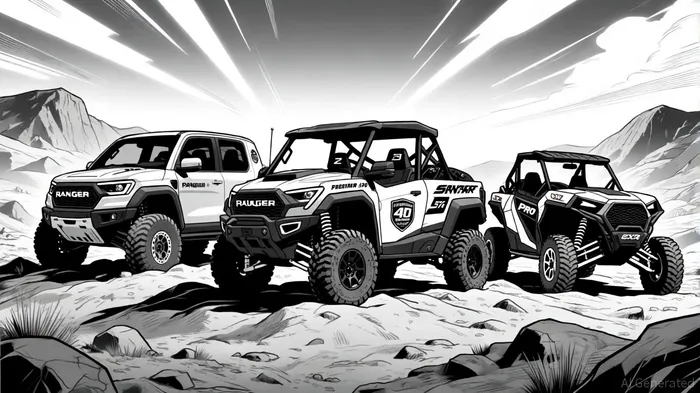
The Dual Engine of Diversification: Entry-Level Access and Premium Prestige
Polaris's 2026 product roadmap exemplifies a calculated diversification strategy. The introduction of the RANGER 500, an entry-level utility side-by-side priced at $9,999, is a masterstroke in market expansion[3]. By targeting cost-conscious buyers without diluting brand equity, Polaris is broadening its customer base while maintaining robust dealer margins-a critical differentiator in a segment where promotional spending has eroded gross margins by 223 basis points year-to-date[1].
Simultaneously, the company is reinforcing its premiumization narrative through limited-edition offerings like the Sportsman 570 Premium 40th Anniversary Edition, which blends nostalgic design with cutting-edge features such as 11.5 inches of ground clearance and on-demand all-wheel drive[3]. These high-margin products cater to enthusiasts willing to pay a premium for exclusivity and performance, a demographic Polaris has historically dominated. The strategy mirrors Apple's approach to product tiers: democratize access with entry-level models while monetizing brand loyalty through premium variants[4].
Financial Resilience Amid Industry Headwinds
Despite a challenging macroeconomic environment, Polaris's Q2 2025 results underscore its operational resilience. The company generated $290 million in free cash flow while gaining market share in off-road, on-road, and marine segments[1]. This financial fortitude is underpinned by its Marine segment, which reported 16% revenue growth driven by Bennington pontoons-a diversification play that insulates the business from off-road market cyclicality[2].
However, margin pressures persist. Elevated promotional spending and tariff-related costs have squeezed gross margins, prompting Polaris to pivot toward supply chain diversification and cost controls[1]. The company's 35% reduction in sourcing from China by year-end 2025 is a testament to its agility in mitigating geopolitical risks[2]. For investors, the key metric will be whether these adjustments stabilize margins without stifling innovation-a tightrope walk that CEO Mike Speetzen has framed as a "long-term value-creation imperative"[5].
2026 Strategic Leverage: Electrification, Global Expansion, and PG&A
Polaris's 2026 ambitions hinge on three pillars: electrification, international growth, and premium goods and accessories (PG&A). The company's investment in electric off-road vehicles (e.g., the RZR RS1) aligns with broader consumer trends toward sustainability, while its expansion into Europe and Latin America-markets with rising demand for ATVs and UTVs-offers fresh revenue streams[3].
Yet the most compelling lever is PG&A, which already contributes a disproportionate share of high-margin revenue. By enhancing the riding experience with accessories like JBL Trail Pro audio kits and sprayer systems, Polaris is transforming its vehicles into platforms for recurring revenue[6]. This strategy mirrors Tesla's Supercharger network: the hardware is the hook, but the ecosystem drives lifetime value[7].
Risks and Realities: Debt, Competition, and Consumer Shifts
No analysis of Polaris is complete without addressing its debt load-a 1.71 debt-to-equity ratio that exceeds industry averages[5]. While manageable for now, this could become a liability if interest rates remain elevated or demand for off-road vehicles softens further. Additionally, competitors like BRP (Bombardier Recreational Products) and Yamaha are ramping up their premium offerings, intensifying price competition[8].
Yet these risks are tempered by Polaris's first-mover advantage in electrification and its deep dealer network. The company's 2026 Capital Markets Day roadmap, which emphasizes R&D in semi-active suspension systems (e.g., DYNAMIX 2.0) and rider-centric technology, suggests it is not merely defending its position but redefining the category[4].
Conclusion: A Calculated Bet on Premiumization
For investors, Polaris 2026 represents a calculated bet on the power of premiumization in a commoditizing sector. By balancing entry-level accessibility with high-margin luxury, diversifying into marine and PG&A, and navigating supply chain challenges with agility, the company is positioning itself to outperform industry headwinds. Analysts may debate its price targets-currently averaging $53.18 as of April 2025[3]-but one thing is clear: in a world where margins are the new moat, Polaris is building its fortress one rugged terrain at a time.





Comentarios
Aún no hay comentarios