
Poland's Memorial Sites: A Timeless Investment in History and Emotion
Poland's tourism sector is undergoing a transformation, driven by the enduring power of history and the emotional resonance of its memorial sites. From the haunting legacy of Auschwitz-Birkenau to the stirring narrative of the Warsaw Uprising Museum, these landmarks are not just historical markers—they are engines of economic growth. For investors, this presents a unique opportunity to capitalize on a sector where sentiment meets strategy.
The Rise of Dark Tourism: A Growth Engine with Deep Roots
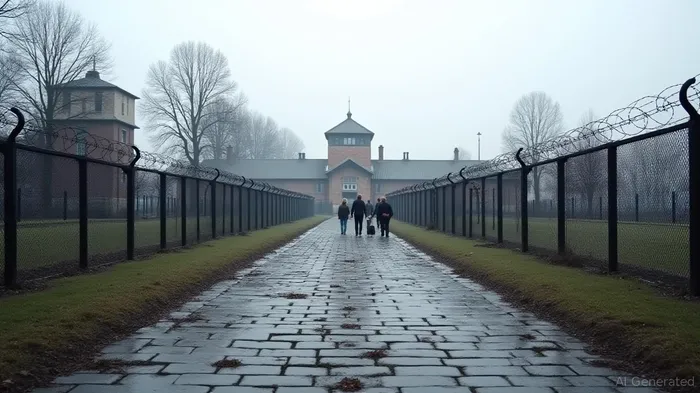
Dark tourism—the practice of visiting sites of historical tragedy—has emerged as a global phenomenon, with Poland at its epicenter. The Auschwitz-Birkenau Memorial alone attracts millions annually, while the Warsaw Uprising Museum draws history enthusiasts to its immersive exhibits. The global dark tourism market, valued at $31.89 billion in 2023, is projected to grow at a 2.9% CAGR through 2030, driven by travelers seeking meaningful, emotionally charged experiences.
Poland's tourism revenue is expected to hit $9.7 billion in 2025, with memorial sites playing a central role. By 2025, the sector could contribute 4.4% of Poland's GDP (PLN 165.5 billion), surpassing pre-pandemic levels. Domestic tourism has already rebounded strongly, with spending projected to reach PLN 44.9 billion—a 10.8% increase over 2019—while international tourism lags slightly behind but shows clear recovery.
Why Memorial Sites Matter: Emotional Engagement as a Competitive Advantage
The emotional significance of Poland's memorial sites is unmatched. Visitors to Auschwitz often describe the experience as “transformative,” while the Warsaw Uprising Museum blends education with interactive storytelling. This emotional engagement drives repeat visits and word-of-mouth marketing.
Investors should note that 70% of travelers now prioritize cultural and historical experiences, per recent surveys. Poland's memorial sites align perfectly with this shift. Additionally, the government's push to modernize infrastructure—such as improved rail links and sustainable tourism initiatives—positions the country to capitalize on this demand.
The Investment Playbook: Where to Look
- Memorial Site Management: Companies or entities managing sites like Auschwitz could benefit from rising visitation. While direct investments may be limited, ETFs tracking European tourism infrastructure (e.g., DBX, which includes travel and leisure stocks) offer exposure to the sector.
- Infrastructure Development: Poland's 2025-2035 tourism plan calls for upgrades to transportation and accommodations. Firms involved in hotel construction or tech-driven visitor management systems (e.g., apps for guided tours) could see growth.
- Sustainability-Driven Innovation: Eco-friendly initiatives, such as renewable energy projects at tourist sites or carbon-neutral transport options, are critical. Investors might explore renewable energy stocks in Poland or green infrastructure funds.
- Cultural Heritage Tech: Startups developing AR/VR experiences for historical sites (e.g., virtual tours of Wawel Castle) could attract venture capital as demand for immersive experiences grows.
Risks and Considerations
- Overcrowding: Sites like Auschwitz face logistical challenges. Investors should monitor infrastructure investments to mitigate bottlenecks.
- International Recovery Lag: While domestic tourism is strong, international arrivals remain 2.8% below 2019 levels. Marketing efforts targeting key markets (e.g., Germany, Ukraine) will be critical.
- Regulatory Risks: Managing historical sites requires compliance with preservation laws. Investors must assess regulatory flexibility.
Conclusion: A Legacy of Growth
Poland's memorial sites are not relics of the past—they are pillars of a thriving tourism economy. With $31.89 billion in global dark tourism spend and Poland's strategic investments in infrastructure and sustainability, the sector is poised for sustained growth. For investors, the path forward is clear: allocate to infrastructure, tech, and sustainability-driven opportunities tied to Poland's historical landmarks.
In a world hungry for meaning, Poland's history is its greatest asset. Investors who recognize this—and act now—will reap the rewards of a timeless story.







Comentarios
Aún no hay comentarios