
Poland's Fiscal Juggernaut: Can Defense Spending Outpace the Reserve Rollback?
Poland finds itself in an intriguing fiscal paradox: its foreign reserves hit a record $247.6 billion in June 2025, yet projections predict a steady decline to $200 billion by 2026. Meanwhile, defense spending is soaring to a staggering 4.7% of GDP—more than double NATO's 2% guideline. This isn't just about numbers; it's a high-stakes balancing act between national security and economic stability. Let's dissect whether Poland's fiscal firewagon can stay on the tracks—or if investors should brace for a derailment.
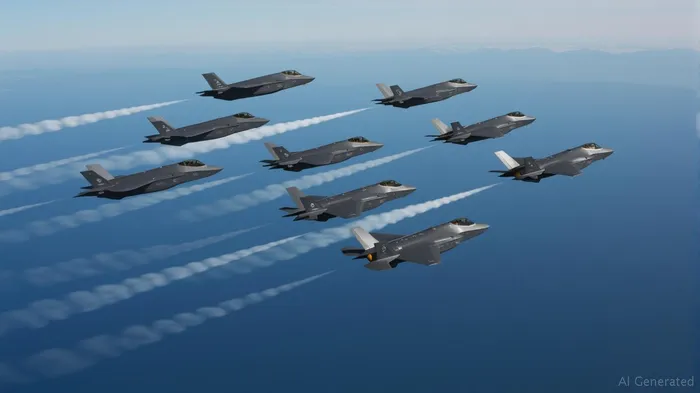
The Defense Spending Blitz
Poland's 2025 defense budget of $45 billion (up from $38 billion in 2024) is a bold play to become NATO's Eastern bulwark. The funds are fueling purchases of U.S. hardware: F-35 jets, Apache helicopters, and Abrams tanks. This isn't just about patriotism—it's a geopolitical insurance policy against Russian aggression. But here's the rub: 80% of Poland's military equipment is imported, mostly from the U.S. and Germany. Those purchases require hard currency, which eats into foreign reserves.
The funding mix is a three-legged stool:
1. Domestic budgets: The state allocates 4.7% of GDP directly.
2. Armed Forces Support Fund: A $3.8 billion war chest from the National Development Bank.
3. Foreign loans: Like the $2 billion U.S. Foreign Military Financing loan.
But what happens if those loans dry up? The EU's Readiness 2030 package offers some relief—$150 billion in loans via the EU's SAFE instrument—but Poland's debt-to-GDP ratio is already creeping toward its 60% constitutional ceiling.
Source: National Bank of Poland, NATO reports
The Reserve Rollercoaster
Foreign reserves are the fiscal “airbag” for a country like Poland. They buffer against currency collapses, trade deficits, or capital flight. Yet reserves are projected to drop $45 billion in just over a year. Why?
- Defense Dollars Drain Reserves: Buying U.S. jets and tanks requires paying in greenbacks.
- Eurozone Uncertainty: A weaker zloty (PLN) could force the NBP to sell reserves to stabilize the currency.
- Interest Rate Risks: The NBP's 5.75% benchmark rate—held steady since 2023—is a double-edged sword. It curbs inflation (now 4.9%, above target) but also crimps growth.
The NBP's strategy is “safety first”—70% of reserves are in Treasuries and AAA bonds. But with projections showing reserves dipping to $200 billion by 2026, the question is: Will Poland's fiscal “airbag” inflate or deflate?
The Sustainability Crossroads
Three factors will decide whether Poland's fiscal high-wire act succeeds:
- Debt Discipline: Can Poland keep its debt-to-GDP ratio below 60%? Current estimates suggest it's already near 55%, and every $1 billion in defense spending pushes it higher.
- EU Funds: The €60 billion in EU Recovery Funds (subsidies and loans) provide a lifeline. But EU rules require “absorption capacity”—if Poland can't spend the money fast enough, the funds lose their oomph.
- Geopolitical Gambles: If Ukraine's war drags on, Poland's border security costs (already $126 million allocated) could balloon.
Investment Takeaways: Play the Edge or Play It Safe?
- Bull Case: Poland's military buildup is a “buy” if you believe deterrence works. Investors might profit from:
- ETFs: The iShares MSCIMSCI-- Poland ETF (EPOL) gives exposure to local equities.
Defense Suppliers: U.S. firms like Lockheed MartinLMT-- (LMT) and Raytheon (RTX) benefit from Poland's hardware hunger.
Bear Case: A fiscal reckoning could come if debt spirals or the zloty weakens. Consider:
- Short the PLN/USD: If reserves decline, the zloty could falter.
- Avoid Polish Sovereign Bonds: Their yields (now ~4.5%) might rise as risk premiums climb.
Source: Bank of Poland, Trading Economics
Final Take: A High-Stakes Gamble with Payoff Potential
Poland is all-in on defense, and investors must decide if the bet pays off. The reserves decline is a red flag, but the NBP's conservative management and EU funds provide a safety net. For now, the fiscal policy is sustainable—but the margin for error is narrowing. Aggressive investors might nibble on EPOL or defense stocks, but keep a close eye on Poland's debt trajectory and zloty stability. This isn't just about Poland—it's a microcosm of how geopolitics and fiscal policy collide in today's volatile world.
Stay hungry, stay cautious, and keep your powder dry!
—The Mad Money Analyst





Comentarios
Aún no hay comentarios