
Poland's Fiscal Expansion: A Value Investor's Play in European Fixed Income
Poland's budget deficit has surged to PLN 289 billion (€63.5 billion) by mid-2025, a stark departure from pre-pandemic projections that envisioned a narrower fiscal path. For value investors scouring European fixed income markets, this widening deficit presents a paradox: a potential buying opportunity in zloty-denominated government bonds, driven by undervalued spreads, structural reforms, and the ECB's evolving policy stance. Here's why Poland's fiscal expansion could be a hidden gem in European bond markets—and how to time the entry.
The Deficit Surge: Drivers and Context
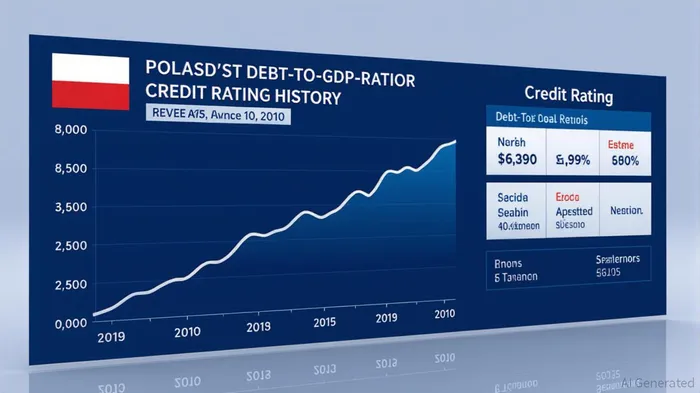
Poland's deficit has ballooned due to record defense spending (PLN 186.6 billion, or 4.7% of GDP), healthcare investments (PLN 221.7 billion, a 16% annual rise), and social programs like the “Family 800+” allowance. These expenditures contrast sharply with the 3.5% deficit projected pre-pandemic in 2019. While the government insists the deficit is manageable, with GDP growth forecasted at 3.9% in 2025, the OECD has flagged risks: public debt is now projected to hit 57.7% of GDP, up from 44% in 2020.
Why Value Investors Should Look Beyond the Headlines
Undervalued Yield Spreads: Poland's 10-year bond yields currently trade at 3.8%, a 200 basis point premium over German Bunds. This widening spread reflects market skepticism about fiscal sustainability, but it also creates a margin of safety. Historically, Poland's spreads have averaged 150 basis points over Germany during stable periods. The current gap suggests a potential reversion to the mean.
ECB Support and Liquidity: The ECB's Corporate Sector Purchase Programme (CSPP) and potential inclusion of more Polish bonds in its asset purchases could provide liquidity backstops. While Poland's credit rating (BBB+ from S&P) remains investment-grade, any ECB support would mitigate tail risks of a downgrade.
Structural Reforms and Inflation Control: The government's Green Bond Framework (launched June 2025) signals a commitment to fiscal discipline in capital expenditures. Meanwhile, Poland's inflation has moderated to 4.0% year-on-year in May 2025, below the ECB's 2% target but within manageable bounds. A 5.2% average wage growth in 2025 may further anchor inflation expectations, reducing pressure for aggressive rate hikes.
Risks and the Timing of Investment
The key risks lie in credit rating downgrades (unlikely unless deficits exceed 7% of GDP) and slower-than-expected GDP growth. However, two Q4 data points could validate Poland's fiscal path:
- Producer Price Index (PPI): Rising PPI could signal cost pressures, but if moderated by productivity gains, it would support bond valuations.
- Housing Starts: A rebound in construction activity (down 2.9% year-on-year in May 2025) would indicate private-sector confidence, underpinning GDP growth.
The Investment Thesis: Buy Ahead of Q4 Data
Polish bonds offer a compelling risk-reward trade: a 3.8% yield with a 200 basis point cushion over German Bunds, coupled with a fiscal narrative that could stabilize—or even narrow—spreads by year-end. The ECB's dovish pivot and Poland's focus on defense/healthcare spending (long-term growth drivers) justify a gradual accumulation of 5-7 year bonds now.
For cautious investors, pair exposure with a zloty currency hedge until Q4 data confirms growth resilience. Aggressive investors might consider long-dated bonds (10Y+) if spreads continue to widen, betting on a eventual ECB-led compression.
Final Takeaway
Poland's deficit is a double-edged sword: it reflects fiscal overreach but also strategic investment in security and social welfare. For value investors, the current spread volatility presents an entry point into a bond market poised for stabilization. With Q4 data acting as a catalyst, now is the time to position for a potential re-rating of Polish fixed income.







Comentarios
Aún no hay comentarios