
Poland's Economic Resilience and Attractiveness in a Volatile Global Landscape: Strategic Investment Opportunities Amid Policy Shifts and Geopolitical Tensions
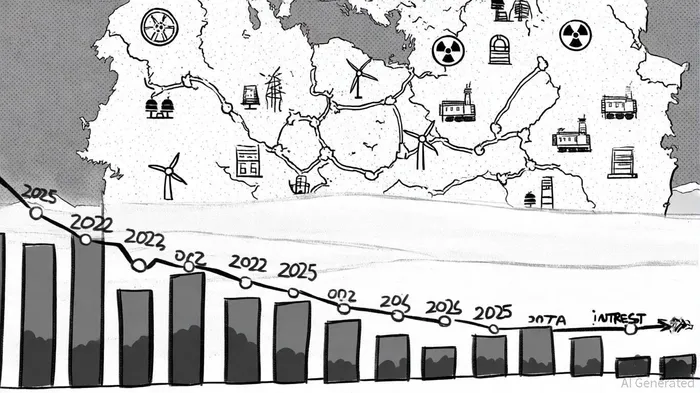
In a world defined by macroeconomic uncertainty and geopolitical volatility, Poland has emerged as a compelling case study in balancing strategic reform with risk mitigation. As September 2025 unfolds, the country's dual focus on monetary easing, infrastructure modernization, and energy transition is creating a unique investment landscape. Yet, these opportunities are shadowed by escalating tensions with Russia and Belarus, which have disrupted critical trade corridors. For investors, the challenge lies in navigating this duality—leveraging Poland's policy-driven growth while hedging against geopolitical headwinds.
Monetary Policy: A Catalyst for Growth
The National Bank of Poland (NBP) has signaled a clear pivot toward accommodative monetary policy, cutting its reference rate by 25 basis points in September 2025 to 4.75%, the lowest level since April 2022[2]. This move reflects a broader trend: inflation has remained within the central bank's 1.5–3.5% target range since July, easing pressure to maintain restrictive rates. Analysts now anticipate at least 25 additional basis points of cuts by year-end[2], which could further stimulate borrowing and investment.
Such policy flexibility is critical for a country aiming to outpace regional growth. With Poland's GDP projected to expand by 4% in 2025[3], the combination of lower borrowing costs and stable inflation creates a favorable environment for both domestic and foreign capital. However, investors must remain cautious: while the NBP's easing cycle supports near-term growth, global inflationary risks—particularly in energy and commodities—could reintroduce volatility.
Strategic Reforms: Building a Future-Ready Economy
The Polish government's 2025 economic strategy[1] underscores a long-term vision centered on six pillars: science, energy transformation, new technologies, infrastructure modernization, capital market development, and business deregulation. This plan is not merely aspirational; it is backed by concrete allocations. For instance, PLN 500 million has been earmarked for the National Science Centre, while universities will receive PLN 1.5 billion to bolster R&D[1]. These investments aim to position Poland as a regional hub for innovation, particularly in sectors like artificial intelligence and green technology.
Equally significant is the focus on infrastructure. The government has allocated PLN 180 billion for railway modernization[1], a move designed to enhance logistics efficiency and support port expansion. By tripling port cargo capacity by 2030, Poland is positioning itself as a critical node in European trade networks. For investors, this means opportunities in construction, logistics, and technology-enabled infrastructure projects.
Energy Transition: A Dual Opportunity
Poland's energy strategy[1] is perhaps its most transformative element. The decision to build a nuclear power plant in the Kashubian region, alongside offshore wind farm developments, signals a departure from coal dependency. While nuclear energy carries long-term risks and high upfront costs, it also offers a stable, low-emission power source that aligns with EU climate goals. Offshore wind, meanwhile, taps into Poland's Baltic coastline, creating a renewable energy corridor that could attract green-tech investors.
The energy transition also intersects with geopolitical risk. By diversifying its energy mix, Poland reduces reliance on Russian gas—a strategic imperative in light of recent drone incursions and border closures. This shift not only enhances energy security but also positions Poland as a leader in Central Europe's decarbonization agenda.
Geopolitical Risks: Navigating the New Normal
The September 2025 closure of Poland's border with Belarus[2] has had immediate and far-reaching consequences. By halting 90% of Chinese rail cargo via the China-Europe Railway Express, the move disrupted supply chains for companies like Temu and Shein[2], which rely on fast, cost-effective transport. While the European Commission has endorsed Poland's security-driven stance[2], the economic fallout is undeniable.
However, Poland's response has been multifaceted. NATO allies have reinforced air policing over the country[3], and the government is exploring alternative routes, such as maritime shipping or rerouting via Kazakhstan[2]. For investors, this underscores the importance of supply chain resilience. Sectors that can adapt to rerouted logistics—such as maritime freight or digital trade platforms—may find new opportunities.
Strategic Investment Positioning
Poland's economic trajectory in 2025 is defined by a delicate balance: leveraging policy-driven growth while managing geopolitical risks. For investors, the key is to align with sectors that benefit from both the country's strategic reforms and its role as a NATO frontline state.
- Infrastructure and Logistics: With PLN 180 billion allocated for railway modernization[1], construction firms and technology providers (e.g., smart grid solutions) are well-positioned.
- Energy Transition: Nuclear and offshore wind projects offer long-term value, particularly as EU climate regulations tighten.
- Deregulation and SMEs: The government's push for business-friendly policies[1] could unlock growth in small and medium enterprises, especially in tech and manufacturing.
- Geopolitical Hedging: Investors should consider diversifying supply chains or investing in cybersecurity and defense-related industries to mitigate risks.
Conclusion
Poland's 2025 economic strategy and monetary policy adjustments have created a robust foundation for growth. Yet, the country's geopolitical challenges—exemplified by the border closure and drone incursions—highlight the need for strategic caution. For investors, the path forward lies in capitalizing on Poland's policy momentum while hedging against regional instability. As the country navigates this complex landscape, its ability to transform risk into resilience will define its attractiveness in the years ahead.







Comentarios
Aún no hay comentarios