
Plug Power's Uzbekistan Deal: A Pivotal Leap Toward Global Hydrogen Dominance
Plug Power (NASDAQ: PLUG) is making a bold play for leadership in the global green hydrogen economy with its newly announced 2 GW electrolyzer partnership in Uzbekistan, part of a broader 5 GW alliance with Allied Green Ammonia (AGA). This strategic move underscores Plug's ambition to scale its technology across continents while capitalizing on near-term catalysts like the final investment decision (FID) for its 3 GW Australian project in Q4 2025. For investors, the question is clear: Can Plug leverage these milestones to transform its financial trajectory and justify its role in hydrogen-focused ETFs like HYDR and HDRO?
The 5 GW Play: A Blueprint for Global Scale
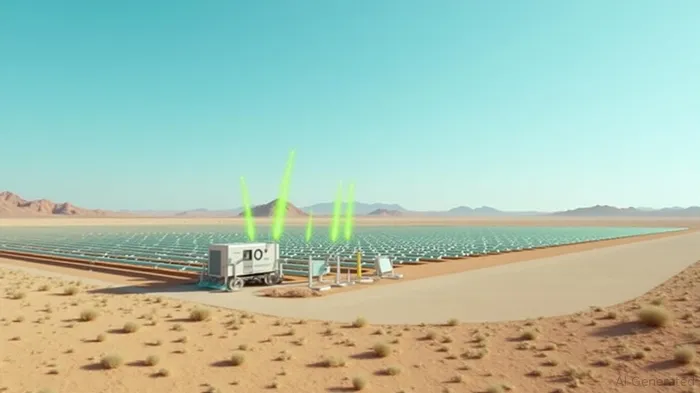
Plug's partnership with AGA marks a critical step in its transition from a niche player in industrial hydrogen to a cornerstone of the green hydrogen economy. The 2 GW Uzbekistan project, backed by the Uzbek government, will produce sustainable aviation fuel, green urea, and diesel—sectors with massive growth potential as industries decarbonize. Combined with the 3 GW Australian project (which will utilize a 4.5 GW solar array), the 5 GW commitment establishes Plug as a go-to partner for large-scale green ammonia and hydrogen facilities.
The Uzbekistan deal's strategic value cannot be overstated. The country's government has made green hydrogen a pillar of its economic diversification strategy, offering low-cost solar power and geographic proximity to Asian and European markets. With electrolyzer manufacturing costs projected to drop 40% by 2030, Plug's early dominance in this region could lock in long-term supply contracts and favorable terms.
Near-Term Catalysts: Q4 2025 FID and Beyond
The most immediate catalyst is the FID for the Australian project, expected by the end of 2025. Once secured, Plug will begin delivering electrolysers in Q1 2027, creating a clear revenue runway. The Uzbekistan project's FID timeline, while less publicized, is also critical: delays here could disrupt the company's backlog, now at 8 GW, including the Bedford Energy District Project.
Analysts should watch Plug's electrolyzer revenue closely. In Q1 2025, this segment surged 75% to $133.7 million, driven by early-stage projects. If the Australian FID is met, revenue growth could accelerate further, potentially lifting gross margins from their current -55% trough.
Competitive Edge: Plug vs. Bloom Energy and Air Products
Plug's execution is its strongest suit compared to peers. Bloom Energy (BE), while lauded for its solid oxide electrolyzer efficiency, faces delays in project timelines—its 100 MW Lingen project in Germany won't ramp until 2027. Air Products (APD), a leader in blue hydrogen, has struggled with green hydrogen cancellations (e.g., Massena in 2025) and relies on carbon capture, a higher-cost alternative to green's renewable feedstocks.
Plug's advantage lies in its integrated ecosystem: electrolyzers paired with hydrogen production, storage, and delivery. Its 72,000 deployed fuel cells and 275 stations provide a customer base hungry for end-to-end solutions. Meanwhile, Bloom's focus on industrial sectors and Air's blue hydrogen dominance leave gaps in Plug's core strength—scalable green hydrogen infrastructure.
Valuation: A Risky Gamble or a Hidden Gem?
Plug's stock trades at $1.37—a 60% drop from its 52-week high—despite a $30 million U.S. tax credit win for its Louisiana Hydrogen Hub. The company's $1.1 billion debt and negative operating margins (-153.8% over four quarters) are daunting. Yet, its inclusion in HYDR and HDRO ETFs (holding 15.6% of its market cap) signals institutional optimism.
Investors must weigh risks against sector tailwinds. The global green hydrogen market is projected to hit $200 billion by 2030, and Plug's first-mover advantage in electrolyzers could pay off. Project Quantum Leap, targeting $200 million in annualized cost savings by 2026, offers a lifeline to profitability—if executed flawlessly.
Investment Thesis: Act Before the FID Crossroads
Plug Power is a high-risk, high-reward bet. The Q4 FID for the Australian project is a binary event: meet it, and revenue growth could validate its valuation; miss it, and the stock may sink further. Yet, the long-term opportunity is undeniable. With governments like Uzbekistan's backing and a backlog of 8 GW, Plug is positioning itself as the Amazon of green hydrogen infrastructure.
For investors willing to bet on execution, Plug's current valuation—1.3x sales—offers a speculative entry. But urgency is key: once competitors like Siemens and Ballard Power ramp up production, Plug's lead could narrow. The next six months will test whether this gamble pays off.
Final Take: Plug's Uzbekistan deal is more than a project—it's a signal of its global ambitions. Investors should monitor the Q4 FID closely. With hydrogen demand surging and ETFs taking stakes, now is the time to decide: Is Plug a leader or a laggard?





Comentarios
Aún no hay comentarios