
Plug Power's Green Hydrogen Gambit: A Strategic Catalyst for Sustained Growth?
The recent meteoric rise in PlugPLUG-- Power's stock price has captured the attention of investors and analysts alike, with the company surging 203% year-over-year in 2025. This rally, however, is not merely a speculative frenzy but a reflection of tangible progress in the green hydrogen sector-a market poised to grow at a staggering 41.3% CAGR from 2025 to 2030, expanding from $3.84 billion to $21.63 billion according to market analysis. For investors seeking exposure to the clean energy transition, Plug Power's strategic positioning, technological innovation, and capital access present a compelling case for long-term potential. Yet, the question remains: Is this rally a sustainable inflection point or a fleeting momentum play?
Strategic Partnerships and Market Expansion
Plug Power's 2025 momentum is anchored by its ability to translate green hydrogen's theoretical promise into scalable infrastructure. A pivotal milestone was the installation of a 5 megawatt GenEco electrolyzer at Namibia's first commercial green hydrogen plant, a project that underscores the company's global reach. This achievement aligns with broader decarbonization goals, particularly in regions like Africa, where hydrogen is increasingly viewed as a cornerstone for energy independence according to market reports.
Equally significant is Plug Power's partnership with GH2 to deploy hydrogen fuel cell logistics hubs across Brazil according to industry reports. This collaboration targets the logistics sector, a high-growth application for hydrogen, and aligns with Plug's 2028 target of achieving 1,000 tonnes per day of green hydrogen use. By focusing on logistics and industrial applications, Plug is tapping into sectors with immediate demand, reducing reliance on the slower-moving transportation market.
Technological and Financial Tailwinds
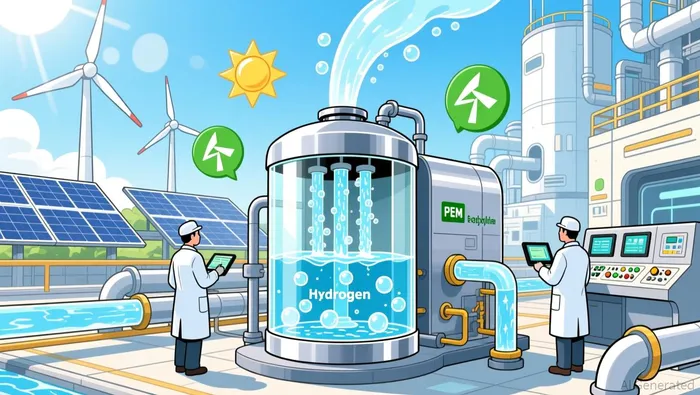
Plug's technological advancements further solidify its competitive edge. The deployment of both PEM and alkaline electrolyzers- technologies expected to dominate the market-positions the company to meet diverse client needs. For instance, PEM electrolyzers are ideal for renewable energy integration, while alkaline systems offer cost advantages for large-scale projects according to market analysis.
 Financially, the company's $1.66 billion conditional loan guarantee from the U.S. Department of Energy (DOE) according to financial reports is a game-changer. This funding not only de-risks capital-intensive projects but also accelerates the development of six U.S. green hydrogen plants, leveraging the Inflation Reduction Act's (IRA) incentives for clean energy. The IRA's tax credits for hydrogen production (Section 45V) according to policy analysis are expected to reduce costs for producers like Plug PowerPLUG--, making green hydrogen more economically viable.
Competitive Positioning in a Fragmented Market
Plug Power operates in a market dominated by global players such as Nel ASA and ITM Power. Nel ASA, for example, is scaling up in Europe with a 280 MW electrolyzer project tied to German wind farms according to market analysis, while ITM Power has secured a 3 GW order for an Australian green ammonia scheme according to industry reports. However, Plug's focus on North America-a region with robust policy support and underpenetrated demand-gives it a unique advantage. The U.S. is projected to become a hydrogen hub, with infrastructure projects and industrial clusters addressing current bottlenecks like storage and transportation according to research.
Moreover, Plug's operational execution outpaces many peers. The company shipped 185 MW of GenEco electrolyzers in 2025, a 203% year-over-year increase, and expanded production at facilities in Georgia and Tennessee. This scalability is critical in a market where first-mover advantages and cost reductions through learning curves are decisive.
Risks and Realities
Despite these strengths, challenges persist. Green hydrogen remains costlier than fossil-derived alternatives, and infrastructure gaps could delay widespread adoption according to market analysis. Plug's reliance on government subsidies also introduces regulatory risk, though the IRA's long-term incentives mitigate this to some extent. Additionally, competition from low-cost producers in Europe and Asia could pressure margins.
Is This a Compelling Entry Point?
For investors, the key question is whether Plug Power's rally reflects overvaluation or undervalued potential. The company's stock surge is driven by concrete milestones-commercial deployments, DOE funding, and strategic partnerships-that align with the green hydrogen market's explosive growth trajectory. While the stock's 2025 performance may have priced in some optimism, the underlying fundamentals suggest this is a long-term play rather than a short-term trade.
Plug Power's ability to execute on its 2028 target of 1,000 tonnes per day of green hydrogen use will be critical. Success here would not only validate its business model but also position it as a key enabler of decarbonization in logistics, refining, and industrial sectors. For investors with a 5–10 year horizon, the current rally appears to signal a strategic inflection point rather than a speculative peak.
Conclusion
Plug Power's stock surge is a testament to its leadership in a market on the cusp of transformation. By combining technological innovation, strategic partnerships, and favorable policy tailwinds, the company is well-positioned to capitalize on the green hydrogen boom. While risks remain, the alignment of market dynamics and Plug's operational execution makes it a compelling candidate for investors seeking exposure to the clean energy transition. As the world races to meet net-zero targets, Plug Power's electrolyzers may well become the backbone of a hydrogen-powered future.







Comentarios
Aún no hay comentarios