
Plug Power's Downgrade: A Tactical Mispricing Setup?
The specific catalyst is clear. Yesterday, TD Cowen downgraded Plug PowerPLUG-- from Buy to Hold, slashing its price target by half to $2.00 from $4.00. This move directly feeds into a broader, more ominous narrative for the sector. Just last week, a Wood Mackenzie report framed 2026 as a "year of reckoning," warning of a major reevaluation of project economics that is tempering the industry's earlier enthusiasm. The downgrade acts as a sharp amplifier for this sector-wide pessimism, turning a company-specific event into a signal for a wider industry reset.
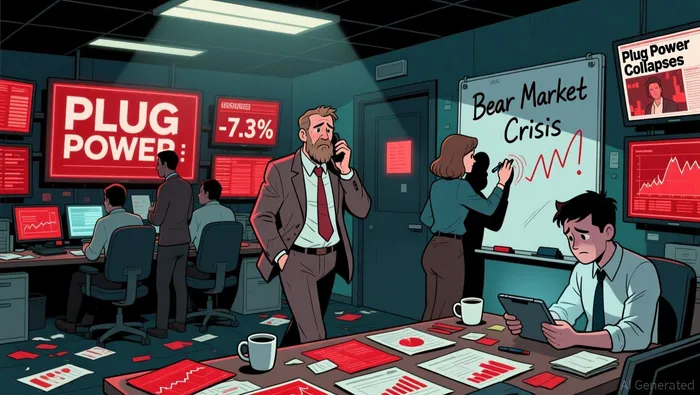
The market's reaction has been extreme, but not necessarily rational. Plug Power's stock is a known volatility magnet, having experienced 89 separate price swings of more than 5% over the past year. This inherent instability means that any negative catalyst, like the TD Cowen downgrade, can trigger outsized moves. The stock's 7.3% drop on the news is a classic example of this amplification effect. The downgrade didn't just change one analyst's view; it provided a focal point for the sector's deeper anxieties, causing the stock to swing violently on the news.
The setup here is tactical. The downgrade is a real event, but its impact is magnified by the stock's extreme volatility and the pre-existing "year of reckoning" narrative. This creates a potential mispricing opportunity. The market is reacting to the downgrade as if it fundamentally alters Plug Power's long-term trajectory, when in reality, the stock's wild swings often reflect sentiment shifts rather than immediate changes in business fundamentals. The key is to separate the signal from the noise.
The Trade Setup: Where's the Edge?
The immediate risk/reward hinges on separating the downgrade's signal from the stock's noise. The price action on the news was telling: a 7.3% decline that saw shares trade as low as $2.24. Yet volume was only 67% of average, a classic sign of a non-urgent, sentiment-driven sell-off rather than a fundamental capitulation. This suggests the move may be more about traders reacting to the headline than a deep revaluation of the business.
The new $2 price target from TD Cowen implies roughly 50% downside from recent levels. That's a steep drop, but it's not a new low. The stock's 52-week high was $4.58, meaning there's still significant room for volatility in either direction. The setup is one of high uncertainty, where the stock could easily swing back toward that high if sentiment shifts, or fall further if liquidity concerns intensify.
That brings us to the critical near-term pressure point. The company raised $370 million through warrant exercises after ending Q3 with just $166 million in cash. While that injection provides a buffer, it underscores a persistent liquidity squeeze. For a stock trading near $2, this creates a tangible overhang. Any stumble in the business or a further pullback in sentiment could reignite fears about the cash runway, making the downside more acute than the analyst target suggests.
The edge here is tactical, not directional. The downgrade is a real event, but the stock's reaction was amplified by its extreme volatility and the pre-existing sector pessimism. The low volume on the drop hints at a potential oversold bounce, while the warrant raise highlights a fundamental vulnerability. The risk/reward is skewed toward the downside in the near term due to liquidity pressure, but the stock's history shows it can quickly reverse on any positive catalyst. For a trader, the edge lies in the mispricing created by this volatility, not in a clear fundamental breakout.
Catalysts & What to Watch
The tactical mispricing thesis now hinges on a few clear, near-term events. The first is the company's next earnings date, estimated for Monday, March 2, 2026. This report will be the critical test. Investors will be looking for updated guidance on when the company expects to reach breakeven, a key metric that has been pushed back multiple times. Any shift in that timeline, positive or negative, will directly impact the stock's valuation and the validity of the current low price.
The operational driver to watch is electrolyzer revenue. This segment showed strong momentum in Q3, with revenue surging 46% sequentially to $65 million. The trend from that high base will be telling. Sustained growth here would confirm commercial traction and support the long-term thesis, while a slowdown would validate the sector's "year of reckoning" narrative and likely pressure the stock further.
Finally, monitor the broader sector narrative. The "year of reckoning" for the hydrogen sector is not just a headline; it's a fundamental reassessment of project economics. Watch if Plug Power's volatility persists as a standalone issue, or if the stock begins to move more in line with sector-wide sentiment. A shift in the narrative-toward renewed optimism on offtake deals or cost reductions-could provide a powerful tailwind, while continued pessimism would reinforce the downside risk. The setup is now a race between these catalysts.







Comentarios
Aún no hay comentarios