
Plug Power: Decoding the Walmart Deal vs. the TD Cowen Downgrade
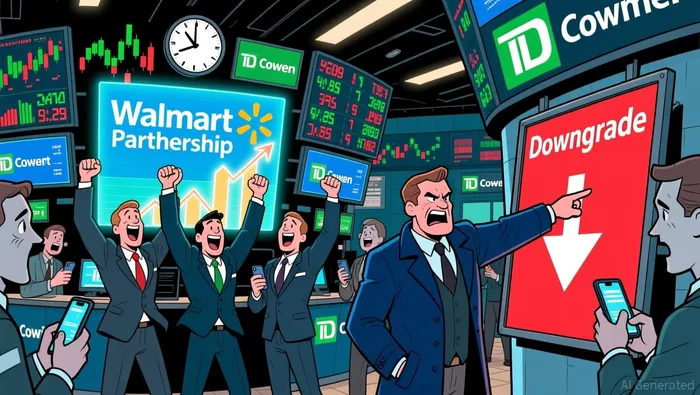
Plug Power's stock is caught in a tug-of-war between two powerful, opposing forces. On one side, a strategic partnership with WalmartWMT-- announced on December 30 sparked a 4.1% rise on Monday. On the other, TD Cowen delivered a sharp downgrade, cutting its price target from $4 to $2 and moving the stock to a Hold rating. This downgrade implies a potential 13.8% downside from recent levels.
The setup creates extreme volatility. The stock has had 89 moves greater than 5% over the last year, a clear sign of a market in constant flux. This choppiness is reflected in its long-term performance, with shares down 13.1% over the past year. The recent news cycle perfectly illustrates this instability: just days before the TD Cowen downgrade, the stock had jumped 7.3% on a separate analyst upgrade from Clear Street. In this environment, the immediate catalysts-this partnership and this downgrade-define the risk/reward for the next few trading sessions. The question for investors is simple: which force currently holds more weight?
The Walmart Deal: A Structural Shift or a Side Bet?
The Walmart partnership is a clean-up operation, not a transformative revenue contract. The core deal is a 15-year Release Event License Agreement that gives Walmart contingent access to escrowed GenKey materials. This is a limited-use license, aimed at helping Walmart identify alternative stack suppliers if needed, while Plug PowerPLUG-- retains full control of its intellectual property.
The most significant immediate impact is the removal of a major overhang. Walmart terminated its 2017 deal and forfeited all vested and unvested Plug Power warrants. This action eliminates the very large potential share issuance that could have diluted existing shareholders, a clear positive for the capital structure.
Yet the deal itself does not represent a direct, large-scale revenue contract for Plug Power. It is structured with license fees and indemnities, but the financial terms are not disclosed as a major new revenue stream. In essence, this is a side bet that secures a future option for Walmart and tidies up the balance sheet, but it does not change the near-term focus on liquidity and cash burn.
For investors, the key takeaway is one of risk mitigation, not growth acceleration. The partnership removes a dilution risk and provides a framework for long-term collaboration, but it does not alter the fundamental financials or the path to profitability. The stock's rally on the news reflects relief on the warrant issue, but the core investment thesis-hinging on Project Quantum Leap cost reductions and securing future capital-remains unchanged.
The TD Cowen Thesis: Operational Weakness and Sector Headwinds
The TD Cowen downgrade is rooted in tangible financial weakness, not just sector sentiment. The firm's analysis points directly to a recent quarter where Plug Power reported negative EPS and missed revenue estimates. This operational shortfall is the bedrock of their skepticism. The downgrade to a Hold rating, with a price target of just $2, reflects a clear reassessment of near-term profitability. The broader analyst consensus mirrors this caution, sitting at a Hold with a $2.73 price target and showing a split of 2 Strong Buy, 4 Buy, 8 Hold, and 6 Sell ratings.
The concerns extend beyond the company's own performance. TD Cowen's move coincides with a harsher outlook for the entire hydrogen sector. A report cited by Yahoo Finance refers to 2026 as a "year of reckoning for the hydrogen sector," marked by a "fundamental reassessment of what drives project economies." This suggests the optimism of previous years is facing a reality check, which directly pressures Plug Power's growth narrative and valuation.
Are these concerns valid? The evidence shows they are. The company's recent financials confirm the operational struggles cited by TD Cowen. More broadly, the sector's "year of reckoning" narrative is a material headwind. For Plug Power, this means the path to profitability is not just a company-specific challenge but one that is being scrutinized against a tougher industry backdrop. The downgrade, therefore, is not an isolated opinion but a reflection of a confluence of weak quarterly results and a challenging sector environment.
The Setup: Valuation, Catalysts, and What to Watch
The stock now trades at $2.28, a level that sits in a contested zone. It is above the $2.00 price implied by TD Cowen's downgrade, which suggests the market is not fully pricing in that worst-case scenario. Yet it remains below the firm's own $2 price target, indicating skepticism persists. This positioning sets up a clear near-term battleground.
The immediate catalysts are logistical and financial. First, a special shareholder meeting on January 15 will vote on a proposal to double the company's authorized share count. This move, aimed at securing future capital flexibility, is a direct response to the cash burn that fuels the downgrade's thesis. A vote against it could trigger a sharp negative reaction. Second, Plug Power is scheduled to participate in the Goldman Sachs Energy, CleanTech & Utilities Conference in the coming weeks. These investor events offer a platform to restate the operational turnaround plan and project economics, providing a potential counter-narrative to the sector's "year of reckoning."
Yet the primary risk remains the company's financial runway. All these events-partnerships, conferences, share authorization-must ultimately support a credible path to profitability. The Walmart deal mitigates one overhang, but it does not change the fundamental need for capital. The stock's extreme volatility, with 89 moves greater than 5% over the last year, shows how quickly sentiment can flip on news of cash burn or progress. For now, the setup is one of high-stakes event trading, where the outcome of the January 15 vote and the tone of upcoming conferences will likely dictate the next major move.





Comentarios
Aún no hay comentarios