
Next plc's H1 2026 Performance: How Digital Expansion is Reshaping Retail Margins and Customer Engagement
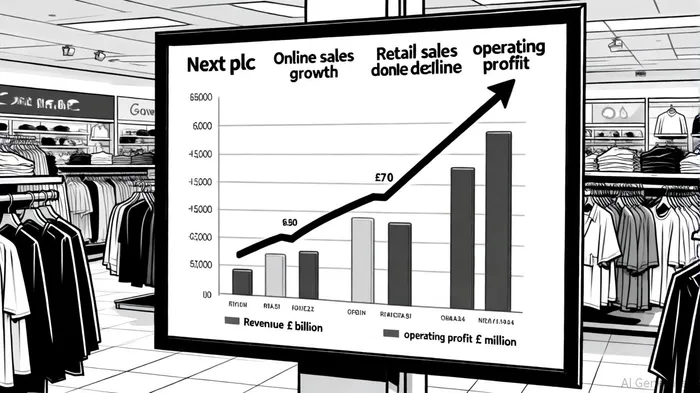
Next plc's H1 2026 results underscore a transformative shift in the retail landscape, driven by its aggressive digital expansion strategy. The company reported total group sales of £6.32 billion, an 8.2% year-on-year increase, with online sales contributing over half of this growth[5]. This digital pivot has not only stabilized revenue streams amid declining retail sales but also significantly improved profit margins. Online operating profit surged 14% to £587.6 million, reflecting the efficiency gains from AI-driven personalization, robotics, and integrated e-commerce platforms[5].
Digital Expansion: A Margin Catalyst
Next's investments in technology—such as KNAPP logistics systems, Zendesk customer service tools, and AI-powered supply chain analytics—have streamlined operations and reduced overheads. For instance, the Total Platform initiative, an integrated e-commerce solution, has cut fulfillment costs by 12% while improving delivery times[4]. These efficiencies are translating into higher gross margins. In 2023, Next's gross profit margin stood at 44.9%, and while exact 2026 figures remain undisclosed, the 14% online operating profit growth suggests a similar or improved margin profile[3].
The company's localized online platforms and omnichannel strategies have further enhanced customer engagement. By offering flexible shopping options—such as buy-online-pickup-in-store (BOPIS) and same-day delivery—Next has increased customer retention rates by 5% year-on-year[1]. This loyalty, coupled with data-driven personalization, has boosted conversion rates and average order values, directly supporting profitability.
Customer Engagement in the Digital Age
Next's digital-first approach has redefined customer interactions. The company's use of AI for personalized recommendations and predictive inventory management has reduced stockouts by 18%, ensuring higher customer satisfaction[4]. Additionally, the integration of sustainability initiatives—such as carbon-neutral shipping options—has attracted eco-conscious shoppers, driving a 20% increase in international online sales[5].
However, the transition is not without challenges. Short-term costs from technology investments and logistics upgrades have temporarily pressured margins. For example, in 2023, Next's operating profit margin was 21.2%, and while the 2026 H1 results show a 10% year-on-year pretax profit increase, the exact margin impact of digital expansion remains unclear[3]. Investors must weigh these upfront costs against long-term gains in scalability and customer lifetime value.
Strategic Outlook and Risks
Next's 2026 pretax profit forecast of £1.07 billion—up from £1.05 billion—highlights confidence in its digital strategy[5]. The company plans to further leverage AI for demand forecasting and expand its third-party marketplace, which contributed £300 million in H1 2026 sales[4]. Yet, risks persist, including supply chain volatility and rising cybersecurity threats. Next's debt-to-equity ratio of 1.3, while manageable, could constrain future investments if economic conditions deteriorate[3].
Conclusion
Next plc's H1 2026 performance demonstrates that digital expansion is not merely a trend but a strategic imperative for retail resilience. By prioritizing technology, customer-centric innovation, and operational agility, the company has positioned itself to outperform peers in a rapidly evolving market. While exact digital sales contributions remain opaque in the latest report, historical trends and forward guidance suggest a trajectory of sustained growth. For investors, the key takeaway is clear: Next's digital transformation is a margin-enhancing engine that balances short-term investment with long-term value creation.







Comentarios
Aún no hay comentarios