
Platform Fees Become Industry Standard Across E-commerce and Quick Commerce Platforms
PorAinvest
viernes, 18 de julio de 2025, 3:58 am ET2 min de lectura
AMZN--
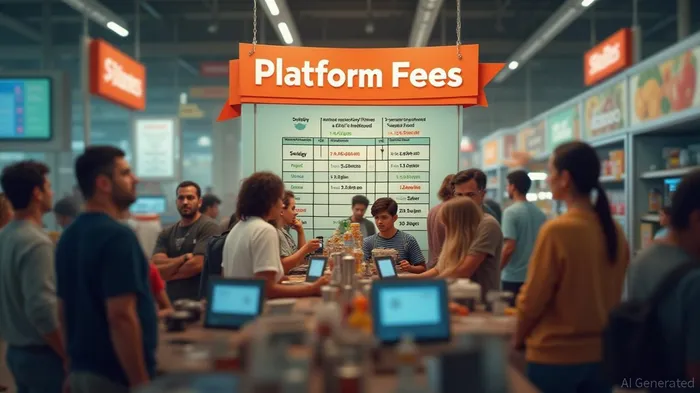
The trend started with a small experiment on Swiggy in 2023, where a ₹2 "platform fee" was introduced. This fee has since grown into an industry standard across various platforms. Swiggy now charges ₹10 as a platform fee, with GST applicable on top of this [1].
The fees are netting relatively modest sums but may be setting the stage for larger revenue streams. For instance, Zomato reported earning ₹83 crore from platform fees in the 2023–24 fiscal year [1]. Amazon, which entered the quick-commerce market later, has also started charging a ₹5 "marketplace fee," something it doesn't appear to charge in other countries [1].
Platforms generally have multiple sources of revenue in a single order. While food delivery players make money from restaurants by charging a commission of 15–25%, grocery delivery apps own the inventory they sell, pocketing the margins of the products flying out of their dark stores. However, margins remain slim [1].
The introduction of platform fees is seen as an inevitable development by industry experts. Digvijay Ghosh, Partner of Consumer Products and Retail at EY-Parthenon, told The Hindu that the fees are a natural step towards profitability [1]. However, the strategy carries some risks, as consumers may react adversely to the fees at checkout [1].
Consumer advocacy groups are raising concerns about the growing fees. Amol Kulkarni, director of research at the Consumer Unity and Trust Society (CUTS), noted that the fees could lead to anti-competitive practices and a lack of transparency [1].
Amazon's expansion into quick-commerce is another significant development. The company has expanded its Amazon Now service to select areas of New Delhi following a successful pilot in Bengaluru. This service caters to the increasing demand for instant delivery of groceries and daily essentials [2].
Amazon and Flipkart are investing heavily to catch up in the quick-commerce space. They are integrating quick-commerce into their existing apps to reduce costs and leverage existing user bases. Amazon is also boosting its logistics backbone by investing Rs 2,000 crore in expanding fulfillment centers [2].
The rise of platform fees and the expansion of quick-commerce services highlight the evolving strategies of e-commerce and quick-commerce platforms. While these developments may increase profitability, they also raise concerns about consumer costs and transparency.
References:
[1] https://www.thehindu.com/news/national/platform-fees-now-an-industry-standard-an-inevitable-development/article69823248.ece
[2] https://knnindia.co.in/news/newsdetails/state/amazon-expands-quick-commerce-service-amazon-now-to-delhi
Platform fees have become an industry standard for e-commerce and quick commerce platforms, with companies like Swiggy, Zomato, BlinkIt, and Zepto charging fees ranging from ₹2 to ₹10. Amazon has also started charging a ₹5 marketplace fee. These fees are seen as a way for platforms to increase profitability and offset investments in infrastructure and discounts. However, consumer advocacy groups are concerned about the growing fees, which may lead to consumer backlash.
Platform fees have emerged as a significant revenue stream for e-commerce and quick-commerce platforms, with companies like Swiggy, Zomato, BlinkIt, and Zepto charging fees ranging from ₹2 to ₹10. Amazon has also started charging a ₹5 marketplace fee. These fees are seen as a way for platforms to increase profitability and offset investments in infrastructure and discounts. However, consumer advocacy groups are concerned about the growing fees, which may lead to consumer backlash.The trend started with a small experiment on Swiggy in 2023, where a ₹2 "platform fee" was introduced. This fee has since grown into an industry standard across various platforms. Swiggy now charges ₹10 as a platform fee, with GST applicable on top of this [1].
The fees are netting relatively modest sums but may be setting the stage for larger revenue streams. For instance, Zomato reported earning ₹83 crore from platform fees in the 2023–24 fiscal year [1]. Amazon, which entered the quick-commerce market later, has also started charging a ₹5 "marketplace fee," something it doesn't appear to charge in other countries [1].
Platforms generally have multiple sources of revenue in a single order. While food delivery players make money from restaurants by charging a commission of 15–25%, grocery delivery apps own the inventory they sell, pocketing the margins of the products flying out of their dark stores. However, margins remain slim [1].
The introduction of platform fees is seen as an inevitable development by industry experts. Digvijay Ghosh, Partner of Consumer Products and Retail at EY-Parthenon, told The Hindu that the fees are a natural step towards profitability [1]. However, the strategy carries some risks, as consumers may react adversely to the fees at checkout [1].
Consumer advocacy groups are raising concerns about the growing fees. Amol Kulkarni, director of research at the Consumer Unity and Trust Society (CUTS), noted that the fees could lead to anti-competitive practices and a lack of transparency [1].
Amazon's expansion into quick-commerce is another significant development. The company has expanded its Amazon Now service to select areas of New Delhi following a successful pilot in Bengaluru. This service caters to the increasing demand for instant delivery of groceries and daily essentials [2].
Amazon and Flipkart are investing heavily to catch up in the quick-commerce space. They are integrating quick-commerce into their existing apps to reduce costs and leverage existing user bases. Amazon is also boosting its logistics backbone by investing Rs 2,000 crore in expanding fulfillment centers [2].
The rise of platform fees and the expansion of quick-commerce services highlight the evolving strategies of e-commerce and quick-commerce platforms. While these developments may increase profitability, they also raise concerns about consumer costs and transparency.
References:
[1] https://www.thehindu.com/news/national/platform-fees-now-an-industry-standard-an-inevitable-development/article69823248.ece
[2] https://knnindia.co.in/news/newsdetails/state/amazon-expands-quick-commerce-service-amazon-now-to-delhi


Divulgación editorial y transparencia de la IA: Ainvest News utiliza tecnología avanzada de Modelos de Lenguaje Largo (LLM) para sintetizar y analizar datos de mercado en tiempo real. Para garantizar los más altos estándares de integridad, cada artículo se somete a un riguroso proceso de verificación con participación humana.
Mientras la IA asiste en el procesamiento de datos y la redacción inicial, un miembro editorial profesional de Ainvest revisa, verifica y aprueba de forma independiente todo el contenido para garantizar su precisión y cumplimiento con los estándares editoriales de Ainvest Fintech Inc. Esta supervisión humana está diseñada para mitigar las alucinaciones de la IA y garantizar el contexto financiero.
Advertencia sobre inversiones: Este contenido se proporciona únicamente con fines informativos y no constituye asesoramiento profesional de inversión, legal o financiero. Los mercados conllevan riesgos inherentes. Se recomienda a los usuarios que realicen una investigación independiente o consulten a un asesor financiero certificado antes de tomar cualquier decisión. Ainvest Fintech Inc. se exime de toda responsabilidad por las acciones tomadas con base en esta información. ¿Encontró un error? Reportar un problema


SOBRE NOSOTROS
Nuestra historiaAutores de noticiasBase de conocimientosPolítica de privacidadTérmino de usoDescargo de responsabilidad de corretaje de tercerosTérminos de uso de AIMEDivulgaciones de riesgos de AInvest AICarrerasCONTÁCTENOS
Email: support@ainvest.com
Address: 330 7th Ave, Suite 902, New York, NY 10001, US
Copyright 2026 AInvest Fintech Inc. All rights reserved.


Comentarios
Aún no hay comentarios