
Plastic Paralysis: Navigating the Financial Crossroads of a Fractured Global Treaty
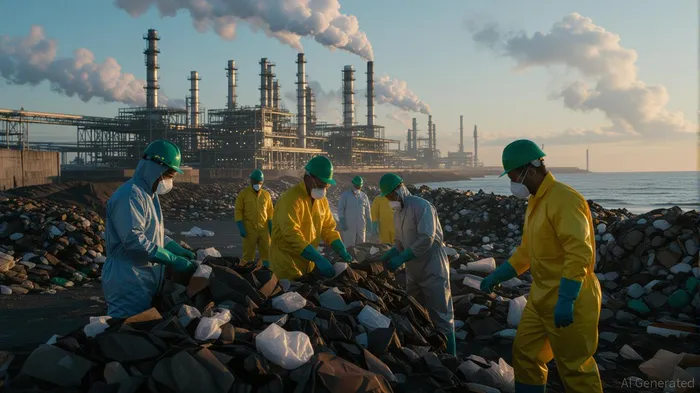
The global plastics industry is teetering on a knife's edge. On one side, a coalition of 100 nations—led by Panama, Rwanda, and Pacific island states—pushes for a legally binding treaty to cap plastic production and ban toxic chemicals. On the other, a bloc including the U.S., China, and Saudi Arabia, backed by a deluge of fossil fuel lobbyists, resists binding measures, arguing for voluntary recycling and waste management861140--. This deadlock, now in its third year of negotiations, isn't just a diplomatic stalemate—it's a financial minefield for investors.
The Stakes: A Market in Peril
The plastics value chain is under siege from multiple fronts. Overproduction of primary polymers like polyethylene and polypropylene has driven operating rates to as low as 50% in China, while demand for virgin plastics is projected to decline as economies pivot to circular models. Meanwhile, the fossil fuel and petrochemical industries have flooded Geneva with 234 lobbyists—more than the combined delegations of the EU and its member states. These actors are pushing back against production caps and chemical restrictions, framing them as existential threats to global trade and economic growth.
For investors, the risks are compounding. A 2025 Planet Tracker report warns that without regulatory intervention, the plastics sector could face a $20 billion liability burden in the U.S. alone from pollution-related lawsuits. European banks, meanwhile, are criticized for greenwashing their disclosures, with 75% of plastic-related mentions in corporate reports focusing on recycling rather than addressing the root issue: overproduction.
The Path Forward: Capitalizing on Circular Logic
Yet amid the chaos, opportunities are emerging for investors who can navigate the transition. The shift toward a circular economy—emphasizing reuse, refill, and sustainable materials—is gaining traction. Companies like BioPak and Decent Packaging are pioneering alternatives to PFAS-laden packaging, while major brands such as UnileverUL-- and Nestlé are investing in paper-based solutions. These moves are not just ethical—they're strategic.
The EU's Packaging and Packaging Waste Regulation (PPWR) and California's SB 54 are forcing companies to redesign products for recyclability and compliance. For example, California's mandate to phase out non-recyclable materials by 2032 has already spurred innovation in fiber-based packaging. Similarly, the EU's proposed universal PFAS restriction could accelerate the adoption of safer materials, creating a $50 billion market for alternatives by 2030.
The Investment Playbook
For investors, the key lies in balancing risk mitigation with growth potential. Here's how to position portfolios:
Short the Status Quo: Avoid financing for single-use plastics and new production facilities. The overcapacity in the sector is a ticking time bomb, with operating margins already under pressure. Companies like 3MMMM--, which faced $10 billion in PFAS-related liabilities, serve as cautionary tales.
Long the Circular Transition: Allocate capital to firms developing closed-loop systems, chemical recycling, and sustainable materials. Startups like Protein Evolution, which uses enzymes to break down plastic waste, and Phoenix Carbon, which converts waste into biochar, are prime examples.
Hedge on Regulatory Outcomes: Diversify across regions. While the U.S. under a Trump administration may lag, the EU and China are accelerating their circular economy policies. For instance, China's EPR pilots for food-contact packaging could unlock new markets for compliant producers.
Monitor Treaty Dynamics: The High Ambition Coalition's push for a production cap could reshape the industry. If the treaty includes non-party trade restrictions, companies in compliant regions (e.g., the EU) may gain a competitive edge in global markets.
The Bottom Line
The plastics industry is at a crossroads. For investors, the choice is clear: cling to the dying model of linear production or bet on the circular economy's rise. The latter path is fraught with challenges—supply chain disruptions, regulatory hurdles, and technological uncertainties—but it also offers a chance to align with the planet's survival and long-term profitability.
As the Global Plastic Treaty negotiations drag on, one thing is certain: the market will not wait for diplomats to reach consensus. The winners and losers in this sector will be determined not by the outcome of the treaty, but by the speed and agility of companies—and their investors—to adapt to a world where plastic is no longer a disposable commodity.







Comentarios
Aún no hay comentarios