
Plasma's Strategic Hiring and Stablecoin Infrastructure: A New Layer-1 Opportunity?
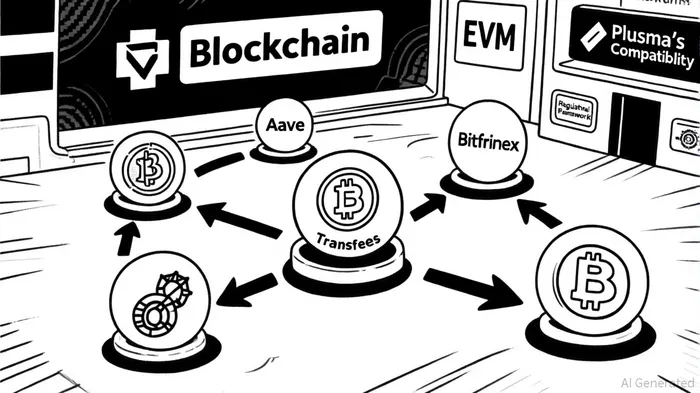
The stablecoin ecosystem is undergoing a seismic shift, driven by institutional demand for scalable, compliant infrastructure and the maturation of Layer-1 solutions. Plasma, a BitcoinBTC-- sidechain designed for fee-free stablecoin transfers, has emerged as a compelling contender in this space. By combining strategic executive hires, institutional-grade partnerships, and a focus on regulatory alignment, Plasma is positioning itself to redefine how stablecoins operate in a post-pilot execution era.
Strategic Hiring: Bridging Finance and Web3 Expertise
Plasma's leadership team has become a magnet for talent from both traditional finance and blockchain innovation. The project has recruited executives from Goldman SachsGS--, bringing institutional-grade financial expertise to its roadmap[1]. This blend of technical and regulatory acumen is critical for navigating the complexities of stablecoin infrastructure, where compliance and scalability are paramount. For instance, Plasma's partnership with AaveAAVE-- to launch an institutional blockchain fund underscores its ability to attract DeFi veterans while addressing the needs of traditional asset managers[6].
The hiring strategy extends beyond finance. Plasma has prioritized roles in infrastructure engineering and compliance, ensuring its platform can integrate stablecoins into treasury, risk, and compliance systems[1]. This approach aligns with broader trends: as stablecoin adoption shifts from pilots to execution, firms require talent to bridge the gap between blockchain innovation and enterprise-grade operations[1].
Institutional Capital and Funding Momentum
Plasma's appeal to institutional capital is evident in its fundraising milestones. In 2025, the project raised $373 million in a 10-day token sale, far exceeding its $50 million target[4]. This oversubscription—driven by 3,000 unique wallets averaging $83,629 per contribution—reflects confidence in Plasma's vision. Earlier rounds, including a $20 million Series A led by Framework Ventures and Bitfinex in February 2025, further solidified its institutional backing[5].
The project's institutional appeal is also tied to its partnerships. Plasma's collaboration with Aave to create a blockchain-based fund for institutional services highlights its focus on bridging DeFi and traditional finance[6]. Meanwhile, its mainnet beta launch in July 2025, which bridged $1 billion in stablecoins, demonstrated rapid adoption potential[1]. These developments position Plasma to compete with high-volume networks like TronTRON-- and EthereumETH--, which currently dominate stablecoin transactions but lack Plasma's fee-free model[1].
Technological Differentiation and Market Positioning
Plasma's technological architecture is designed to address pain points in the stablecoin ecosystem. As a Bitcoin sidechain, it leverages Bitcoin's security while enabling zero-fee USDTUSDC-- transfers and high-throughput processing[1]. This is a critical differentiator in a market where transaction costs and scalability have historically hindered adoption. By supporting EVM compatibility, Plasma also lowers the barrier for developers to migrate stablecoin applications from Ethereum[1].
The project's focus on regulatory compliance further strengthens its position. With global regulators tightening oversight on stablecoins, Plasma's emphasis on institutional-grade compliance frameworks aligns with the needs of enterprises and governments[3]. For example, its partnership with Aave includes safeguards to ensure adherence to evolving regulatory standards, a feature that could attract risk-averse institutional players[6].
Data-Driven Validation
Plasma's growth is supported by macroeconomic tailwinds. The DeFi market, projected to grow from $26.94 billion in 2025 to $231.19 billion by 2030[1], presents a vast opportunity for infrastructure projects. Plasma's focus on stablecoin payments—accounting for over 80% of blockchain transaction volume—positions it to capture a significant share of this growth[1].
Conclusion: A Layer-1 Opportunity in the Making
Plasma's strategic hires, institutional backing, and technological innovation create a compelling case for investors. By addressing the technical and regulatory challenges of stablecoin infrastructure, the project is well-positioned to become a foundational layer in the global payments ecosystem. As venture capital firms and institutional players increasingly prioritize high-quality Web3 infrastructure[1], Plasma's execution roadmap—anchored by a late-2025 mainnet launch—offers a unique opportunity to capitalize on the next phase of stablecoin adoption.





Comentarios
Aún no hay comentarios