
Plains GP Holdings' Strategic NGL Divestiture: A Catalyst for Crude-Centric Growth and Enhanced Unitholder Returns
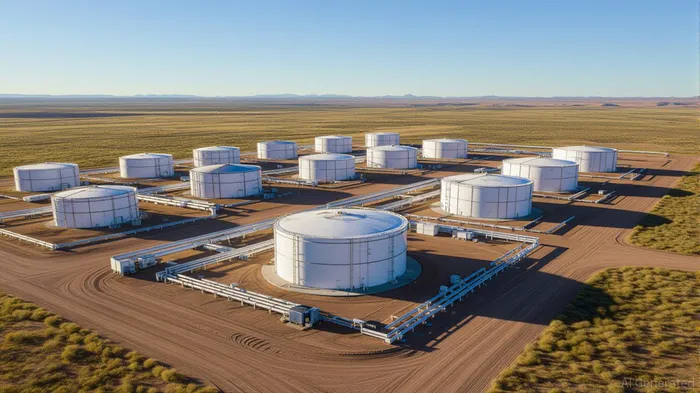
The energy midstream sector is undergoing a strategic recalibration as companies adapt to shifting demand dynamics and capital efficiency imperatives. Plains GPPAGP-- Holdings (PAGP) and its operating partnership, Plains All American PipelinePAA-- (PAA), have taken a decisive step by announcing the $5.15 billion CAD ($3.75 billion USD) divestiture of their Canadian NGL (natural gas liquids) business to Keyera Corp. This transaction, slated to close in Q1 2026, marks a pivotal pivot toward a pure-play crude oil midstream model. For investors, the move raises critical questions: How does this divestiture enhance long-term value creation? What does it mean for unitholder returns? And how does the $3 billion in proceeds reshape Plains' capital allocation strategy?
Strategic Rationale: From Volatility to Predictability
The NGL segment, while historically a source of growth, introduced operational and financial volatility. Fluctuating butane spreads, working capital demands, and regulatory complexities diluted the consistency of cash flows. By exiting the Canadian NGL market while retaining U.S. NGL assets and Canadian crude oil infrastructure, Plains is streamlining its operations. This shift aligns with a broader industry trend: midstream operators are increasingly prioritizing stable, fee-based revenue streams over commodity-linked exposure.
The divestiture also positions Plains to capitalize on structural tailwinds in the crude oil sector. Global demand for U.S. and Canadian crude remains robust, driven by geopolitical uncertainties and the energy transition's reliance on reliable hydrocarbon supplies. Plains' core assets—pipelines, storage, and processing facilities in the Permian and Gulf Coast—offer defensible scale and high-margin contracts. The company's leverage ratio of 3.3x as of Q2 2025, already within its target range of 3.25x to 3.75x, is expected to improve further post-transaction, enhancing credit flexibility and reducing interest rate risk.
Capital Reallocation: A $3 Billion Windfall
The proceeds from the NGL sale will be deployed across three pillars:
1. Disciplined Bolt-On M&A: Plains has demonstrated a track record of accretive acquisitions, such as its recent 20% stake in BridgeTex Pipeline, which strengthens its Permian Basin footprint.
2. Preferred Unit Repurchases: Reducing the cost of capital by retiring higher-yielding preferred units.
3. Opportunistic Common Buybacks: A one-time special distribution of $0.35 per unit underscores the company's commitment to returning capital to unitholders.
The strategic use of proceeds is critical. Unlike speculative greenfield projects, Plains' focus on bolt-ons and buybacks aligns with its capital-efficient model. The company's Adjusted Free Cash Flow of $348 million in Q2 2025, despite a 15% decline year-over-year, highlights its ability to generate cash even in a challenging macroeconomic environment. Post-divestiture, the reduction in leverage and corporate taxes (notably in Canada) will further bolster free cash flow, creating a virtuous cycle of reinvestment and returns.
Financial Metrics and Investor Implications
The divestiture's impact on credit metrics is equally compelling. Plains' leverage ratio is projected to fall below 3.25x post-transaction, providing a buffer against interest rate volatility. The company's Adjusted EBITDA from crude oil operations has remained stable at $580 million quarterly, outperforming the 7% decline in NGL EBITDA. This divergence underscores the resilience of crude-focused assets.
For unitholders, the shift to a pure-play model reduces exposure to cyclical NGL markets and enhances visibility on cash flows. The special distribution and potential buybacks add immediate value, while the focus on crude infrastructure—tariff escalations, pipeline expansions, and storage optimization—creates long-term upside.
Risks and Considerations
While the strategy is compelling, investors should monitor execution risks. The success of bolt-on acquisitions hinges on identifying undervalued assets at reasonable valuations. Additionally, regulatory approvals for the NGL sale must be secured by Q1 2026. A delay could temporarily disrupt capital deployment plans.
Conclusion: A Model for Midstream Resilience
Plains GP Holdings' NGL divestiture is more than a transaction—it's a strategic repositioning. By exiting volatile segments and doubling down on crude oil infrastructure, the company is aligning itself with structural demand trends and optimizing its capital structure. The $3 billion in proceeds, when deployed judiciously, will enhance unitholder returns through disciplined buybacks, lower leverage, and accretive growth. For investors seeking a midstream operator with a clear path to predictable cash flows and capital efficiency, Plains' post-divestiture trajectory offers a compelling case.





Comentarios
Aún no hay comentarios