
Pioneer Lithium's Market Cap Surge to AU$9.5M: A Case of Sector Undervaluation or Investor Optimism?
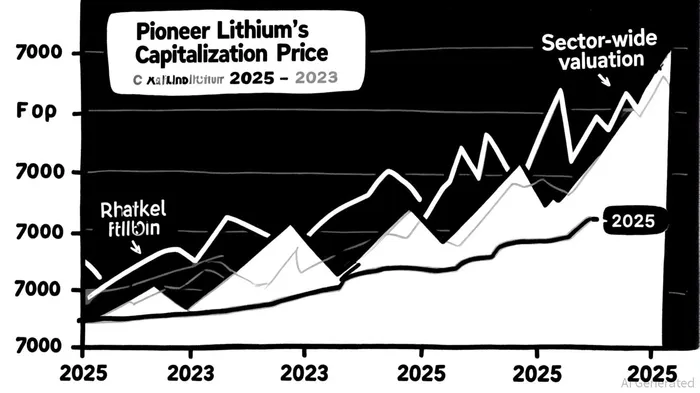
The recent surge in Pioneer Lithium's market capitalization to AU$9.5 million has sparked speculation about the interplay between insider sentiment and undervaluation dynamics in the lithium sector. While direct evidence of insider transactions or sector-specific reports remains elusive, the broader context of undervaluation—defined as the discrepancy between an asset's market price and its intrinsic value—provides a framework to interpret this development.
Undervaluation Metrics and Sector Dynamics
Undervaluation often arises when market prices fail to reflect a company's fundamental strengths, such as resource reserves, operational efficiency, or strategic positioning. In Pioneer's case, the absence of recent analyst reports or financial disclosures complicates traditional valuation analysis. However, the lithium sector itself has historically experienced cycles of undervaluation, driven by macroeconomic factors like supply-demand imbalances or shifts in energy transition policies. For instance, lithium prices have fluctuated sharply in recent years due to geopolitical tensions and regulatory changes, creating opportunities for investors to capitalize on mispriced assets.
The concept of undervaluation extends beyond numerical metrics. Behavioral biases, such as herd behavior or confirmation bias, can distort market perceptions, leading to prolonged undervaluation of assets with strong long-term potential. Pioneer's surge may reflect a correction in such mispricing, particularly if investors anticipate renewed demand for lithium in battery technologies or green energy infrastructure.
Insider Sentiment: A Missing Puzzle Piece
Despite the lack of concrete data on insider transactions or statements, the absence of negative signals—such as insider selling—could imply cautious optimism. Insiders often act as contrarian indicators, with large-scale purchases or sales signaling confidence or distress. In Pioneer's case, the absence of reported transactions suggests neither validation nor rejection of the market's enthusiasm, leaving room for interpretation.
This ambiguity underscores the importance of qualitative factors. For example, Pioneer's exploration projects or partnerships with downstream manufacturers could enhance its intrinsic value, even if these factors are not yet reflected in traditional valuation ratios like P/E or EV/EBITDA. Investors may be betting on future catalysts, such as the de-escalation of global supply chain bottlenecks or policy tailwinds for critical minerals.
Broader Sector Implications
The lithium sector's undervaluation potential is further complicated by its dual role as both a cyclical commodity and a strategic enabler of decarbonization. While short-term volatility persists, long-term fundamentals—such as the electrification of transportation and energy storage demand—remain robust. Pioneer's market cap surge could signal a broader re-rating of the sector, as investors recalibrate expectations for lithium's role in a net-zero economy.
Conclusion
Pioneer Lithium's AU$9.5 million valuation surge appears to hinge on a combination of speculative optimism and the sector's inherent undervaluation potential. While direct evidence of insider confidence is absent, the broader narrative of lithium's strategic importance in the energy transition provides a plausible rationale for the market's enthusiasm. Investors, however, should remain cautious, as undervaluation does not guarantee future outperformance—especially in a sector as volatile as lithium.







Comentarios
Aún no hay comentarios