
Pictet's Strategic Shift: Capitalizing on Takaichi's Victory in Japan
The recent leadership victory of Sanae Takaichi in Japan's Liberal Democratic Party (LDP) has ignited a wave of optimism in equity markets, particularly in sectors aligned with her pro-growth fiscal agenda. As the first female leader of the LDP, Takaichi's emphasis on "crisis management investment" and targeted fiscal stimulus has already triggered a 4.5% surge in the Nikkei 225, surpassing 47,000 points, with real estate, technology, and heavy industry sectors leading the charge, as reported in . For asset managers like Pictet Asset Management, this political shift presents a compelling case for regional reallocation and sector-specific opportunities in Japanese equities.
Takaichi's Fiscal Agenda: A Tailwind for Growth-Oriented Sectors
Takaichi's economic strategy centers on a "responsible proactive fiscal policy," which includes deficit financing for infrastructure, AI, semiconductors, and next-generation energy technologies, according to . Her vision mirrors elements of Abenomics but with a sharper focus on industrial modernization and national security. For instance, Japan's recent ¥10 trillion ($70 billion) commitment to semiconductor and AI infrastructure through 2030 aligns directly with Takaichi's push for technological self-reliance, as outlined in . This creates a fertile ground for companies in advanced manufacturing, cybersecurity, and energy innovation.
Pictet's long-term robotics and automation strategy, which emphasizes AI-driven industrial efficiency, is particularly well-positioned to benefit. The firm's Global High Yield Emerging Equities fund has maintained significant exposure to semiconductor manufacturers like Taiwan Semiconductor Manufacturing Company (TSMC) and Samsung Electronics, with co-manager Young Jae Lee noting that AI remains a "structural opportunity" despite recent volatility, as discussed in the . Takaichi's pledge to expand R&D subsidies and state-backed investment in AI and semiconductors could amplify the earnings potential of these holdings, especially as Japan seeks to counter global supply chain risks.
Political Uncertainty vs. Market Optimism: Navigating the Risks
While Takaichi's agenda has spurred market enthusiasm, political headwinds persist. The LDP's loss of a parliamentary majority in both chambers has created governance challenges, with analysts cautioning that policy implementation could be delayed without a broader coalition, according to the . However, Pictet's strategic focus on sectors with cross-party consensus-such as energy security and AI-mitigates some of this risk. For example, Japan's 2025 policy goals for digital innovation and energy resilience are bipartisan priorities, ensuring continuity even in a fragmented political landscape, as noted in .
Moreover, Takaichi's emphasis on fiscal expansion and low borrowing costs has already weakened the yen to a two-month low of 150 against the U.S. dollar, a dynamic captured in the . While this could raise import costs and inflationary pressures, it also enhances the competitiveness of Japanese exporters. Pictet's overweight position in technology and industrial sectors-both beneficiaries of yen depreciation-positions the firm to capitalize on this dynamic.
Sector-Specific Opportunities: AI, Semiconductors, and Defense
Takaichi's "crisis management investment" strategy explicitly targets sectors where Pictet has deep expertise. The firm's focus on application-specific integrated circuits (ASICs) for AI, for instance, aligns with Japan's $65 billion AI and semiconductor investment plan, which aims to reduce reliance on foreign chipmakers, as described in . Similarly, her call for increased defense spending (targeting 2% of GDP by 2027) opens avenues for defense-linked equities, a sector that has already seen significant gains post-election (see Strategic Spending in an Age of Uncertainty: Takaichi's Bid for Japan's Premiership).
The alignment between Takaichi's policy priorities and Pictet's investment thesis is further reinforced by global trends. As U.S. export restrictions on China disrupt semiconductor supply chains, Japan's strategic investments in domestic chip production and AI infrastructure are likely to attract capital inflows. Pictet's proactive stance on these themes-evidenced by its 4% overweight in the technology sector during Q4 2022-demonstrates a forward-looking approach that could yield outsized returns (see This Top Performing Value Fund Still Sees 'Chunky Upside' in Chip Sector).
Conclusion: A Strategic Reallocation with Long-Term Potential
Takaichi's leadership marks a pivotal moment for Japan's economic trajectory, blending fiscal stimulus with industrial modernization. For Pictet, this environment offers a unique opportunity to reallocate capital toward sectors poised for structural growth. While risks such as Japan's high debt-to-GDP ratio and political fragmentation remain, the firm's focus on resilient, technology-driven industries positions it to navigate these challenges. As the Nikkei approaches the 50,000 threshold, investors may find that Pictet's strategic alignment with Takaichi's vision is a key driver of outperformance in the coming years. 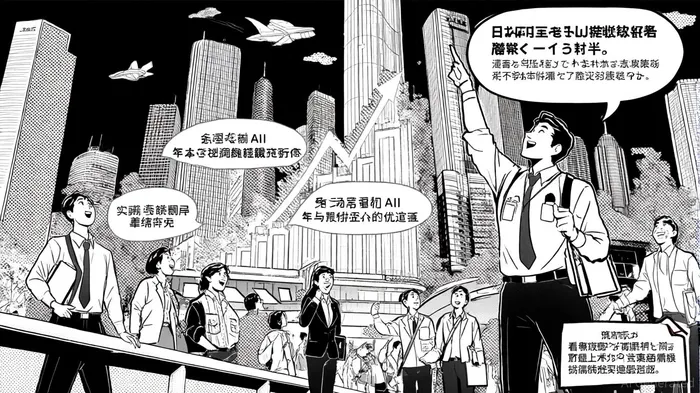





Comentarios
Aún no hay comentarios