
Pi Network's Struggle Between Hype and Fundamental Value
The cryptocurrency space is rife with projects that promise moonshots but deliver mediocrity. Pi Network, with its 47 million users and mobile-first mining model, sits at the intersection of viral hype and nascent utility. As of Q4 2025, its market capitalization hovers around $2.17–2.19 billion, with token prices fluctuating between $0.20 and $0.47. Yet, beneath the surface, Pi's journey reflects a classic tension: the clash between speculative fervor and the hard work of building real-world value.
The Hype: A Grassroots Powerhouse
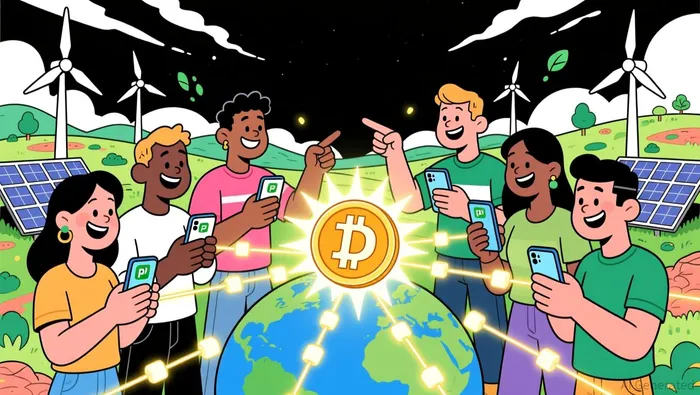
Pi Network's user base is its most striking asset. With over 35 million active participants across 150+ countries according to analysis, it has achieved a scale few crypto projects can match. Its mobile mining model-allowing users to mine Pi via smartphones with minimal energy consumption-has democratized access, particularly in regions with limited crypto infrastructure according to Forbes. This grassroots adoption has fueled optimism, with bullish forecasts suggesting a potential 323% ROI by 2030.
However, hype alone cannot sustain a project. Pi's current "enclosed" mainnet phase restricts liquidity, as tokens cannot be freely traded on external exchanges. This creates a disconnect between user numbers and market value, as the token's true utility remains unproven. Critics argue that without a transition to an "open network" phase, Pi risks becoming a social experiment.
Regulatory Catalysts: MiCA Compliance and ISO 20022
A critical catalyst for Pi's long-term viability is its alignment with regulatory frameworks. In 2025, Pi Network achieved a major milestone by registering under MiCA. This not only grants Pi legal status in Europe but also paves the way for listings on MiCA-compliant exchanges. The project's GDPR certification and protocols further solidify its regulatory credibility.
Equally transformative is Pi's adoption of the ISO 20022 standard, a global financial messaging protocol. By November 2025, Pi Network completed a three-phase integration to align with this standard, enhancing interoperability with traditional banking systems. This move positions Pi to facilitate cross-border payments and merchant settlements, addressing a key gap in its ecosystem.
Merchant Adoption: From Pilots to Practicality
Real-world utility is the litmus test for any cryptocurrency. Pi Network has taken steps to bridge this gap, particularly through initiatives like PiFest 2025. This event, held in March 2025, encouraged merchants to accept Pi Coin for in-store transactions via the Map of Pi app. While partnerships remain in pilot stages, regions like Ghana, South Africa, and Uganda have seen early traction in micro-businesses.
Yet, merchant adoption faces hurdles. The open mainnet, launched in February 2025, has enabled decentralized applications (DApps) and payments, but the ecosystem still lags behind EthereumETH-- or SolanaSOL-- in terms of DeFi infrastructure. For Pi to gain traction, it must demonstrate scalability and security in high-volume transaction environments.
Risks: Liquidity Constraints and Token Dynamics
Despite progress, Pi's path is fraught with risks. Daily token unlocks of over 6 million create downward pressure on prices, especially in a bearish market. Limited exchange listings further exacerbate liquidity issues, making it difficult for investors to assess fair value.
Regulatory uncertainties also loom. While MiCA compliance is a win, the project must navigate evolving standards in other jurisdictions. For instance, the U.S. lacks a unified crypto framework, and Pi's utility-token structure may face scrutiny under future legislation.
The Road Ahead: Balancing Hype and Fundamentals
Pi Network's success hinges on its ability to convert hype into tangible utility. The transition to an open mainnet-where tokens can interact with external platforms-is a make-or-break milestone. If achieved, it could unlock partnerships with global payment processors and expand merchant adoption.
Meanwhile, ecosystem development remains critical. The Pi Hackathon 2025 and TOKEN2049 conference in Singapore are opportunities to showcase innovation, but the network must prioritize DApps and DeFi tools to compete with established blockchains.
Conclusion
Pi Network embodies the paradox of crypto: a project with massive user engagement but uncertain fundamentals. Its regulatory compliance and ISO 20022 integration are strong catalysts, yet liquidity constraints and delayed open mainnet adoption pose significant risks. For investors, the key question is whether Pi can evolve from a social experiment into a functional, globally adopted currency. As of 2025, the answer remains unresolved-but the next 12–18 months will be pivotal.






Comentarios
Aún no hay comentarios