
Pi Network's PiUSD Stablecoin: A Strategic Shift in Usage Limits and Its Implications for Investors
In October 2025, Pi Network unveiled a pivotal evolution in its ecosystem with the launch of PiUSD, a stablecoin designed to anchor its broader vision of a decentralized, utility-driven financial system. This move marks a strategic shift toward stricter usage limits and enhanced regulatory preparedness, positioning PiUSD as a tool for everyday transactions rather than speculative trading. For investors, this transition signals a maturation of Pi Network's approach, blending compliance-first principles with a focus on real-world utility.
Regulatory Preparedness: A Compliance-First Blueprint
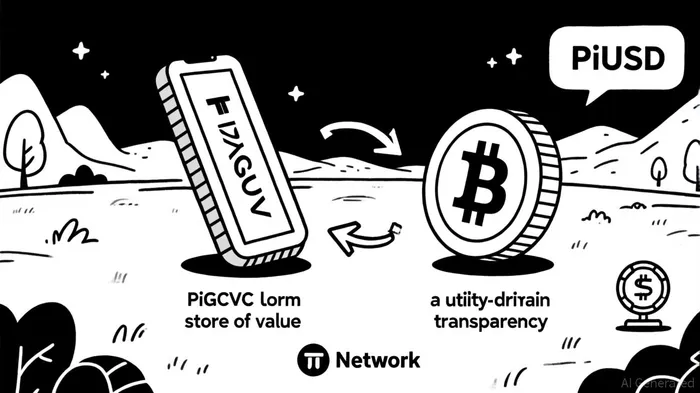
Pi Network has long emphasized its commitment to avoiding the regulatory pitfalls that have plagued other cryptocurrencies. The introduction of PiUSD reinforces this stance through strict usage caps-$250,000 monthly and $10,000 daily per user-to deter arbitrage and speculative activity, as outlined in PiUSD usage limits. These limits, combined with a dual-currency model (PiGCV for long-term value and PiUSD for transactions), align with global regulatory expectations for stablecoins, particularly under the EU's Markets in Crypto-Assets (MiCA) framework, according to the dual-value model.
The network's KYC mechanism, which integrates AI-based verification and community review, has already verified over 25 million users, adhering to FATF guidelines and GDPR standards, as detailed in a Gate.io compliance report. This decentralized validator program not only streamlines compliance but also incentivizes user participation, creating a self-sustaining ecosystem. By avoiding an ICO and focusing on utility, Pi Network sidesteps the U.S. SEC's securities classification risks, a critical advantage in a regulatory landscape where enforcement actions have targeted speculative tokens - a point emphasized by the dual-value model analysis.
Moreover, Pi Network's partnerships with platforms like Gate.io and its alignment with Wyoming's regulatory sandbox demonstrate a proactive approach to navigating diverse jurisdictions. While direct alignment with Basel III standards remains unconfirmed, the emphasis on on-chain transparency and reserve disclosures mirrors the liquidity and risk management principles central to Basel III's framework, as noted in the Basel III report.
Utility-Driven Value: Beyond Speculation
PiUSD's design prioritizes transactional utility, with usage restricted to payments and direct swaps between Pi and fiat currencies, as first described in PiUSD usage limits. This focus on real-world adoption is amplified by the Open Mainnet's integration with merchant services and decentralized apps (dApps), creating a flywheel effect for network participation. By capping transaction limits, Pi Network mitigates volatility risks and ensures PiUSD remains a stable medium of exchange-a critical factor for global adoption.
The dual-currency model further strengthens this value proposition. PiGCV, as a scarce, long-term asset, rewards early adopters and trueTUSD-- pioneers, while PiUSD's utility drives daily engagement. This separation mirrors traditional financial systems, where cash (utility) and equity (value) coexist. For investors, this duality reduces exposure to speculative cycles and aligns with the growing demand for stablecoins in cross-border payments and e-commerce, as highlighted by the dual-value model analysis.
Implications for Investors
For investors, Pi Network's strategic shift underscores a transition from hype-driven growth to sustainable, compliance-focused development. The emphasis on regulatory preparedness reduces the risk of enforcement actions, a major concern in 2025 as global regulators tighten crypto oversight. Additionally, PiUSD's utility-driven model positions it to capture market share in the $100+ billion stablecoin sector, particularly in emerging markets where Pi's mobile-first, user-friendly approach resonates, according to reports on PiUSD usage limits.
However, challenges remain. The absence of explicit Basel III or MiCA alignment in PiUSD's documentation could delay adoption in highly regulated markets. Investors should monitor the network's progress in securing partnerships with traditional financial institutions and its ability to scale KYC processes without compromising decentralization, a concern noted in the Basel III report.
Conclusion
Pi Network's PiUSD represents a bold step toward a compliant, utility-driven crypto ecosystem. By imposing usage limits, embracing dual-currency dynamics, and prioritizing regulatory alignment, the network addresses key pain points that have hindered mainstream adoption. For investors, this strategic shift offers a compelling case: a stablecoin with real-world utility, backed by robust compliance measures and a growing user base. As the crypto landscape matures, Pi Network's approach may well serve as a blueprint for the next generation of decentralized finance.







Comentarios
Aún no hay comentarios