
Is Pi Network (PI) a Buy in 2026 Amid Volatility and Uncertain Roadmaps?
The cryptocurrency market in 2026 remains a landscape of extremes-speculative fervor colliding with institutional pragmatism. Pi Network (PI), once a social experiment in mobile mining, has evolved into a blockchain ecosystem with over 17.5 million KYC-verified users and 15.8 million Mainnet migrants. Yet, as the year unfolds, the project faces a critical juncture: Can it transform its ambitious but vague roadmap into tangible utility, or will its lack of clarity erode investor confidence further?
Ecosystem Growth and Partnerships: A Foundation of Potential
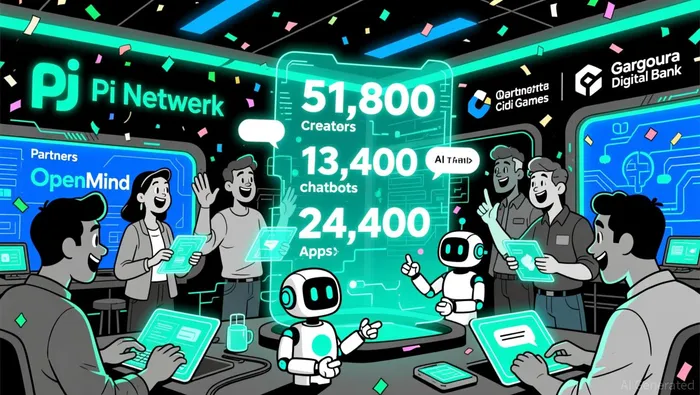
Pi Network's 2026 developments highlight its pivot from speculative hype to real-world utility. The Pi App Studio, launched in 2025, has enabled over 51,800 creators to build 13,400 chatbot apps and 24,400 custom applications. This democratization of app development aligns with broader trends in decentralized innovation, where user-generated content drives ecosystem growth.
Strategic partnerships further underscore Pi's ambitions. Investments in OpenMind-a robotics OS developer-and CiDi Games, which plans to integrate PI as in-game currency, signal a focus on AI and gaming utility. Meanwhile, the Gargoura Digital Bank on testnet aims to bridge Pi's ecosystem with regulated financial services, including custody and digital payments. These moves suggest a long-term vision to position PI as a multi-sector asset, though execution remains unproven.
Technologically, Pi has made strides in infrastructure. The rebranded Pi Desktop node software and Pi Linux Node package standardize operations, while Testnet2's integration of smart contracts enables on-chain state changes and lower fees. Over 215 Mainnet apps have emerged post-hackathon, reflecting growing developer engagement.
However, the Core Team's 2026 roadmap has drawn criticism for its lack of specificity. Community members argue that vague goals-such as "ecosystem development" without measurable milestones-undermine trust. This ambiguity contrasts with competitors like SolanaSOL-- or EthereumETH--, which prioritize transparent, quarterly updates.
Roadmap Criticisms and Market Volatility: A Double-Edged Sword
The PI token's price trajectory in 2025-2026 has been nothing short of volatile. After peaking at $3.00 in February 2025, the token plummeted to below $0.20 by December 2025, a 90% decline. This bearish trend coincided with a 12% monthly drop in December 2025, exacerbated by a 134 million PI supply unlock in January 2026. Such events raise concerns about inflationary pressure and market sentiment.
Community backlash has intensified as delays accumulate. Critics argue that the Core Team's "slow and steady" approach risks alienating early adopters who invested in Pi's social mission. Yet, proponents counter that the project's focus on utility-rather than rapid token appreciation-positions it for long-term resilience.
Tokenomics and Supply Dynamics: A High-Stakes Balancing Act
Pi's tokenomics present a paradox. While the 17.5 million KYC completions and 15.8 million Mainnet migrations indicate robust user adoption, the sheer supply of PI tokens (now over 134 million unlocked in 2026) could dilute value. The Core Team's emphasis on compliance tools and decentralized finance (DeFi) infrastructure-such as a DEX and AMM liquidity pools-aims to offset this by creating demand channels.
However, success hinges on execution. For instance, CiDi Games' planned Q1 2026 testing of PI as in-game currency could drive utility, but only if the platform attracts mass adoption. Similarly, the Gargoura Digital Bank's testnet launch is promising, but regulatory hurdles in unbanked markets may stifle growth.
Risk-Reward Analysis: A Calculated Gamble
Investing in Pi Network in 2026 requires a nuanced risk-reward assessment:
- Upside Potential:
- Ecosystem Scalability: With 51,800 active creators and 24,400+ apps, Pi's App Studio could become a decentralized app store rivaling Apple's or Google's.
- Strategic Partnerships: Integrations with AI, gaming, and finance sectors may unlock new use cases, driving demand for PI.
Mainnet Adoption: 15.8 million Mainnet users represent a user base larger than many established blockchains, offering a foundation for future growth.
Downside Risks:
- Roadmap Ambiguity: Vague goals and delayed milestones risk eroding trust, particularly in a market where transparency is king.
- Price Volatility: The token's 90% drop from its 2025 peak highlights its susceptibility to market sentiment and macroeconomic factors.
- Supply Inflation: Large unlocks (e.g., 134 million in January 2026) could depress value unless offset by robust demand mechanisms.
Conclusion: A Cautious Bull Case
Pi Network's 2026 trajectory hinges on its ability to convert ecosystem ambition into concrete utility. While the project has made strides in infrastructure and partnerships, its lack of a clear roadmap and token price volatility remain significant headwinds. For risk-tolerant investors, Pi could represent a high-conviction bet on a decentralized future-if the Core Team executes on its vision. However, those prioritizing stability may find the risks outweigh the rewards.
In the end, Pi's story is one of potential and promise, but also of unmet expectations. As the Core Team navigates 2026's challenges, the community-and the market-will be watching closely.







Comentarios
Aún no hay comentarios