
The Philippines' Regulatory Clampdown and Its Implications for Global Crypto Exchanges
The Philippines has emerged as a pivotal battleground in the global crypto regulatory landscape. In 2025, the country's dual enforcement efforts by the Bangko Sentral ng Pilipinas (BSP) and the Securities and Exchange Commission (SEC) have reshaped the competitive environment for cryptocurrency exchanges. These measures, while stringent, offer a case study for investors assessing market risks and opportunities in emerging markets for U.S. crypto stocks.
A Dual Regulatory Front
The Philippines' regulatory crackdown is anchored in two key institutions: the BSP and the SEC. The BSP's Circular No. 1206 mandates that VASPs adhere to consumer protection, financial stability, and cybersecurity standards. Simultaneously, the SEC introduced the Crypto-Asset Service Provider (CASP) rules in May 2025, requiring crypto platforms to register as Philippine corporations, maintain a minimum paid-up capital of ₱100 million, and operate physical offices in the country according to regulatory guidelines. Noncompliant platforms face severe penalties, including fines and imprisonment as per enforcement actions.
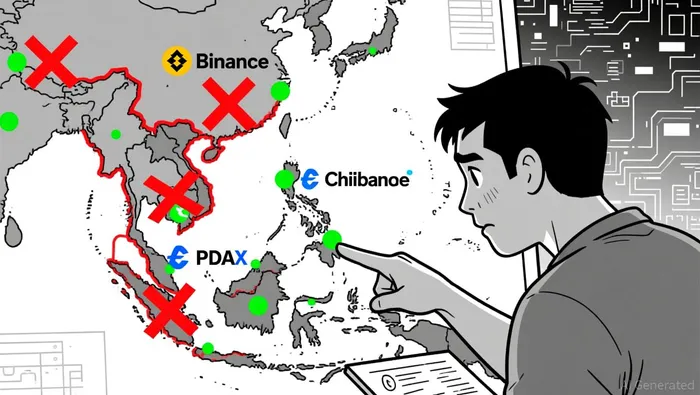
To enforce these rules, the National Telecommunications Commission (NTC) has directed internet service providers (ISPs) to block access to approximately 50 unlicensed exchanges, including global giants like Binance, CoinbaseCOIN--, Gemini, OKX, and Kraken as reported. This move underscores the Philippines' commitment to aligning with international financial standards while protecting local investors from perceived risks.
Market Risks for Global Exchanges
The immediate impact of these regulations is a contraction in market access for unlicensed platforms. For U.S. crypto stocks, this signals a broader trend: emerging markets are increasingly prioritizing regulatory compliance over unfettered innovation. According to a report by Live BitcoinBTC-- News, the blocking of major exchanges has disrupted user access and forced platforms to either localize operations or exit the market entirely.
This creates a dual risk for investors. First, U.S.-listed crypto firms with significant exposure to unregulated markets may see revenue declines if they fail to adapt to local compliance frameworks. Second, the regulatory uncertainty in jurisdictions like the Philippines could amplify volatility in global crypto stocks, as seen in the 2025 market corrections following enforcement announcements.
Opportunities in Compliance-Driven Innovation
However, the crackdown also reveals opportunities. The rise of licensed platforms like PDAX and GoTyme demonstrates demand for compliant services in the Philippines. Moreover, white-label crypto exchange solutions-pre-built platforms that enable financial institutions to meet regulatory requirements-are gaining traction. As noted by Antier Solutions, these tools allow banks to offer crypto services while adhering to BSP and SEC mandates. For U.S. firms with expertise in compliance technology, this represents a niche market in emerging economies.
The SEC's CASP rules, while restrictive, also create a clear pathway for foreign firms to enter the market. By establishing local subsidiaries and meeting capital requirements, global exchanges could pivot from unregulated operations to licensed entities, potentially capturing market share from smaller, unlicensed competitors as outlined in regulatory documents.
Strategic Implications for Investors
For U.S. investors, the Philippines' regulatory environment highlights two key themes: adaptability and localization. Crypto stocks that can rapidly adjust to emerging market regulations-whether through partnerships with local entities or by developing compliance-focused products-are likely to outperform. Conversely, firms that resist localization or underestimate regulatory rigor in markets like the Philippines may face liquidity challenges.
The broader lesson is that emerging markets are no longer passive adopters of global crypto trends. They are active participants in shaping the industry's future, often with stricter rules than their Western counterparts. This shift demands a recalibration of investment strategies, prioritizing firms that treat compliance as a competitive advantage rather than a cost center.
Conclusion
The Philippines' regulatory clampdown is a microcosm of the global crypto industry's maturation. While the immediate risks for U.S. crypto stocks are clear-blocked access, compliance costs, and market uncertainty-the long-term opportunities lie in innovation tailored to emerging markets. For investors, the challenge is to distinguish between short-term turbulence and the durable infrastructure being built in regions like Southeast Asia. As the line between regulation and opportunity blurs, the winners will be those who navigate both with agility.





Comentarios
Aún no hay comentarios