
Philippines' Political Crossroads: How Sara Duterte's Impeachment Trial Shakes Equity Markets and FDI
The Philippine Senate's June 10 decision to remand Vice President Sara Duterte's impeachment trial back to the House of Representatives has crystallized a critical inflection point in the country's political landscape. This procedural move—requiring the House to prove compliance with constitutional rules on impeachment timelines—exposes deepening fissures between President Ferdinand Marcos Jr.'s administration and Duterte's faction, reigniting concerns about governance stability. For investors, this political fragmentation poses immediate risks to equity markets and foreign direct investment (FDI), particularly in sectors aligned with Duterte's influence.
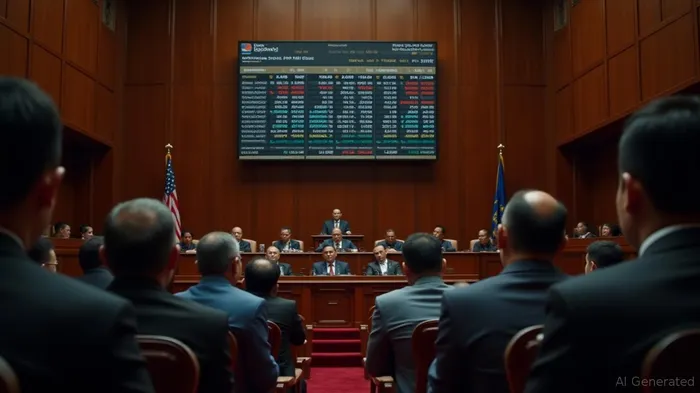
The Remand Decision: A Microcosm of Political Fragmentation
The Senate's 18-5 vote to remand the case reflects a strategic gambit by Duterte allies to delay proceedings until the incoming 20th Congress, which convenes in July 2025. Five senators opposed the motion, arguing it undermines the Senate's constitutional role to “try and decide” impeachment cases. Legal experts, including constitutional scholar Paolo Tamase, have labeled the remand a “dangerous precedent,” as it risks extending the trial into a new legislative session where Duterte-aligned senators could dilute the process.
This procedural stalemate highlights a broader governance challenge: legislative gridlock. With the May 12 midterm elections fracturing the Marcos-Duterte alliance, the new Senate will have a diluted pro-Marcos majority, complicating reforms tied to infrastructure and economic policy. For investors, this uncertainty casts a shadow over sectors reliant on regulatory clarity, such as real estate and healthcare—two industries closely tied to Duterte's political base.
FDI Declines: A Barometer of Political Risks
Foreign investors have already begun pricing in this instability. Philippine FDI inflows fell to $498 million in March 2025, a 27.8% year-on-year decline, with equity investments plummeting by 27.4% (to $102 million). Sectors like real estate (37% of equity inflows) and manufacturing (33%)—both key Duterte-aligned areas—have been hardest hit.
Analysts attribute this drop to two factors: 1. Policy Uncertainty: Duterte's impeachment trial and the Marcos-Duterte split have stalled legislative approvals for projects like the Bangsamoro infrastructure corridor and energy privatization. 2. Geopolitical Tensions: U.S. tariffs on Philippine exports (e.g., semiconductors) and Duterte's pro-China tilt have added volatility to sectors like tech and manufacturing.
The Makati Business Club (MBC) has warned that institutional inaction on the impeachment trial risks eroding investor confidence further. “If we cannot follow the rule of law, how can we attract long-term capital?” asked MBC spokesperson Tony Llamas, emphasizing that transparency in governance is critical to FDI recovery.
Sectoral Risks: Duterte's Influence and Its Implications
Investors must assess exposure to Duterte-aligned sectors, which face regulatory and reputational risks:
Real Estate: Duterte's family and allies control significant landholdings and development projects. A prolonged trial or guilty verdict could trigger asset freezes or regulatory probes, impacting companies like SM Development Corp. and Ayala Land.
Healthcare: As former Health Secretary, Duterte's legal battles may embolden her faction to resist reforms in healthcare privatization. This could slow approvals for PPP projects in hospitals and pharmaceutical distribution, hurting firms like Universal Robina Corp.
Infrastructure: While Marcos's “Build, Build, Build” program remains a priority, Duterte's allies could delay permits for projects perceived as benefiting Marcos allies. Investors should monitor delays in rail upgrades and port expansions.
Hedging Strategies: Navigating the Political Crossroads
To mitigate risks, investors should consider:
PHP-Denominated Bonds: The Philippine government's 2025 peso bonds (e.g., 3.45% yield) offer a hedge against equity volatility. Their low correlation to equities and stable returns provide ballast in uncertain political environments.
Sector ETFs:
- Tech and Telecom ETFs (e.g., PHTECH): These sectors benefit from Marcos's digital infrastructure push and are less exposed to Duterte's influence.
Consumer Staples ETFs (e.g., PHCONS): Defensive plays like food and beverages (Unilever Philippines, Nestlé) offer stability amid political noise.
Short-Term Plays:
- Avoid real estate ETFs (e.g., PHREIT) until the Senate's composition solidifies post-midterms.
- Track FDI inflow data quarterly; a rebound could signal improved governance confidence.
Conclusion: A Delicate Balancing Act
The Philippines' equity markets and FDI inflows are at a crossroads. While the Marcos administration's economic fundamentals—5.5–6% GDP growth and low inflation—remain robust, political fragmentation threatens to derail progress. Investors must stay vigilant on three key triggers:- The House's ability to meet the Senate's remand requirements by June 14.- The composition of the new Senate and its stance on Duterte's trial.- FDI inflow data post-midterms, which will signal whether policy uncertainty is easing.
In this environment, diversification and hedging are critical. By pairing defensive bonds with tech/telecom ETFs, investors can navigate the Duterte-Marcos rivalry while positioning for a potential recovery in governance stability. As the MBC reminds us, the stakes are high: the Philippines' growth story hinges on whether its leaders can rise above politics to uphold the rule of law.







Comentarios
Aún no hay comentarios