
The Philippines-India Strategic Partnership: A New Frontier for Defense, Infrastructure, and Tech Investments
The Philippines and India have emerged as unlikely but strategically aligned partners in the Indo-Pacific, forging a dynamic relationship that spans defense, infrastructure, and technology. As China's regional assertiveness intensifies and Southeast Asia's economic ambitions grow, this partnership is not merely geopolitical but deeply economic—offering investors a unique window into high-growth sectors poised for transformation.
Defense Procurement: A Boon for Indian and Philippine Defense Industries
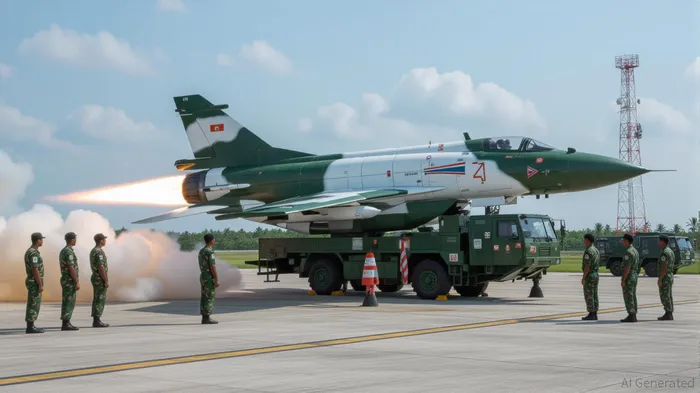
The Philippines' procurement of India's BrahMos and Akash missile systems represents a seismic shift in regional defense dynamics. The $375 million BrahMos deal in 2022 and the anticipated $200 million Akash contract in 2024 highlight the Philippines' strategic pivot toward India as a key supplier of advanced weaponry. These systems, designed for long-range strikes and air defense, directly address the Philippines' need to counter Chinese incursions in the South China Sea.
For India, the deals underscore its ambition to become a global defense exporter. The BrahMos joint venture with Russia remains a cornerstone of its military-industrial strategy, while the Akash system—developed by the Defence Research and Development Organisation (DRDO)—is now being marketed aggressively abroad. Indian defense firms like Bharat Dynamics (BrahMos producer) and state-owned DRDO are set to benefit, as are Philippine companies involved in logistics and maintenance of these systems.
Investors should monitor Indian defense stocks such as Bharat Dynamics (BHEL) and Larsen & Toubro (L&T), which have been integral to India's export push.
Infrastructure Development: Bridging Connectivity and Economic Growth
Both nations are prioritizing infrastructure as a catalyst for economic resilience. India's PM Gati Shakti initiative has transformed its logistics network, with a $120 billion fiscal 2023–24 capital investment plan. The Philippines, under its “Build Better More” agenda, has greenlit over 100 projects in 2025, focusing on roads, ports, and digital infrastructure.
Key projects include the Philippines' Metro Manila Subway and India's Delhi-Mumbai Expressway, both of which are critical for reducing congestion and boosting trade. The Philippines' openness to 100% foreign ownership in sectors like ports and rail opens doors for Indian engineering firms. For instance, Indian companies with expertise in smart cities or renewable energy infrastructure could capitalize on the Philippines' commitment to 75% emissions reductions by 2030.
The digital infrastructure boom is equally compelling. The Philippines' expansion of public Wi-Fi sites from 4,000 to 19,000 since 2022, coupled with India's Digital India initiative, creates synergies in tech-driven urbanization. Investors might explore Philippine infrastructure firms like San Miguel Corporation (involved in energy and transport) or Indian construction giants like L&T and Tata Projects.
Emerging Tech Collaboration: Fintech and Digital Infrastructure
The partnership's most innovative facet lies in digital ecosystems. A 2023 joint fintech working group between India and the Philippines aims to enhance cross-border payments and digital financial inclusion. The Philippines' fintech sector, growing at 40% annually, now hosts nearly 300 active companies, creating a fertile ground for Indian startups.
India's UPI (Unified Payments Interface) model, which revolutionized digital payments, is being adapted to Philippine needs. The Market Next project, connecting public markets to high-speed internet, and the Bayanihan SIM Project, distributing free data to schools, exemplify this collaboration. These initiatives are not just about connectivity—they're about building a digital economy where small businesses and students thrive.
Emerging opportunities also lie in AI and semiconductors. While not explicitly detailed in recent agreements, the Philippines' push for digital public infrastructure (eGovPH) and India's AI research hubs suggest future alignment. Investors should watch Indian tech firms like Infosys or TCS, which are likely to expand into Southeast Asia's growing digital market.
Investment Opportunities and Strategic Considerations
The Philippines-India partnership offers a multi-faceted investment landscape:
- Defense: Target Indian firms with export capabilities and Philippine logistics partners.
- Infrastructure: Focus on public-private partnerships in roads, ports, and renewable energy.
- Tech: Prioritize fintech and digital infrastructure firms leveraging cross-border collaboration.
However, investors must remain cautious. Political dynamics in both countries, regulatory hurdles in infrastructure projects, and the volatility of defense contracts require careful due diligence. Yet, for those who can navigate these challenges, the rewards are substantial.
As the Indo-Pacific redefines itself as a hub of innovation and strategic competition, the Philippines and India's partnership is more than a geopolitical alliance—it's an economic engine. For investors, the time to act is now.







Comentarios
Aún no hay comentarios