
The Philippines' Crypto Regulatory Shift: Implications for Market Access and Local Firms
The Philippines' 2025 regulatory overhaul of its cryptocurrency sector marks a pivotal moment in the country's digital financial evolution. By tightening oversight of virtual asset service providers (VASPs) and mandating stringent compliance frameworks, the Bangko Sentral ng Pilipinas (BSP) and the Securities and Exchange Commission (SEC) have redefined market access for both local and foreign players. This shift, while imposing higher barriers to entry, is simultaneously unlocking new opportunities for innovation and capital reallocation in a market where crypto adoption remains among the highest globally.
Regulatory Enforcement and Market Access
The Philippines' regulatory crackdown began in earnest with the National Telecommunications Commission (NTC) blocking 50 unregistered VASPs, including global giants like CoinbaseCOIN-- and Gemini, at the BSP's request. This action, underpinned by Section 902-N of the Manual of Regulations for Non-Bank Financial Institutions (amended by BSP Circular No. 1206, 2024), underscores the government's commitment to curbing unregulated crypto activity. By enforcing a "license or exit" policy, the BSP has effectively narrowed the playing field to platforms like PDAX and GoTyme, which operate under its formal oversight.
For foreign firms, the regulatory landscape now demands dual compliance: not only must they secure a license from the SEC but also adhere to the SEC's PhiliFintech Innovation Office's rigorous documentation requirements, including business conduct rules, risk control plans, and client onboarding procedures. The minimum paid-up capital of ₱100 million ($1.8 million) and mandatory physical office presence further elevate operational costs, favoring well-capitalized entities over nimble startups.
Capital Reallocation and Local Firm Adaptation
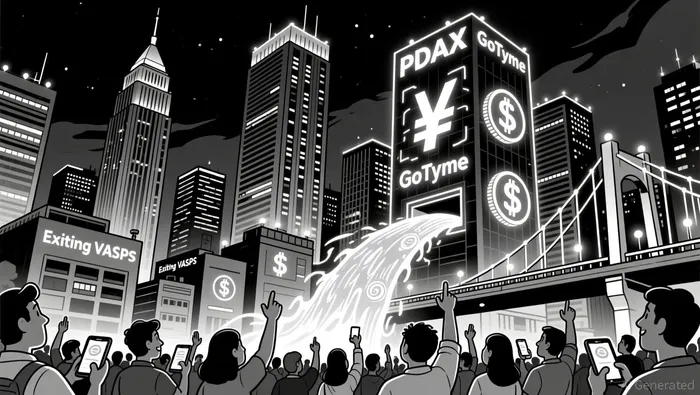
The regulatory burden has forced a recalibration of capital allocation strategies among local firms. Smaller players, unable to meet the SEC's capital and compliance demands, are either exiting the market or pivoting to niche services. Meanwhile, licensed exchanges like PDAX and GoTyme are expanding their offerings to capture market share, leveraging their regulatory compliance as a competitive edge.
The SEC's emphasis on investor protection-requiring CASPs to segregate customer funds and submit regular reports to the Anti-Money Laundering Council (AMLC)-has also spurred a wave of operational restructuring. Firms are reallocating capital toward compliance infrastructure, cybersecurity, and AML/KYC systems, which, while costly, position them for long-term stability. This reallocation mirrors trends in Brazil and Mexico, where regulatory clarity has similarly driven institutional-grade crypto adoption.
Emerging Opportunities in a Structured Ecosystem
Despite the initial friction, the 2025 regulatory framework is catalyzing innovation in remittances, wealth management, and cross-border transactions. The Philippines' $38.34 billion remittance sector, for instance, is being transformed by partnerships like Pays0 and Coins.ph, which facilitate fiat-to-crypto conversions at scale. This aligns with President Marcos Jr.'s vision of a digital-first economy, where crypto serves as a bridge for financial inclusion.
The SEC's expansion of the taxation regime-introducing capital gains and value-added taxes on crypto transactions-further signals institutional confidence in the sector's maturity. These measures, while increasing transaction costs, enhance transparency and reduce the risk of scams, fostering trust among retail and institutional investors alike.
Global Context: The Philippines in the Emerging Markets Crypto Race
The Philippines' regulatory approach mirrors broader trends in emerging markets, where crypto is increasingly viewed as a tool for financial integration rather than speculative excess. Brazil's 2025 crypto framework, for example, mandates SPSAV licenses for custodians and exchanges, while Mexico is finalizing rules to align with global AML standards. In both cases, regulatory clarity has attracted foreign capital, with stablecoins and tokenization initiatives driving cross-border liquidity.
Notably, the Philippines' dual-agency oversight model-BSP for systemic stability, SEC for investor protection-offers a blueprint for balancing innovation with risk management. This contrasts with the fragmented regulatory environments in many Latin American countries, where inconsistent policies have stifled growth. By institutionalizing a layered approach, the Philippines is positioning itself as a regional hub for compliant crypto innovation.
Conclusion: A Strategic Inflection Point
The Philippines' 2025 regulatory shift represents more than a compliance exercise-it is a strategic recalibration of the country's digital financial architecture. While the immediate impact includes higher entry barriers and capital reallocation, the long-term benefits are clear: a more resilient market, enhanced investor trust, and a fertile ground for innovation in remittances and wealth management. For investors, the key takeaway is that regulatory-driven markets like the Philippines are not just surviving but thriving in the global crypto ecosystem, offering opportunities for those who navigate the new rules with foresight.





Comentarios
Aún no hay comentarios